Cricket wasn’t always the high-tech sport we know today.
There was a time when umpires made every call with their eyes alone, and what they saw was final—no replays, no reviews, no second opinions.
But on November 14, 1992, everything changed. Sachin Tendulkar, already making waves as India’s teenage prodigy, became the first player to be given out by the third umpire during a Test match in Durban.
It wasn’t just another dismissal. It was the moment cricket stepped into a new era, one where technology would eventually shape outcomes, settle controversies, and even out the playing field.
And ironically, it happened to one of the game’s greatest batsmen.
Who Was The First Player To Be Given Out By The Third Umpire?
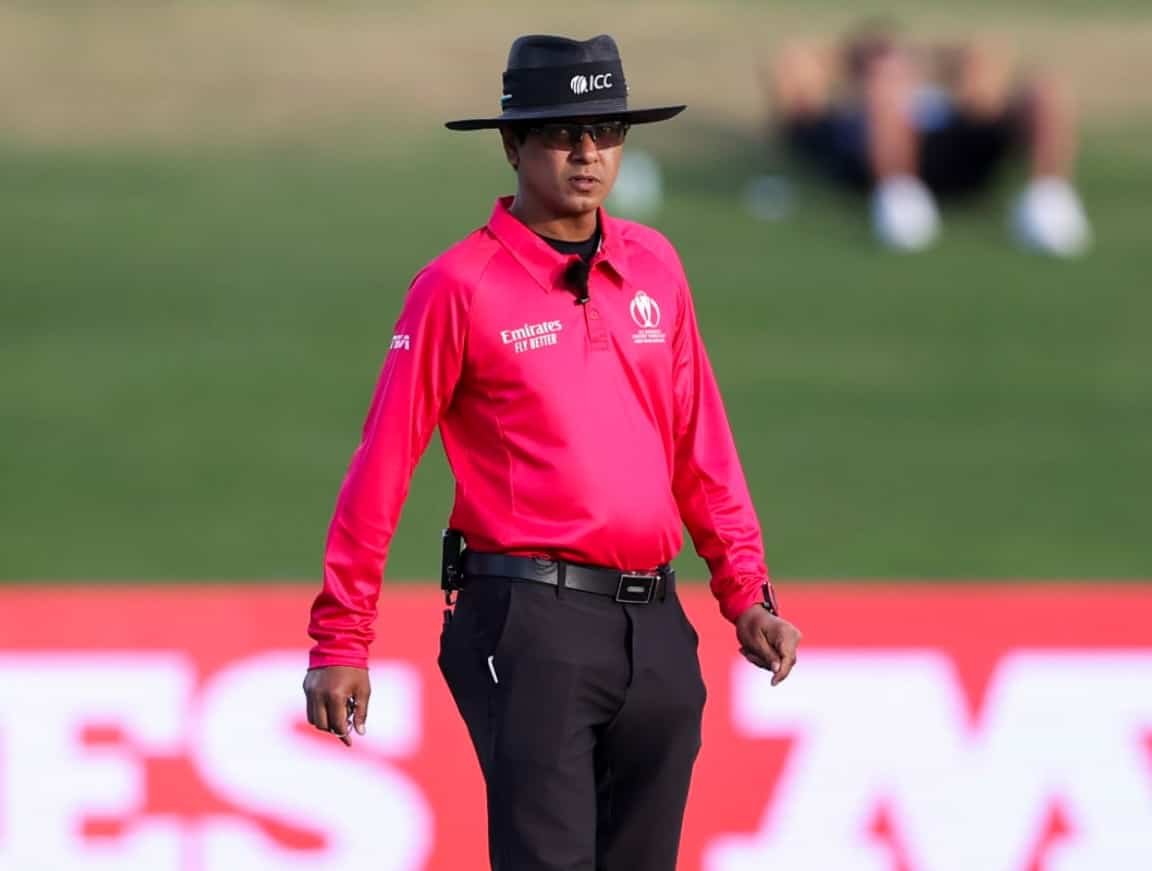
What Happened at Kingsmead That Day?
India was touring South Africa for the first time after the country’s readmission to international cricket.
The first Test at Kingsmead was tense, competitive, and rain-affected.
During India’s first innings reply to South Africa’s 254, Tendulkar was looking solid when he attempted what seemed like a routine single.
But Jonty Rhodes wasn’t your routine fielder. Known for his athleticism and lightning reflexes, Rhodes swooped in, picked up cleanly, and threw down the stumps in one motion. It was close—really close.
The on-field umpires weren’t sure if Tendulkar had made his ground, so they did something unprecedented: they referred the decision upstairs to Karl Liebenberg, the third umpire.
Using television replays, Liebenberg reviewed the run-out frame by frame. The verdict? Tendulkar was short. Out. The decision stood, and history was made.
Match Context: India vs South Africa, 1st Test 1992
To understand the significance, you need to see where this match stood. Here’s how the scoreboard looked:
| Innings | Team | Score |
|---|---|---|
| 1st Innings | South Africa | 254 All Out |
| 1st Innings | India | 227 All Out |
| 2nd Innings | South Africa | 176/3 Declared |
| 2nd Innings | India | Did Not Bat |
The match eventually ended in a draw due to rain interruptions on days three and four. South Africa declared their second innings at 176 for 3, leaving no time for a result.
But by then, cricket had already witnessed something far more lasting than the match outcome.
How the Third Umpire in Cricket Actually Works
The system introduced in 1992 was simple compared to today’s DRS.
Back then, the third umpire could only be called upon for run-outs and stumpings—decisions involving whether a batsman had made his ground before the stumps were broken.
The on-field umpire would signal to the TV umpire, who’d review available camera angles and communicate the decision.
If the batsman was in, a green light appeared on the stadium screen. If out, a red light. It was binary, quick, and effective.
Today’s third umpire has far broader responsibilities. They handle:
- Run-outs and stumpings (the original mandate)
- Boundary checks (whether the ball touched the rope or a fielder was grounded beyond it)
- Catches (especially close ones near the ground or involving the boundary)
- No-ball checks for dismissals
- DRS reviews initiated by teams for LBW, edges, and more
It’s become a full-time role requiring sharp focus, quick decision-making, and a solid understanding of playing conditions.
Why This Moment Mattered More Than the Dismissal Itself
Tendulkar’s run-out wasn’t controversial. Most observers agreed he was short of the crease.
But the psychological shift was massive. For the first time, players knew that tight calls wouldn’t hinge solely on an umpire’s split-second judgment from 22 yards away.
There was now a safety net—or a ruthless fact-checker, depending on which side of the decision you were on.
Fans, too, started seeing cricket differently. Replays had always been available on TV broadcasts, often showing that umpires got it wrong.
Now those replays weren’t just for debate in living rooms—they were part of the official process. It forced a reckoning: if technology can help, why wouldn’t we use it?
Expert Insight: The Tactical Psychology Behind Tech Decisions
There’s something worth noting about how technology affects player behavior. Before 1992, batsmen might gamble on close singles, banking on benefit-of-the-doubt rulings.
Fielders knew they had to make the dismissal obvious—just breaking the stumps wasn’t always enough if the umpire couldn’t tell.
But once replays entered the equation, margins tightened. Batsmen became more cautious.
Fielders started aiming for direct hits with more urgency.
The game got sharper, faster, and less forgiving of half-measures. You see this clearly in modern cricket—players don’t assume they’ll get away with being a frame short. They know the cameras will catch them.
And for someone like Jonty Rhodes, whose fielding was already extraordinary, it meant his brilliance could finally be rewarded with certainty. A tight call was no longer a coin flip.
When Was the 3rd Umpire Introduced in Cricket and Who Invented It?
The third umpire system was officially introduced in international cricket in 1992, with the India-South Africa Test series serving as the debut stage.
It wasn’t the brainchild of a single inventor but rather a collective evolution pushed by cricket administrators, broadcasters, and the International Cricket Council (ICC).
The idea emerged naturally from the growing availability of television coverage and slow-motion replay technology.
South Africa’s re-entry into world cricket provided a fresh opportunity to trial innovations without disrupting established cricketing traditions in older Test nations.
By the mid-1990s, it became a standard feature across all formats. ODIs and T20s adopted it quickly, and as camera technology improved, so did the scope of decisions the third umpire could adjudicate.
Common Confusions: Third Umpire vs DRS vs Umpire’s Call
People often mix up the third umpire system with DRS (Decision Review System), but they’re not the same. Here’s the breakdown:
- Third umpire: An official who reviews specific decisions using replays. They’ve been around since 1992.
- DRS: Introduced in 2008, this allows teams to challenge on-field decisions. It uses ball-tracking, UltraEdge, and HotSpot.
- Umpire’s Call: A DRS-specific concept where the original decision stands if ball-tracking shows marginal contact with the stumps.
The third umpire existed long before DRS and continues to function independently for run-outs, stumpings, and boundaries—even when DRS isn’t in use (like in some domestic leagues).
Frequently Asked Questions
- Who was the first player to be given out by the third umpire?
Sachin Tendulkar, during the India vs South Africa Test match on November 14, 1992, at Kingsmead, Durban. He was run out after a referral to third umpire Karl Liebenberg.
- What are the main duties of a third umpire in cricket today?
They review run-outs, stumpings, boundary decisions, catches, no-balls on dismissals, and manage DRS reviews when teams challenge on-field calls.
- Is the third umpire used in all formats of cricket?
Yes, the third umpire is present in Tests, ODIs, and T20 internationals. Some domestic leagues also use the system depending on broadcast availability.
- Can the third umpire overturn LBW decisions without DRS?
No. Without DRS, the third umpire can’t intervene in LBW or caught-behind decisions unless specifically asked by the on-field umpire for a no-ball check.
- Who was the fielder involved in Tendulkar’s historic dismissal?
Jonty Rhodes executed the direct-hit run-out that led to the first-ever third umpire decision in international cricket.
The Ripple Effect: From Durban to Modern Cricket
What began as a simple referral system for tight run-outs has grown into a sophisticated web of technologies. Ball-tracking predicts trajectories.
UltraEdge detects faint edges. HotSpot shows impact points. And at the center of it all sits the third umpire, making calls that can swing matches, series, and sometimes entire tournaments.
Tendulkar’s dismissal didn’t just answer one close call—it opened the door for cricket to trust evidence over instinct.
Today, it’s hard to imagine the sport without it.
Every India-Pakistan thriller decided by a review, every World Cup final hinging on a marginal LBW call, every tight run chase affected by a boundary check – all of it traces back to that November afternoon in Durban when a young batsman was run out, and cricket was never quite the same again.
Also Check:
About the Author
