Cricket is mostly about series. Five Tests. Three ODIs. A bilateral back-and-forth that unfolds over weeks.
But some matches stand completely alone. One game. No replay. No catching up if something goes wrong.
These are called one-off matches or one-off tournaments, and they produce some of cricket’s sharpest, most memorable cricket.
One-Off Tournaments
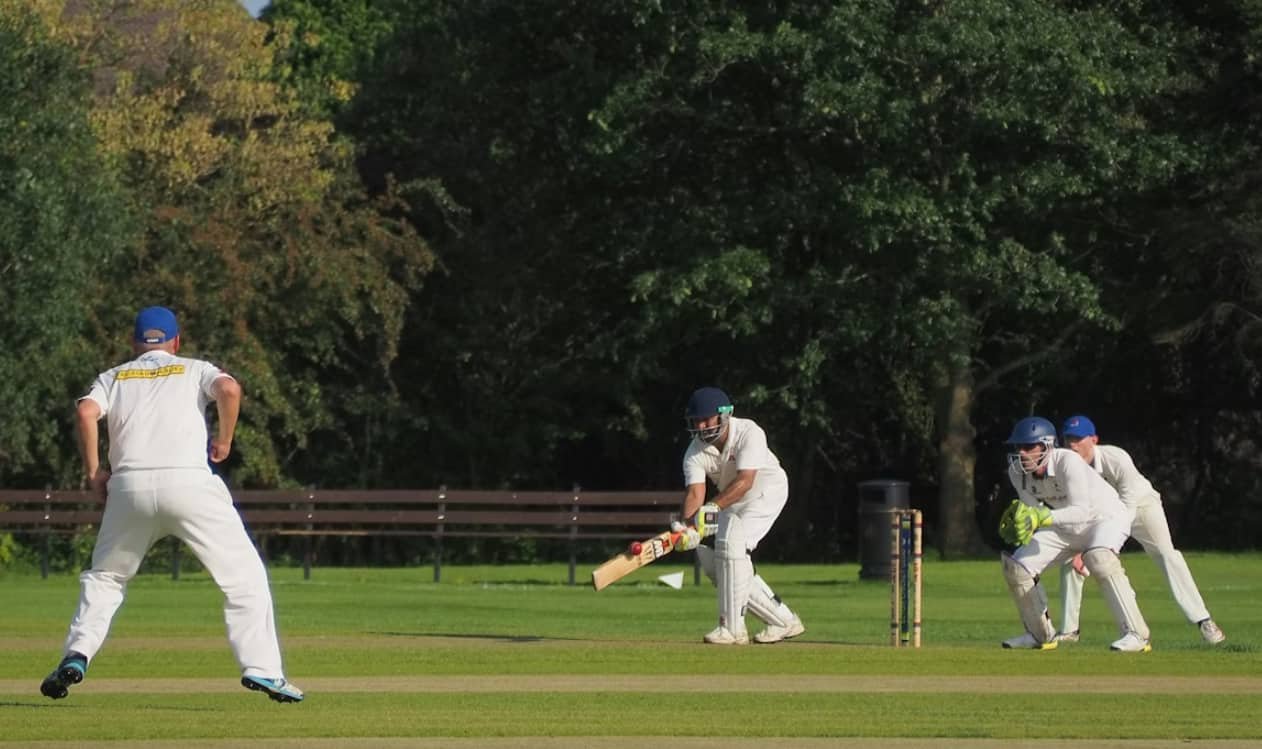
This article covers exactly what they are, why they exist, how their schedules and standings work, and which ones still get talked about years later.
Quick Answer:
A one-off tournament in cricket is a standalone event played only once, either as a single match or a short competition without a fixed annual schedule. It carries full ICC status, affects rankings, and offers players no second chance.
What “One-Off” Actually Means in Cricket?
The phrase means exactly what it sounds like. One time only.
In cricket, a one-off match is a fixture not attached to a longer series. There’s no second match to turn things around, no rubber game to settle the outcome. What happens in that one match is the final answer.
This applies across all formats:
- A one-off Test is a single Test match between two countries, played independently
- A one-off ODI or T20I is a limited-overs international played as an isolated fixture
- A one-off tournament is a short competition, typically 1-2 weeks, with a defined final and no recurring edition on the annual calendar
None of these is unofficial or secondary. They count fully toward ICC rankings and individual stats.
Why Cricket Schedules One-Off Events?
Boards don’t plan these games randomly. There’s usually a clear reason.
- Schedule gaps. The FTP is loaded. Sometimes a tour has room for only one match, and that’s what gets played.
- Debut Test matches. When the ICC grants a country full Test status, their first game is almost always a one-off. Ireland and Afghanistan both had their Test debuts this way, in 2018.
- Commemorative fixtures. A ground inauguration, a national cricket milestone, or a tribute game for a retiring player. These are special occasions that don’t fit a recurring series format.
- Budget and tour logistics. A shorter board, or one hosting a team from a much longer journey, may only fund a single match. A full series isn’t always viable.
- Format or rule experiments. Some boards use one-off events to test playing conditions, team combinations, or tournament structures before committing to something longer.
One-Off Tests: What You Need to Know?
A one-off Test is a five-day match with full ICC status. It counts the same as any Test in a five-match series, for rankings, averages, milestones, and records. The only thing missing is the buffer of follow-up games.
Three One-Off Tests Worth Knowing
- Afghanistan vs India, Bengaluru, 2018 Afghanistan’s first-ever Test match. India won in under two days. The result was one-sided, but the occasion was significant for Afghan cricket. It confirmed their status as a full Test nation in practice, not just on paper.
- India vs Bangladesh, Fatullah, 2015 Bangladesh’s 100th Test. The match was heavily interrupted by rain and ended as a draw, but the number was the point. A milestone worth a standalone fixture.
- Afghanistan vs New Zealand, Greater Noida, 2024 Scheduled as Afghanistan’s first Test against New Zealand. Rain came in and never left. No play was possible. The fixture was abandoned without a ball bowled, but it showed how seriously Afghanistan’s Test calendar is now being taken.
How Players Approach One-Off Tests?
There’s no easing in. In a series, a captain might play conservatively in the first match and attack later. That option doesn’t exist here.
Batters can’t afford a quiet first day. Bowlers can’t save their best plans for the second Test. Every session from day one matters, and that changes how teams set up and attack.
One-Off ODIs and T20Is
Shorter formats see stand-alone fixtures even more often. They appear as warm-up games before ICC events, fill narrow tour windows, and sometimes mark special occasions.
One-Off ODIs
- World XI vs Australia, Melbourne, 2005 (ICC Super Series): The ICC assembled a World XI to play Australia in a short series. The one-off ODI was part of that experiment. Australia won easily, but the concept of a World XI match remains one of cricket’s most-discussed what-ifs.
- England vs New Zealand, Lord’s, 2019 (World Cup Final): Every World Cup final is technically a one-off decider. The 2019 edition is the most extreme version. The match is tied. The Super Over tied. England won on boundary count. It’s the closest thing cricket has to an unanswerable argument about what one match can produce.
One-Off T20Is
- Australia vs South Africa, Johannesburg, 2006: The only T20I on the tour, played when the format was still finding its feet internationally. A single match, treated as an experiment. The format has obviously gone further than that since.
Many boards now schedule single T20Is as season openers, farewell tributes, or ICC event warm-ups. These are all one-off fixtures in the strict sense.
How Standings Work in One-Off Tournaments?
The format determines whether there’s a standings table at all.
- Single match: No standings. One game, one result. Done.
- Mini tri-series: Three teams, two matches each, then a final. Points and net run rate determine who qualifies.
- Small round-robin: Four teams, one or two matches each, followed by a knockout stage.
Here’s what a typical tri-series standings table looks like:
| Team | Played | Won | Lost | Pts | NRR |
|---|---|---|---|---|---|
| Team A | 2 | 2 | 0 | 4 | +1.12 |
| Team B | 2 | 1 | 1 | 2 | +0.43 |
| Team C | 2 | 0 | 2 | 0 | -1.55 |
When the format is a pure single match, there’s no table. The scorecard is the record.
One-Off Tournament Schedule: How They’re Arranged
Most one-off events are announced on short notice, filling FTP windows that open up between longer tours. A typical short tournament runs for 7 to 14 days.
| Day | Fixture | Venue | Local Time |
|---|---|---|---|
| Day 1 | Team A vs Team B | Dubai | 7:30 PM |
| Day 4 | Team B vs Team C | Sharjah | 3:30 PM |
| Day 7 | Team A vs Team C | Abu Dhabi | 7:30 PM |
| Day 10 | Final | Dubai | 7:30 PM |
For confirmed upcoming one-off fixtures, the ICC website and ESPNcricinfo‘s fixtures section are the most current sources.
One-Off Tournaments in India
India runs some of the most-watched one-off events in world cricket.
The BCCI schedules stand-alone T20Is as ICC event warm-ups, and has experimented with domestic champion challenge matches as season openers.
Any one-off fixture involving India draws large audiences, which makes these games commercially valuable even without a series context.
That’s partly why India-related one-off fixtures tend to get confirmed earlier and attract stronger broadcast deals.
One-Off Tournaments Across Asia
The UAE hosts a significant number of Asian one-off fixtures, particularly for teams like Afghanistan whose home conditions aren’t always available for international cricket.
Pakistan has played several high-profile stand-alone matches in neutral venues.
The Asia Cup has also used condensed formats that function as short, one-off tournaments when a full competition isn’t on the calendar.
One-Off Tournaments and Player Stats
Stats from one-off matches count the same as those from any other match in the format.
A Test century scored in a one-off Test appears in a player’s career record no differently than one scored in a five-match series.
This matters for a few reasons:
- Players chasing milestones (1000 runs, 100 wickets) get the same opportunities
- Debut records are set in one-off Tests just as they would be in a series
- Ranking points move after each official fixture, including stand-alone games
What doesn’t carry over is momentum. There’s no next match to bounce back in.
The stat either comes in that game or it waits for the next tour.
What 2026 Looks Like for One-Off Tournaments?
Several cricket boards are working around ICC event preparation in 2026, and stand-alone tournaments fit that window well.
- Tri-series warm-ups. Short 7-10 day tri-series as ICC event preparation is likely to appear more in 2026 schedules. These are classic one-off tournament formats.
- High-profile single-match finals. The idea of a one-match decider between top-ranked white-ball sides has been discussed by boards as a commercial product. Some of these may be confirmed closer to mid-2026.
- Season-opening domestic challenges. India and Australia both have a history with champion vs. combined XI formats as season openers. Those are expected to continue.
- Broader FTP gaps. As bilateral tour scheduling improves, short windows open. One-off tournaments are the natural fit for a 10-14-day gap between major commitments.
Cricket in 2026 is building toward the next cycle of ICC events. One-off tournaments will carry some of the preparation load.
FAQs
- What is a one-off match in cricket?
A match played only once as a standalone fixture, not part of a recurring series or tournament. It carries full ICC status.
- Do one-off matches affect ICC rankings?
Yes. All officially sanctioned one-off Tests, ODIs, and T20Is count fully toward ICC team and player rankings.
- What is the most famous one-off match in cricket history?
The 2019 ODI World Cup Final between England and New Zealand is the most cited. It tied twice and was decided on boundary count.
- Can a one-off tournament have a standings table?
Only in multi-team formats like a tri-series. A single match between two teams has no standings, just a result.
- How do I track upcoming one-off cricket fixtures?
The ICC’s official site and ESPNcricinfo carry confirmed international schedules. One-off fixtures are listed alongside standard series.
- Why does Afghanistan play so many one-off matches?
Afghanistan’s home infrastructure limits regular international hosting. Neutral venues and stand-alone fixtures allow them to maintain an active Test and white-ball schedule.
Conclusion:
One-off matches don’t get the same build-up as a five-Test series.
There’s no long narrative, no “who takes the series lead” storyline.
What they do have is finality. Every ball, every over, every dropped catch lands with more weight.
There’s no way to fix it in the next game.
That’s why the 2019 World Cup Final gets replayed in cricket conversations years later.
That’s why Afghanistan’s debut Test in 2018 is remembered clearly.
Not because of the context around it, but because of what was at stake in that single match.
If a one-off fixture is on the calendar, it’s worth watching closely. The cricket rarely lets you down.
Also Check:
About the Author
