Cricket’s filled with strange moments, but some are stranger than others.
Imagine this: a bowler stepping up to deliver his first-ever ball in international cricket, sending down a wide, and walking away with a wicket.
No legal delivery bowled. No runs conceded off a proper ball. Just a wicket credited to his name at 0.0 overs.
That’s exactly what happened to Virat Kohli in 2011.
It sounds impossible, doesn’t it?
But the laws of cricket allow for such quirks, and Kohli – primarily known for his batting genius – became the first player to take a wicket on the 0th ball in men’s international cricket history.
This wasn’t just a statistical oddity.
It was a moment that combined part-time bowling, lightning-fast keeping, and one ambitious charge down the pitch.
First Player to Take a Wicket on the 0th Ball
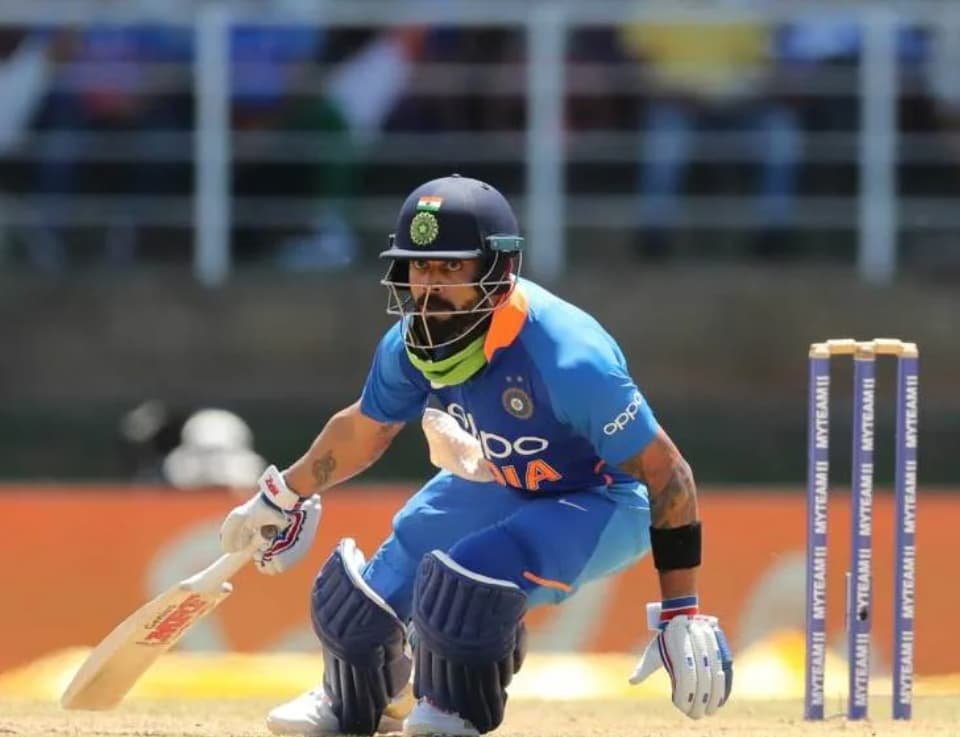
How Did Virat Kohli Take a Wicket Before Bowling a Legal Ball?
The incident unfolded during a T20 International between India and England on August 31, 2011, at Old Trafford in Manchester.
Kohli, still early in his international journey, was handed the ball by captain MS Dhoni.
At that point, Kohli had bowled in just four previous matches — his bowling was occasional at best.
Kevin Pietersen, England’s explosive middle-order batter, was at the crease.
Known for his aggressive intent, Pietersen decided to charge down the track even before Kohli released the ball.
Kohli’s delivery drifted down the leg side — a wide. Pietersen missed it completely. MS Dhoni, positioned perfectly behind the stumps, whipped off the bails in a flash.
Stumped. Out. Wicket credited to Kohli.
But here’s the kicker: because the ball was called wide, it didn’t count as a legal delivery.
Kohli’s over hadn’t technically started. His bowling figures read 0.0 overs, 0 runs, 1 wicket.
Breaking Down the Match Moment
| Match Detail | Information |
|---|---|
| Match | India vs England, T20I |
| Date | 31st August 2011 |
| Venue | Old Trafford, Manchester |
| Batter Dismissed | Kevin Pietersen |
| Mode of Dismissal | Stumped (MS Dhoni) |
| Delivery Type | Wide ball |
| Kohli’s International Match | 5th overall |
| Legal Balls Bowled | 0 |
The sequence was simple but bizarre. Pietersen’s aggression, Kohli’s wayward line, and Dhoni’s sharpness – all three elements combined to create something unprecedented.
If Dhoni had been even a fraction slower, Pietersen would’ve made his ground.
If the ball had been straighter, it might’ve been a legal delivery, and Kohli’s first wicket would’ve come “normally.”
Understanding the 0th Ball Wicket Meaning
So what does “0th ball wicket” actually mean? It refers to a dismissal that occurs before a bowler delivers their first legal ball.
In cricket’s scoring system, legal deliveries are the ones that count toward the over. Wides and no-balls don’t count.
However, certain dismissals — like stumpings, run-outs, or hit-wicket — can still happen off these illegal deliveries.
When that happens, the bowler gets credit for the wicket even though their official ball count remains at zero.
In T20 cricket, especially, where every ball matters, this kind of dismissal carries extra weight.
A 0th ball wicket in T20 means you’ve removed a batter without consuming any legal deliveries from your quota.
It’s a tactical dream — a wicket for free, in a format built on economy and strike rates.
Why This Record Stands Alone in Men’s International Cricket
You might wonder: has this happened before? The short answer is no.
Virat Kohli remains the first and only player in men’s international cricket to claim a wicket on the 0th ball of his bowling career.
Other bowlers have taken wickets off wides or no-balls, sure.
But to do it as your first-ever delivery in international cricket? That’s a one-of-a-kind achievement.
It’s not something you can plan or practice. It’s pure circumstance meeting opportunity.
What made it even more memorable was the partnership behind it. MS Dhoni’s keeping was central to the dismissal.
His ability to read Pietersen’s movement, stay balanced despite the wide line, and execute the stumping cleanly — that’s what turned a wayward delivery into a match-shifting moment.
Expert Insight: The Tactical Psychology Behind the Dismissal
From a tactical standpoint, this dismissal says a lot about how batters approach part-time bowlers.
Pietersen likely saw Kohli — a fifth-choice bowler at best — as someone to dominate early.
Charging down the pitch before the ball was even released was an attempt to unsettle a relatively inexperienced bowler.
But cricket doesn’t always reward aggression. Sometimes, it punishes overconfidence.
Dhoni understood this. He stood up to the stumps, anticipated the charge, and positioned himself for the wide.
That kind of game awareness doesn’t show up in stats, but it defines match-winning moments.
For Kohli, it was an unexpected bonus. He wasn’t brought on to take wickets.
He was probably there to give the frontline bowlers a breather. Instead, he ended up in the record books.
Virat Kohli’s Bowling Career: Beyond That One Wicket
While Kohli’s name is synonymous with batting excellence, his bowling career offers some interesting footnotes.
He’s bowled sporadically across formats, usually as a filler option when the main attack needs rest or variety.
His first wicket in ODI cricket came under more conventional circumstances, but it was that T20I stumping in Manchester that remains his most talked-about bowling contribution.
Kohli himself has joked about his bowling in interviews, often downplaying his abilities with the ball.
Yet that 0th ball dismissal continues to be referenced whenever cricket’s quirks are discussed.
Could This Happen Again?
Technically, yes. The laws haven’t changed. A bowler can still claim a wicket off a wide or no-ball if the batter is stumped or run out.
But for it to happen on someone’s very first delivery in international cricket? The odds are astronomically low.
It requires:
- A part-time or debutant bowler
- An aggressive batter willing to take risks immediately
- A keeper sharp enough to execute under pressure
- A wayward first ball that doesn’t become a legal delivery
All these factors aligned once. They might never align again.
Frequently Asked Questions
- Who was the first player to take a wicket on the 0th ball in men’s international cricket?
Virat Kohli holds this unique record. He dismissed Kevin Pietersen off a wide delivery in a T20I against England in 2011.
- What does 0th ball wicket mean?
It means a dismissal occurred before the bowler delivered their first legal ball. The wicket is credited, but the over count remains at 0.0.
- Is there a video of Virat Kohli’s 0th ball wicket?
Yes, footage from the India vs England T20I on August 31, 2011, is available online, showing the stumping off the wide delivery.
- What was Virat Kohli’s first wicket in ODI cricket?
Kohli’s first ODI wicket came later in his career, under more conventional circumstances, though his T20I 0th ball dismissal remains his most famous bowling moment.
- Who bowled the first ball in cricket history?
The exact identity isn’t definitively recorded, as cricket’s origins date back centuries. Early organized cricket in the 1700s didn’t maintain detailed records of individual deliveries.
The Lasting Legacy of a Statistical Oddity
Cricket thrives on these moments.
Not just the centuries and five-fors, but the strange, unrepeatable incidents that remind us why we love the sport.
Virat Kohli’s 0th ball wicket sits comfortably in that category.
It wasn’t a match-winning spell. It didn’t earn him a bowling award. But it carved out a permanent place in cricket’s trivia vaults.
Decades from now, when fans debate cricket’s oddest records, this dismissal will still come up.
And perhaps that’s the beauty of it — sometimes, cricket’s most memorable moments aren’t the ones that follow the script.
They’re the ones that tear it up entirely.
Also Check:
About the Author
