There’s a moment in cricket when everything changes.
The fielding captain starts gesturing wildly. Bowlers look at the ground between deliveries.
The crowd isn’t just cheering anymore—they’re witnessing something rare. That’s what happens when a batsman decides that fifty balls to reach a hundred is taking too long.
In ODI cricket, most centuries come off 80 or 90 deliveries. That’s considered good batting. But the fastest centuries?
They’re scored in fewer than 50 balls. To manage this, you’re not just hitting boundaries you’re refusing to defend, you’re backing yourself to clear the ropes ball after ball, and you’re accepting that one mistimed shot could end it all.
Only seven batsmen have ever scored ODI centuries in 45 balls or fewer.
The quickest was done in just 31 deliveries. These innings didn’t just win matches—they redefined what seemed possible.
Fastest Centuries in ODIs Cricket History
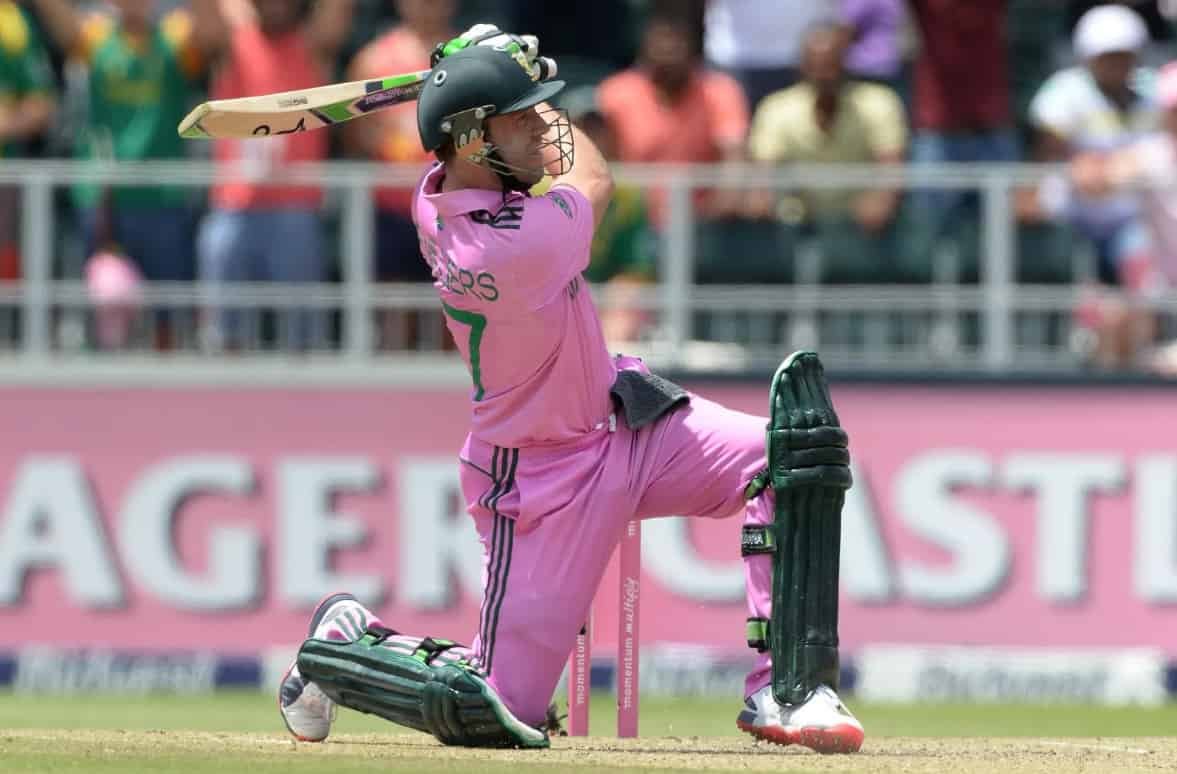
Fastest Centuries in ODI Cricket History
The Seven Batsmen Who Broke the Clock
| Player | Balls | Runs | Sixes | Fours | Opposition | Venue | Year |
|---|---|---|---|---|---|---|---|
| AB de Villiers | 31 | 149 | 16 | 9 | West Indies | Johannesburg | 2015 |
| Corey Anderson | 36 | 131* | 14 | 6 | West Indies | Queenstown | 2014 |
| Shahid Afridi | 37 | 102 | 11 | 6 | Sri Lanka | Nairobi | 1996 |
| Glenn Maxwell | 40 | 106 | 8 | 9 | Netherlands | Delhi | 2023 |
| Asif Khan | 41 | 101* | 11 | 4 | Nepal | Kirtipur | 2023 |
| Mark Boucher | 44 | 147* | 10 | 8 | Zimbabwe | Potchefstroom | 2006 |
| Brian Lara | 45 | 117 | 4 | 18 | Bangladesh | Dhaka | 1999 |
AB de Villiers — The 31-Ball Masterpiece Nobody’s Touched
- When South Africa faced West Indies in Johannesburg on January 18, 2015, AB de Villiers walked in and did something that still hasn’t been matched. He reached his century in 31 balls and kept going until he’d scored 149. Sixteen sixes. Nine fours. A strike rate above 300.
- Thirty-one balls is roughly five overs. Think about that—reaching a hundred before most batsmen have settled in. The West Indies changed bowlers, moved fielders, tried everything. Nothing worked. De Villiers was seeing the ball like a football, and the boundaries at Johannesburg weren’t big enough.
- What makes this the fastest century in ODI history isn’t just the speed—it’s the sustained destruction. He didn’t slow down after reaching the milestone. This innings set a benchmark that’s stood for over a decade because breaking it requires the kind of perfection where you can’t afford a single defensive stroke.
Corey Anderson’s New Year’s Day Statement
- New Zealand’s Corey Anderson held the record before de Villiers took it. On January 1, 2014, in Queenstown, he smashed the West Indies attack for 131 off 36 balls. Fourteen sixes meant the ball was clearing the boundary almost every alternate delivery.
- This was the fastest ODI century at the time, and it came with that particular kind of brutality where bowlers start doubting their line, their length, and eventually themselves. Anderson’s strike rate was outrageous, and West Indies had no answers. The Queenstown crowd got the best New Year’s present they could’ve asked for.
- Anderson’s career didn’t quite reach the heights this innings promised, but that 36-ball hundred remains a reminder of what he was capable of on his day.
Shahid Afridi — The Original Boom Boom
- Before anyone else thought it was possible, Shahid Afridi did it. On October 4, 1996, in his second ODI match, the young Pakistani walked out in Nairobi and scored a hundred off 37 balls against Sri Lanka. Eleven sixes. Six fours. He was 16 years old.
- This was the first time anyone had reached a century in fewer than 40 balls in ODI cricket. Afridi wasn’t easing himself into international cricket—he was announcing himself. The Sri Lankan bowlers, experienced and skilled, were taken apart by a teenager who didn’t seem to understand the concept of playing himself in.
- That innings became his trademark. Afridi played for Pakistan for nearly two decades, and while he had many memorable moments, nothing quite matched the audacity of his second match. It’s why “Boom Boom” became his nickname, and why people still talk about Nairobi when his name comes up.
Glenn Maxwell’s 2023 World Cup Explosion
- Australia’s Glenn Maxwell scored the fastest century in ODI cricket’s most recent list when he destroyed the Netherlands in Delhi during the 2023 World Cup. Forty balls. 106 runs. Eight sixes and nine fours.
- Maxwell’s known for this kind of batting—when he’s on, there’s no containing him. Against the Netherlands, he was on from the first ball. Seventeen boundaries in 40 deliveries means that nearly every other ball was going to or over the rope. The Dutch bowlers tried different angles, different lengths. Maxwell just kept swinging.
- This hundred came during a World Cup, which adds extra weight. The pressure’s higher, the scrutiny’s greater, and Maxwell still managed to score at a pace that most batsmen can’t even reach in the nets.
Asif Khan — The UAE’s Unlikely Hero
- Asif Khan isn’t from one of cricket’s traditional powerhouses. The UAE isn’t known for producing explosive batsmen. But on March 16, 2023, in Kirtipur, Khan scored a century off 41 balls against Nepal. Eleven sixes. Four fours. 101 runs.
- What’s remarkable is that Khan joined a list dominated by players from South Africa, Australia, New Zealand, and the West Indies. The UAE doesn’t have the infrastructure or history of these nations, yet Khan produced an innings that belongs in the same conversation.
- Eleven sixes in 41 balls shows serious power. The Nepali bowlers had no answers, and Khan’s innings put UAE cricket in the spotlight. It proved that fast hundreds can come from anywhere.
Mark Boucher — The Wicketkeeper Who Could Hit
- South Africa’s Mark Boucher was primarily a wicketkeeper who batted lower down the order. But on September 20, 2006, against Zimbabwe in Potchefstroom, he came in and scored 147 off 68 balls. His century came off just 44 deliveries.
- Boucher’s innings is unique because it came from a lower-order position. Wicketkeepers aren’t usually known for this kind of hitting. But Boucher got going and didn’t stop—ten sixes and eight fours, and he kept accelerating even after reaching his hundred.
- Zimbabwe couldn’t contain him. South Africa posted a massive total. Boucher’s innings showed that explosive batting isn’t limited to opening batsmen or top-order stars.
Brian Lara — The Master’s Different Approach
- Brian Lara’s 45-ball century against Bangladesh in Dhaka on October 9, 1999, stands out for one reason: he hit only four sixes. Most fast centuries rely heavily on clearing the boundary. Lara hit eighteen fours instead.
- This is a different kind of fast scoring. Lara used timing and placement to find gaps, to pierce the field, to hit boundaries along the ground. Eighteen fours in 45 balls means finding the boundary almost every other delivery without needing to clear it. It requires a different skill set—reading the field, understanding angles, executing precise shots under pressure.
- Lara finished with 117, and the Bangladeshi attack had no response. This innings showcased his class—when he wanted to score quickly, he could match anyone’s pace, but he’d do it with more elegance and variety.
Why Some Records Happen Against Certain Teams
You’ll notice that West Indies, Netherlands, Bangladesh, Nepal, and Zimbabwe appear as opposition teams in this list. That’s not coincidental. These innings often happen when there’s a gap in quality or when bowlers are under-resourced to handle sustained hitting.
However, that doesn’t diminish the achievement. You still have to execute. Maxwell still had to hit those shots. De Villiers still had to maintain that strike rate. The bowlers are international cricketers, and they’re trying their hardest. The batsman just happens to be unstoppable that day.
Expert Insight: What Makes These Innings Possible
- Fast centuries require three elements: pitch conditions that favor batting, a batsman in exceptional form, and the mental freedom to attack without fear. Most batsmen get tentative when they’re on 80 or 90—they want to reach the milestone. These players didn’t slow down. They kept swinging.
- The psychological aspect matters too. Once a bowler’s been hit for a few sixes, his confidence drops. He starts missing his lengths. The batsman gains confidence with every boundary. It becomes a cycle that’s hard to break.
How the Fastest Century in ODI Compares to T20 Cricket
- The fastest hundred in T20 international cricket is actually slower than several ODI records. Chris Gayle’s 50-ball T20I century is quicker than most, but it doesn’t match de Villiers’ 31 balls in ODIs. This seems counterintuitive since T20 cricket is shorter and more aggressive.
- The reason is opportunity. In ODIs, if a batsman gets set and overs are remaining, he can keep accelerating. In T20s, you might run out of balls. The innings structure is different. ODI cricket sometimes allows more freedom for sustained hitting once the platform’s set.
Top Records by Indian Batsmen
- While no Indian player appears in the top seven fastest centuries in ODI cricket history, Rohit Sharma holds the fastest ODI century for India in men’s cricket. His quickest hundred came off 35 balls during a practice match, though his fastest in official ODIs is significantly slower.
- Indian batsmen have scored plenty of ODI centuries, but they’ve tended toward accumulation rather than explosion. Virender Sehwag and Rohit Sharma have come closest to joining this elite list, but India’s fastest remains outside the top ten.
Frequently Asked Questions
- Who scored the fastest century in ODI cricket?
AB de Villiers holds the record with a 31-ball century against the West Indies in Johannesburg in 2015.
- What’s the difference between the fastest ODI and T20 centuries?
The fastest ODI century (31 balls) is actually quicker than most T20 hundreds because ODI innings allow more balls to be faced if the batsman’s set.
- Has any batsman scored multiple centuries in under 40 balls?
No. Each of these records was a one-time achievement by the respective batsmen.
- Why do many fast centuries happen against certain teams?
Bowling attacks with less depth or experience can struggle to contain explosive batsmen, though execution still requires exceptional skill.
- Can de Villiers’ 31-ball record be broken?
It’s possible but extremely difficult. It would require a batsman to score even faster without getting out, which means almost no dot balls and constant boundaries.
The Enduring Appeal of Fast Scoring
These innings stick in memory because they represent cricket at its most extreme.
They’re not just about winning—they’re about domination.
When a batsman’s scoring a century in 31 balls, the match becomes secondary. Everyone’s watching to see how far it can go.
The fastest centuries in ODI cricket history remind us that records exist to be broken, but some stand longer than others.
De Villiers’ 31-ball hundred has lasted over a decade. Afridi’s 37-ball record stood for nearly two decades.
These aren’t just numbers—they’re moments when cricket stopped being a contest and became a spectacle.
And that’s why people still talk about them years later.
Also Check:
- Fastest Century in T20 World Cup History
- Most Handsome Cricketers In The World
- Fastest Centuries in T20Is Cricket History
- Fastest Stumping in Cricket History with Timing
About the Author
