Left-arm spinners have shaped the outcomes of Test matches, ODI campaigns, and T20 tournaments across every era of international cricket.
Their ability to generate turn from the rough, create drift in the air, and vary pace and flight makes them a fundamentally different proposition from right-arm spin — and the best practitioners have exploited those differences to devastating effect at every level of the game.
The evolution of left-arm spin has produced two distinct disciplines — orthodox finger spin and wrist spin — with elite exponents emerging across both.
Each demands different technical skills, different match-day applications, and different strategic roles within a bowling attack.
Ranking the best left-arm spinner in cricket history requires evaluating wicket volumes alongside format versatility, conditions adaptability, and the ability to perform when match results depend on individual bowling performances under sustained pressure.
Best Left-Arm Spinner In Cricket History
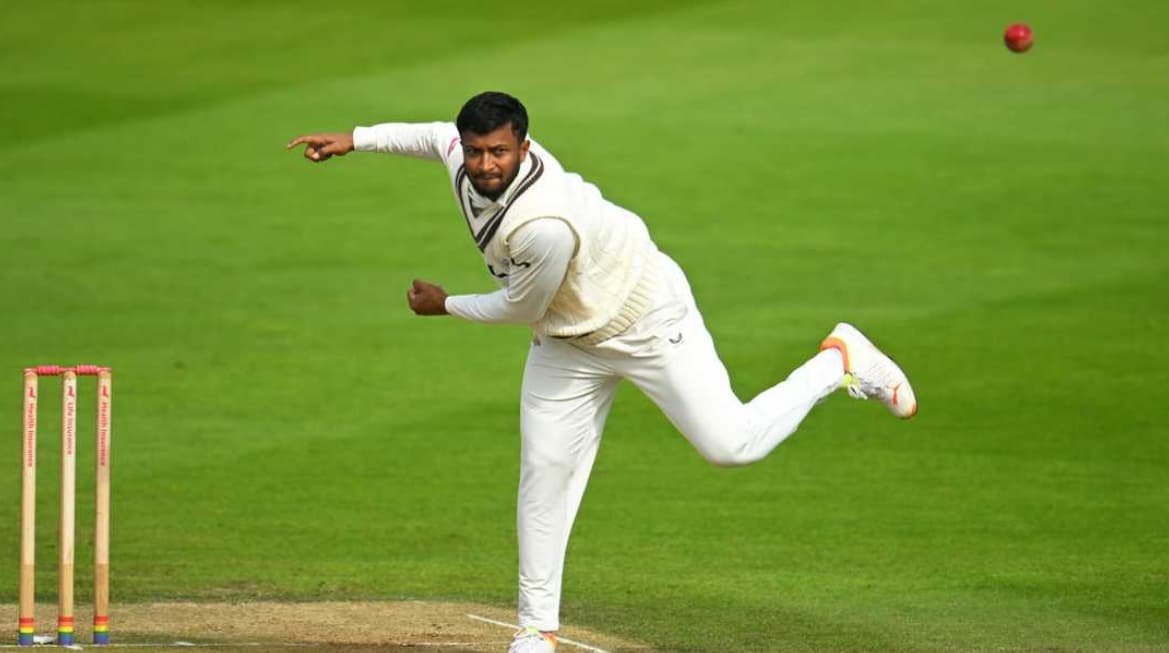
Best Left-Arm Spinner In Cricket History
| Rank | Player | Country | Matches | Wickets | Primary Role |
|---|---|---|---|---|---|
| 1 | Shakib Al Hasan | Bangladesh | 447 | 712 | All-rounder |
| 2 | Daniel Vettori | New Zealand | 442 | 705 | Orthodox Spinner |
| 3 | Ravindra Jadeja | India | 355 | 604 | All-rounder |
| 4 | Rangana Herath | Sri Lanka | 181 | 525 | Test Specialist |
| 5 | Sanath Jayasuriya | Sri Lanka | 586 | 440 | Batting All-rounder |
| 6 | Derek Underwood | England | 112 | 329 | Classical Spinner |
| 7 | Mitchell Santner | New Zealand | 254 | 314 | White-ball All-rounder |
| 8 | Kuldeep Yadav | India | 163 | 302 | Wrist Spinner |
| 9 | Keshav Maharaj | South Africa | 142 | 292 | Test Spinner |
| 10 | Ravi Shastri | India | 230 | 280 | Containment Bowler |
Top 10 Best Left-Arm Spinners In Cricket History
Shakib Al Hasan — Complete All-Format Dominance
- Shakib Al Hasan stands at the summit of the top 10 best left arm spinner in cricket history with 712 international wickets from 447 matches — a volume that no other left-arm spinner across all formats has matched. His wicket-taking ability is built on subtle variations in flight, deceptive arm speed, and a consistency of line that forces batters to play at deliveries they would prefer to leave. Unlike most specialist spinners who rely on conditions to generate wicket opportunities, Shakib creates them through skill on surfaces that offer no assistance.
- His all-round contribution elevates him beyond the purely bowling category that this ranking addresses. He has scored thousands of international runs while simultaneously taking wickets at the top of every bowling attack he has been part of — a dual contribution that has made him Bangladesh’s most influential cricketer in every format across an international career spanning nearly two decades.
- His adaptability to different conditions, different oppositions, and different match situations across Test cricket, ODI campaigns, and T20 tournaments simultaneously is the quality that separates him from every other candidate for the title of best left-arm spinner in cricket history. He has performed in Asia, in England, in the Caribbean, and in Australia — dismissing the best batters in world cricket across all pitch types with the same disciplined, intelligent bowling approach.
Daniel Vettori — Master of Control and Consistency
- Daniel Vettori’s 705 wickets from 442 matches across all formats represent the second-highest wicket tally in this list and were accumulated through a bowling philosophy built almost entirely on accuracy, tactical intelligence, and the ability to outthink batters across long spells in demanding match situations. He was not a spinner who relied on sharp turn or dramatic drift — he was a spinner who made batters play, then punished the mistakes that his unrelenting consistency generated.
- His best left arm orthodox spinner credentials are beyond dispute. His finger-spin trajectory, flight variations, and ability to hold his line on any surface made him the most reliable bowling asset New Zealand possessed across an entire decade of international cricket. Captains used him in every condition because they trusted the outcome — not necessarily the wicket, but the pressure and the control that his presence created throughout his bowling spells.
- His tactical intelligence extended beyond individual deliveries to reading batting partnerships and identifying the precise moment to change pace, flight, or angle to generate the error he had been manufacturing across multiple overs. He was a chess player with a cricket ball — the most intellectually complete left-arm spinner in the game’s history, even if his raw wicket impact was slightly inferior to Shakib’s volume at the very top of the list.
Ravindra Jadeja — Modern Match-Winner
- Ravindra Jadeja’s 604 wickets from 355 matches confirm him as the best left arm spinner in cricket history india has produced in the modern era — and one of the few spinners in world cricket whose bowling, batting, and fielding collectively make him the most valuable all-round cricketer in any format he plays. His bowling is built on a quick arm action that generates pace through the air faster than almost any other left-arm spinner, making him significantly harder to use feet against than classical flight-based spinners.
- His current left arm spinner India status is unchallenged — he has been the automatic selection in the Indian Test XI for a decade, and his match-winning contributions have come in the most important fixtures India has played across that period. His ability to take wickets on the turning Chepauk surface, the bouncy Perth pitch, and the swing-friendly Lord’s conditions simultaneously places him in an elite group of spin bowlers who transcend conditions-dependent categorization.
- The fielding dimension of his contribution — arguably the best fielder in world cricket across the last ten years — means that even when he is not taking wickets, he is affecting match outcomes through run saves, catches, and direct-hit run-outs that no statistic in the wickets column can fully represent. His batting at six or seven, capable of match-winning centuries, further expands his match impact beyond what his 604 wickets alone convey.
Rangana Herath — Sri Lanka’s Silent Assassin
- Rangana Herath’s 525 wickets from only 181 matches represent the most wicket-efficient record in this entire top ten — a per-match average that reflects the concentration and quality of his contribution rather than the volume of matches he was given to accumulate it in. He waited years behind Muttiah Muralitharan for his opportunity in the Sri Lanka Test team, and when it arrived following Muralitharan’s retirement, he produced one of the most seamless successions in the history of any bowling attack.
- His bowling was built on flight and drift — he used the air more than most left-arm spinners of his generation, inviting batters to drive and then turning the ball away from the bat through subtle variations in wrist position and release angle. He did not rely on sharp turn; he relied on the batter’s misreading of trajectory and the consequent edge or missed straight one that his deceptive flight generated.
- His record in post-Muralitharan Test cricket — inheriting the primary spinner’s role in an attack that opposing batters had spent a decade preparing specifically for Muralitharan’s unique action — and immediately dominating with a completely different bowling style is one of the most impressive individual transitions in Test cricket history. His 525 wickets confirm him as the best left arm spinner in cricket history from Sri Lanka with an authority that the statistics fully support.
Sanath Jayasuriya — Dual-Threat Game Changer
- Sanath Jayasuriya’s 440 wickets from 586 matches across all formats arrived as the secondary contribution of a player whose primary reputation was built entirely on his explosive batting at the top of the Sri Lanka order — which makes the volume of his bowling impact all the more remarkable. He operated as a left arm leg spinner list entry who defied the usual categorization, bowling at a pace between orthodox and wrist-spin that batters found difficult to read consistently.
- His ODI effectiveness as a bowler was particularly significant during the mid-1990s and early 2000s period when Sri Lanka were operating as one of the most innovative cricket teams in the world. His ability to bowl four or five overs in the powerplay, generating early wickets against opposition openers before they had established their innings, provided Sri Lanka with a bowling option that required entirely different preparation from batters accustomed to facing conventional pace or classical spin.
- His bat-ball balance — a genuine all-time great batter who also took 440 international wickets — places him in a category of cricket all-round contribution that very few players in the game’s history have occupied. The wickets came against top-order batters in pressure situations, confirming that his bowling was not simply a useful add-on to his batting but a genuine match-influencing weapon in its own right.
Derek Underwood — England’s Deadly Accuracy
- Derek Underwood’s 329 wickets from only 112 matches represent a wicket-taking ratio that confirms his status as the most impactful English spinner the country has produced across any era of international cricket. He earned the nickname “Deadly” for a reason — on damp, seaming English pitches, he was virtually unplayable, combining his left-arm finger spin with a bowling pace that sat between spin and medium pace and exploited wet conditions in ways that conventional spinners could not replicate.
- His era context is essential to understanding his achievement fully. He played through the 1960s and 1970s in international cricket that was dominated by pace bowling — an environment where specialist spinners were frequently marginal selections rather than first-choice bowlers. Within that context, 329 wickets at the pace he generated them represents an individual bowling achievement that modern statistics do not fully capture.
- His best left arm orthodox spinner technique relied on subtle variations — a pushed-through quicker ball, a slightly slower floated delivery, a leg-cutter that behaved unexpectedly on responsive surfaces — rather than the significant turn and drift that classical slow left-arm bowlers generate. This technical distinctiveness made him a category unto himself within the spinner classification, and it made him England’s most reliable match-winning bowling option for an extended period that no subsequent English spinner has fully replicated.
Mitchell Santner — White-Ball Specialist
- Mitchell Santner’s 314 wickets from 254 matches reflect a bowling contribution that has been built primarily in white-ball cricket — ODIs and T20Is — where his economy, middle-over wicket-taking, and ability to function effectively on flat surfaces against power-hitting lineups have made him one of the most valued specialist spinners in limited-overs cricket globally. His wicket total across all formats continues to grow with each passing series, and his trajectory suggests he will eventually challenge the higher positions on this list.
- His specific value in modern white-ball cricket is the ability to bowl his four overs across different phases — sometimes in the powerplay, sometimes in the death — and produce consistent results regardless of the match situation or the batting lineup he faces. Most spinners in T20 cricket are matchup bowlers who are effective against certain types of batters and exposed by others. Santner is effective more broadly, which explains his continued selection across conditions that don’t traditionally favor spin.
- His batting contribution as a genuine all-rounder provides New Zealand with additional flexibility in their team composition — they can play Santner without sacrificing a bowling slot because his bat is valuable enough to justify the selection even in matches where his spin may be less effective than alternative bowling options.
Kuldeep Yadav — Rare Left-Arm Wrist Magic
- Kuldeep Yadav occupies a left arm leg spinner name position in this list that is genuinely unique — he is the only specialist left-arm wrist spinner to have succeeded consistently at international level in the modern era, a distinction that reflects how rare and technically demanding the skill set is. His googly, his top-spinner, and his conventional left-arm wrist-spin create three entirely different ball trajectories from the same basic bowling action — a variety that batters find exceptionally difficult to read even with detailed advance preparation.
- His 302 wickets from 163 matches have been accumulated primarily in white-ball cricket where his strike-bowling role — attacking, wicket-hunting, happy to concede runs for the chance of taking wickets in regular succession — has made him India’s most effective bowling weapon in one-day and T20 internationals. His bowling record at the ICC level, particularly in World Cup cricket, reflects performances that have repeatedly changed match momentum through his ability to take multiple wickets in short spells.
- His revival in recent years following a period where batters appeared to have solved his bowling has demonstrated the adaptability of elite bowling skill — he has adjusted variations, refined his googly, and found new ways to challenge batters who believe they understand his action. This ability to evolve under examination is the mark of a genuinely world-class bowling craftsman.
Keshav Maharaj — Overseas Test Warrior
- Keshav Maharaj’s 292 wickets from 142 matches carry a context that makes them arguably more impressive than the raw numbers suggest — South Africa’s pitch conditions, historically among the most pace-friendly in world cricket, are not environments designed to produce match-winning results for finger-spinners. Yet Maharaj has consistently taken wickets not just at home but in overseas Test cricket where the conditions offer even less assistance to slow left-arm bowling.
- His success in pace-friendly conditions is built on a bowling intelligence that identifies specific batters’ weaknesses against turn and flight even when the pitch is not actively generating significant assistance. He bowls to plans, sets up dismissals across multiple overs, and finishes with wickets that reflect patient, systematic bowling rather than conditions-dependent fortune.
- South Africa’s reliance on him as their primary spinning option in Test cricket across multiple cycles of selection confirms the respect in which he is held within their coaching and selection structure. Being the Test team’s main spinner for a nation that produces fast bowlers naturally and selects pace-dominant attacks is a genuinely difficult role — and his consistency in fulfilling it, including his wicket contributions in England, India, and Australia, confirms his standing as one of the most complete Test match left-arm spinners currently active in world cricket.
Ravi Shastri — Reliable Pressure Bowler
- Ravi Shastri’s 280 wickets from 230 matches across his playing career were accumulated through a bowling philosophy built on containment, pressure accumulation, and the consistent line-and-length discipline that forces batters into error without offering them the width or length to score freely. He was never a wicket-hunting bowler in the aggressive sense — he was a pressure builder whose bowling created the conditions that allowed India’s more attacking bowlers to take wickets at the other end.
- His ODI discipline across the 1980s was particularly valuable in an era when India were developing their limited-overs identity and required reliable bowling options who could function across multiple phases without conceding the kind of boundary-heavy overs that derailed run chases. Shastri provided that reliability with a consistency that made him one of his captain’s most trusted bowling options throughout the middle portion of his career.
- His best left-arm spinner in India ranking during his playing era is complicated by the simultaneous presence of Bishan Bedi’s legacy and the emergence of subsequent Indian spinners — but as a bowling-batting all-rounder who contributed 280 wickets in the service of a developing Indian team across multiple formats, his place in this top ten is a reflection of consistent professional contribution across an extended international career.
Conclusion
The full analysis of the best left-arm spinner in cricket history confirms that the discipline has produced some of cricket’s most complete bowling performers — players whose contributions extended across formats, conditions, and career spans that defined entire eras of international cricket.
- Consistency Across Eras The players on this list have delivered wickets in Test matches, ODIs, and T20Is across different decades and cricket environments. Their records reflect sustained excellence rather than short-term peak performance — the true measure of greatness in any bowling discipline.
- Format Versatility The best left arm spinner in the world at any given moment must function across all three formats. Shakib, Jadeja, and Vettori all achieved this simultaneously — a standard that separates the top three from everyone below them on this list.
- Match-Winning Impact Wicket volume alone is insufficient as a ranking criterion. Every player in this top ten has produced match-defining bowling spells in critical international fixtures — the performances that confirm individual quality when collective team results are insufficient to protect a legacy.
- Why One Name Stands Above All Shakib Al Hasan is the definitive best left-arm spinner in cricket history. His 712 wickets across all formats, his all-round batting contribution, his performances under pressure for a nation without the depth of support that most elite bowlers receive, and his sustained excellence across nearly two decades of international cricket at the highest level make his position at the summit of this ranking beyond reasonable challenge.
Also Check:
About the Author
