Picture this: it’s 2010, and India’s batting line-up is already stacked with talent.
Yet there’s one achievement nobody has managed to score a century across all three international formats.
That’s when Suresh Raina stepped up in a T20 World Cup match against South Africa and changed Indian cricket history forever.
Raina didn’t just become the first Indian to score a hundred in Tests, ODIs, and T20Is.
He did it in the same year he made his Test debut, which tells you everything about his fearless approach.
While others were still figuring out T20 cricket, Raina had already cracked the code.
Who is the First Indian to Score 100 in All International Cricket Formats
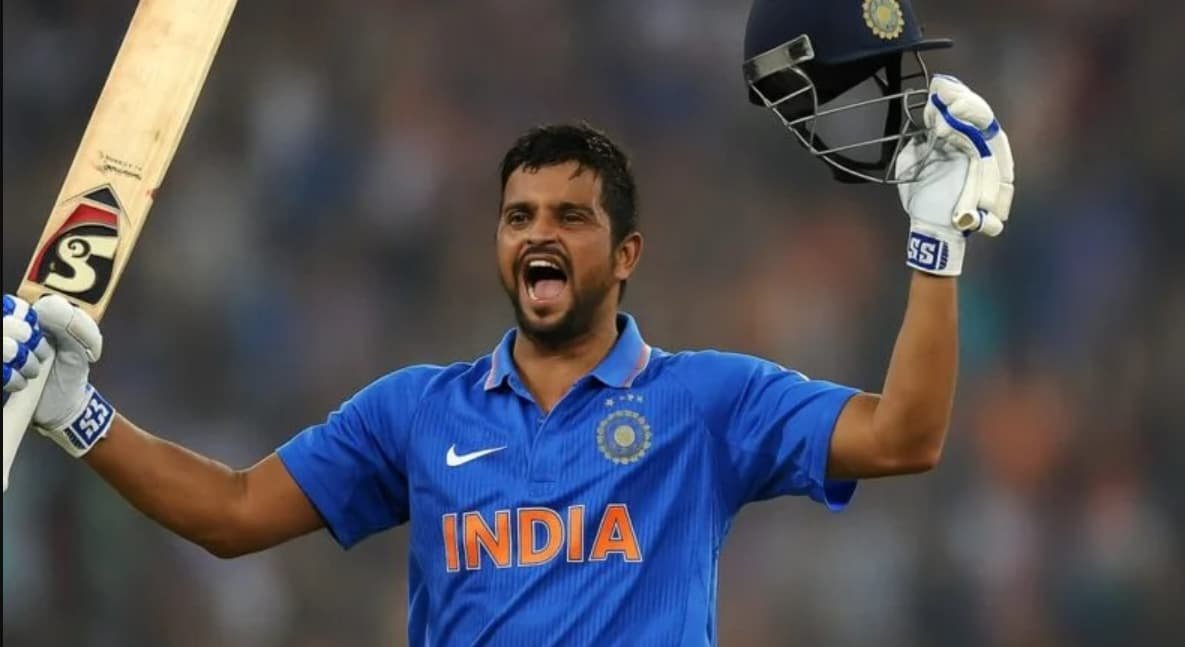
The Historic Achievement
Suresh Raina completed this rare triple in 2010, becoming India’s first batter to score centuries in all three international formats.
He reached the milestone when he smashed 101 runs off just 60 balls against South Africa in the ICC World Twenty20.
What makes this even more impressive is that he’d scored his Test hundred on debut just months earlier.
The journey wasn’t overnight.
Raina had been around since 2005, but his first international century came only in 2008—a blazing 101 off 68 balls against Hong Kong in the Asia Cup.
That innings showed his ability to switch gears, something that would define his entire career.
Breaking Down Raina’s Century Timeline
Raina’s path to this record shows the different challenges each format throws at you:
- ODI Century (First): 101 vs Hong Kong, Asia Cup 2008 – A controlled yet aggressive knock that announced his arrival
- T20I Century: 101* vs South Africa, T20 World Cup 2010 – India’s first-ever T20I hundred, struck at a rate of 168
- Test Century: 110 vs Sri Lanka on debut, 2010 – The 12th Indian to score a ton on Test debut
What’s remarkable is how he adapted his game.
The ODI hundred came from timing and placement. The T20I knock was pure aggression from ball one.
The Test century showed patience and technique against quality spin bowling.
Format-Wise Challenges Explained
Scoring a century in each format isn’t just about talent—it’s about completely rewiring your approach. Here’s why it’s so rare:
- Test Cricket: You’re facing the red ball for hours. The bowlers are fresh every session. One mistake against reverse swing or a turning ball, and you’re walking back. It demands concentration that most T20 specialists simply don’t have.
- ODI Cricket: This is the balancing act. You can’t throw your wicket away early, but you also can’t let the run rate slip. Raina’s ODI hundreds usually came when India needed quick runs in the middle overs—a high-pressure situation.
- T20I Cricket: Arguably the hardest format to score a hundred in. You’ve got just 120 balls for the entire team. Going big means taking risks from the first over. As of 2025, only 12 Indian batters have T20I centuries—that number alone shows how difficult it is.
| Format | Indian Batters with Centuries | Primary Challenge |
|---|---|---|
| Test Cricket | 92 batters | Patience and technique over long periods |
| ODI Cricket | 43 batters | Balancing aggression with consistency |
| T20I Cricket | 12 batters | Extreme aggression with calculated risks |
Raina opened the door, and four others have walked through since:
- Rohit Sharma took the art of multi-format batting to another level. His numbers are staggering—12 Test hundreds, 32 ODI tons, and 5 T20I centuries. He’s proven that opening in all formats can work if you’ve got the game awareness.
- KL Rahul represents the modern Indian versatile batter. With 10 Test centuries, 7 ODI hundreds, and 2 T20I tons, he’s shown he can anchor an innings or blow it open depending on what the situation demands.
- Virat Kohli is perhaps the most interesting case. Despite having 30 Test hundreds and 51 ODI centuries by 2022, he hadn’t scored a T20I hundred. When he finally did—122 not out against Afghanistan—it completed one of cricket’s most decorated careers.
- Shubman Gill is the latest addition, achieving the feat in 2023. At such a young age, with 9 Test centuries, 8 ODI hundreds, and 1 T20I ton, he represents India’s next generation of complete batters.
Expert Insight: Why This Record Matters
From a tactical standpoint, scoring centuries across formats reveals a player’s mental flexibility.
It’s not just about having different shots—it’s about reading match situations correctly.
Take Raina’s T20I hundred against South Africa. India was chasing, which meant he couldn’t just slog.
He still had to pick his bowlers, find gaps, and maintain strike rotation.
That’s Test-match thinking applied at T20 speed.
Very few players can process information that quickly while staying calm under pressure.
The psychological aspect is equally important.
When you walk out to bat in a T20, knowing you’ve already scored Test hundreds, there’s a different confidence.
You’re not just a format specialist—you’re a proper batter who happens to be playing a shortened game.
The Global Picture
Raina wasn’t the first cricketer worldwide to achieve this; that honour belongs to Chris Gayle, followed by Brendon McCullum and Mahela Jayawardene.
But being India’s first carries extra weight, given the country’s massive talent pool and competition for spots.
As of 2025, only 27 men and five women have scored centuries in all three formats globally.
Compare that to the thousands who’ve played international cricket, and you realize how exclusive this club really is.
India having five such players—more than any other nation—speaks to the depth of batting talent.
But it also reflects how Indian cricket encourages players to be multi-format specialists rather than pigeonholing them early.
Why More Players Don’t Achieve This
The modern game has made this feat harder, not easier. Here’s why:
- Teams now prefer format specialists who excel in one area
- The schedule is so packed that playing all three formats consistently is nearly impossible
- T20 leagues have created a generation of players who rarely face red-ball cricket
- Different fitness demands mean maintaining form across formats is exhausting
Look at someone like Jasprit Bumrah in bowling—he’s world-class in all formats but manages his workload carefully.
Batters face similar challenges.
You can’t play fearless T20 cricket one week and then expect to occupy the crease for six hours in a Test match the next week without mental adjustment.
Frequently Asked Questions
- Who scored the first T20I century for India?
Suresh Raina scored India’s first T20I hundred—101 not out against South Africa in the 2010 T20 World Cup.
- Has any Indian captain scored centuries in all three formats?
Yes, Rohit Sharma has scored centuries in all formats while also leading India in each format at different times.
- Who is the youngest Indian to score hundreds in all formats?
Shubman Gill achieved this milestone at approximately 24 years old, making him the youngest Indian to complete the feat.
- How many players worldwide have scored centuries in all formats?
As of 2025, 27 male cricketers and 5 female cricketers have achieved this globally.
- Did Sachin Tendulkar score a century in all formats?
No. Despite his legendary status, Tendulkar never scored a T20I century, though he scored hundreds in Tests and ODIs.
Final Thoughts
Suresh Raina’s achievement in 2010 set a benchmark that defined what it means to be a complete Indian batter.
He wasn’t the most elegant player in that line-up, and he wasn’t the biggest name.
But he understood something crucial—each format is a different game requiring different gears.
The fact that India took five more years to produce another player with centuries in all formats shows how special Raina’s accomplishment was.
He did it when T20 cricket was still evolving, when strategies weren’t as refined, and when playing all three formats regularly was more common.
Today’s generation has Rohit, Kohli, Rahul, and Gill as proof that multi-format excellence is possible.
But it all started with Raina walking out in Gros Islet and taking apart the South African attack.
That innings didn’t just win India a match—it created a template for what Indian batters could achieve if they trusted their skills across all formats.
Also Check:
- Who Was the First Player to hit Six Sixes in the 2007 World Cup
- Who Was the First Indian Cricketer to Hit Six Sixes in an Over
- Who Was The First Player To Be Given Out By The Third Umpire
- Who Is The King of IPL
About the Author
