Delhi’s cricket fortress has seen 98 IPL battles.
Each one added data points to help us understand this ground better.
The Arun Jaitley Stadium pitch report matters because this venue behaves differently from most IPL grounds.
Some patterns are predictable. Others surprise you.
Arun Jaitley Stadium Pitch Report
This analysis uses real numbers from nearly a century of T20 matches.
No guesswork, just facts about how teams score here, which bowlers succeed, and what the toss winner should choose.
Understanding the Playing Surface
The pitch here has a natural pace. When curators prepare it fresh, batters get value for their shots.
Red soil forms the base, which gives the surface firmness. The ball does not stop on you like it might on slower, lower tracks elsewhere.
New ball bowlers find help early. The pitch has enough in it to reward good areas and disciplined lines. After 6-8 overs, batting becomes easier as the ball gets softer.
Wear and tear changes things. By the second innings, the surface shows signs of breakdown. Spinners get purchase, though not dramatically.
The Numbers Tell the Story
| Metric | Figure |
|---|---|
| Matches Played | 98 |
| First Innings Wins | 47 |
| Second Innings Wins | 50 |
| Tied/No Result | 1 |
| First Innings Average | 169.94 |
| Second Innings Average | 149.84 |
| Run Rate Per Over | 8.61 |
| Pace Bowling Share | 65.61% |
| Spin Bowling Share | 34.20% |
Look at that gap between innings. Teams batting first average 170.
Teams are chasing an average of 150. That is a 20-run swing.
Chasing teams have won more games (50 vs 47), which seems to contradict the scoring data.
But many of those chases came when teams batted poorly first.
Pace bowlers own this ground. Nearly 66% of all wickets fall to fast bowling.
The pitch’s pace and bounce favor quicks who understand their craft.
The run rate of 8.61 sits in the normal range for T20 cricket. Not a minefield, not a highway.
Batting Versus Bowling Conditions
Why Batters Like It?
The ball reaches you at a good pace. No sticky pitch, no up-and-down bounce. Batters who play straight and trust their eyes score freely.
Timing matters more than power. Yes, boundaries are short, but good cricket shots get rewarded better than wild slogs.
Building an innings works here. You can rotate strike, find gaps, then explode later. The surface allows different batting approaches.
Where Bowlers Find Success?
The powerplay offers chances. Fresh ball, hard surface, some movement off the seam. Fast bowlers who pitch it up can find edges.
Variations beat batters later on. Change of pace, slower balls, knuckle balls. These work better than trying to bowl 145 kph every delivery.
Spinners need brain over rip. Flight, trajectory changes, and mixing speeds beat trying to turn it square. The pitch gives some help but demands smart bowling.
Death bowling requires precision. With short boundaries and flat conditions, only yorkers and wide lines save you. Miss by inches, lose by runs.
Compact Boundaries Change Everything
| Measurement | Distance |
|---|---|
| Square Boundary (shorter) | 60 meters |
| Straight Boundary (longer) | 74 meters |
| Overall Average | 65 meters |
Sixty meters square is tiny. Average club cricketers clear that. IPL batters murder anything short on the leg stump.
The straight hit at 74 meters gives bowlers some breathing room. But not much.
Modern bats and strong players make this reachable, too.
Compare this to bigger grounds like Bengaluru or Kolkata. Those square boundaries stretch to 70-75 meters.
This 10-15 meter difference changes field placements and bowling plans completely.
Record Scores and Performances
| Achievement | Details | Season |
|---|---|---|
| Biggest Team Score | RCB 231/4 | 2017 |
| Top Individual Knock | Virat Kohli 119 | 2016 |
| Highest Successful Chase | MI 208/5 | 2017 |
| Best Bowling Return | Amit Mishra 5/16 | 2015 |
RCB’s 231 came when AB de Villiers and Virat Kohli were both firing.
They targeted specific bowlers and exploited the short leg side boundary ruthlessly.
Kohli’s 119 showed the blueprint. He played percentage cricket, found boundaries regularly without taking huge risks.
Mumbai chasing 208 proved that big totals can fall.
But that chase needed three batters to play knocks above 40. Solo efforts do not work when chasing big here.
Mishra’s 5/16 is the outlier. Leg spin that gets you thinking can still win matches on any surface.
Recent Match Trends
| Game | Matchup | Result | First Innings | Second Innings | Winning Margin |
|---|---|---|---|---|---|
| 1 | DC vs MI | DC wins | 158/6 | 159/4 | 6 wickets |
| 2 | DC vs RR | RR wins | 181/7 | 185/5 | 5 wickets |
| 3 | DC vs KKR | DC wins | 172/5 | 166/8 | 6 runs |
| 4 | DC vs CSK | CSK wins | 167/8 | 171/3 | 7 wickets |
| 5 | DC vs PBKS | DC wins | 213/2 | 198/8 | 15 runs |
Three defended totals versus two successful chases in the last five games. That tilts toward batting first.
Score range runs from 158 to 213. Conditions vary based on pitch preparation, weather, and team strengths.
The recent first innings average is 178.4 runs. That beats the historical 169.94 mark.
Pitches might be getting flatter, or batters are getting better.
Teams posting 180-plus have defended successfully. Totals under 170 invite pressure.
Weather Impact on Match Day
| Element | Status |
|---|---|
| Temperature Range | 24-28°C |
| Wind Conditions | Light, 8-10 km/h |
| Rain Probability | Less than 5% |
| Cloud Coverage | Minimal to none |
| Humidity Levels | 40-50% |
| Dew Possibility | Low to moderate |
Delhi offers near-perfect cricket weather during IPL season. Temperatures stay comfortable, neither too hot nor too cool.
Wind hardly affects play. The gentle breeze does not move the ball in flight or disturb batters.
Rain rarely threatens matches here in April. The season is dry, stable, and reliable for scheduling.
Dew sometimes appears under lights. When it does, the ball gets slippery for bowlers. But it is not as severe as Kolkata or Mohali.
What the Toss Winner Should Do?
Historical data says chase. Fifty wins while chasing versus 47 batting first suggests teams prefer hunting targets.
But recent form says bat first. That 20-run average difference between innings cannot be ignored.
The truth sits in the middle. If your batting lineup is deep and strong, bat first and post 180. If your bowling attack is weak, chase and hope dew helps.
Pitch condition on the day matters most. Fresh pitch with grass? Bat first. Dry, used pitch? Maybe chase.
Tactical Insights for Success
Batting Strategy
Start carefully. The new ball does things here. Losing early wickets puts you behind immediately.
Accelerate through the middle overs. Overs 7-15 offer the best scoring window. The ball is older, bowlers are rotating, and fields are spread out.
Launch in the final five. This is where games get decided. Batters set for 30-40 deliveries can target 60-70 runs from the death overs.
Bowling Approach
Strike early or restrict. You need wickets in the powerplay or run rate control. Doing neither loses matches.
Smart spin bowling wins the middle overs. Bowlers who vary pace and use the crease create doubt. An orthodox finger spin gets hit unless bowled with perfect control.
Death overs need ice in the veins. Wide yorkers, slower balls into the pitch, nothing in the slot. Miss your length once, concede 15 in the over.
Field Placement
Protect the square boundary. That 60-meter dimension is your enemy. Always have a deep square leg and a deep point.
Save one fielder for straight boundaries. Mid-off and mid-on cannot both be up after the powerplay.
Change fields between deliveries if needed. Batters watch where fielders go. Use that against them.
Pitch Behavior Today
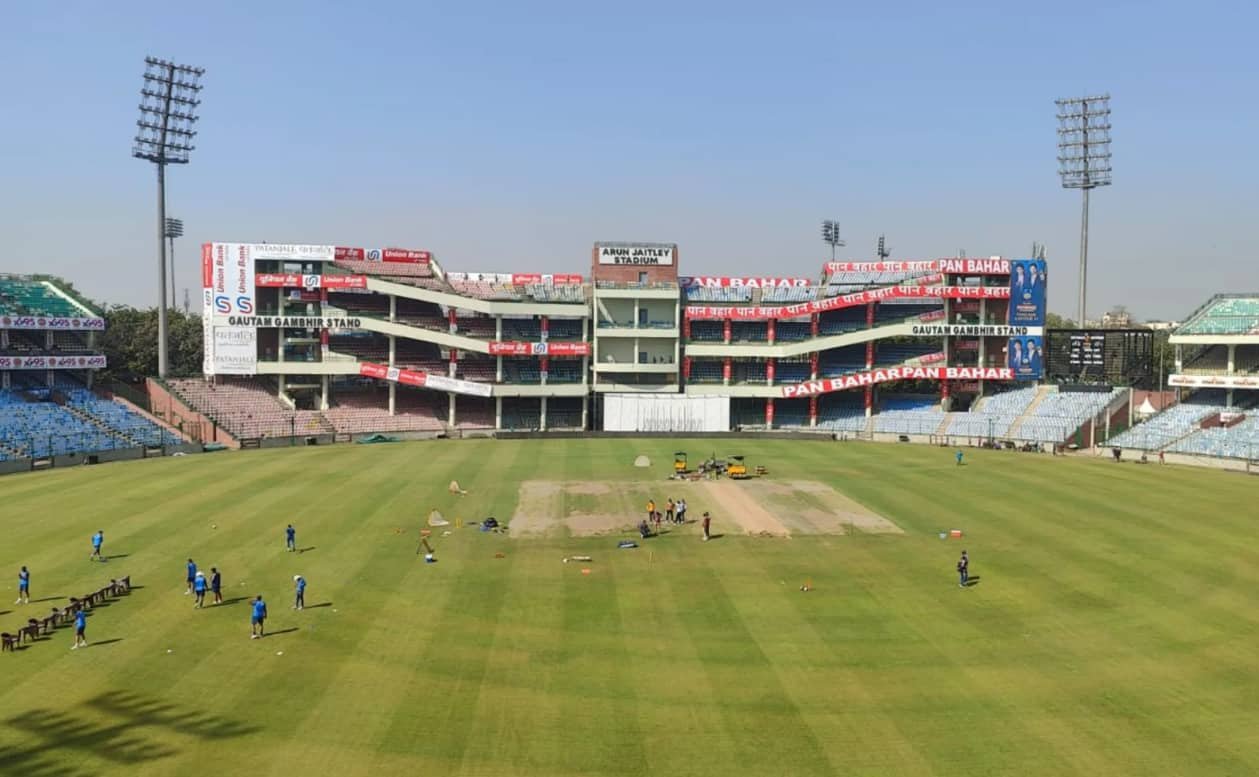
Current preparation shows typical Delhi characteristics. Dry surface, minimal grass, some visible cracks starting to form.
The cracks matter more by evening. As the pitch heats and cools, they open slightly. This helps spinners grip the ball.
Based on visual inspection, this pitch will play true initially, then slow down. First innings batters get better value. The second innings requires more work.
Expect 175-185 to be competitive. Anything above 190 pressures most chasing teams heavily.
Key Takeaways
Arun Jaitley Stadium rewards good cricket. Batters who play proper shots score. Bowlers who execute plans take wickets.
The numbers favor batting first in recent games. That 20-run scoring difference between innings tells you plenty.
Short boundaries demand precision bowling. Wide yorkers and slower balls save runs in death overs.
Pace bowlers get most wickets. But smart spinners who vary pace and trajectory still play crucial roles.
The weather stays friendly. Rain will not interrupt play. The dew might affect the second innings slightly.
FAQs
- Q1: Does Arun Jaitley Stadium favor batting or bowling?
The ground favors batting with a first innings average of 169.94 runs. The pitch has pace and bounce, which helps stroke play. Pace bowlers get some assistance with the new ball, taking 65.61% of wickets, but batters control most phases.
Q2: What are the boundary dimensions at Arun Jaitley Stadium?
Square boundaries measure 60 meters, straight boundaries are 74 meters, averaging 65 meters overall. These compact dimensions favor aggressive batting and make it harder for bowlers to defend in death overs.
- Q3: Should teams bat or chase at Arun Jaitley Stadium?
Recent data favors batting first. The first innings average is 169.94 compared to 149.84 when chasing. Although chasing teams have won 50 of 98 matches, the scoring gap suggests batting first with confidence is the better strategy.
- Q4: What is the highest team score at Arun Jaitley Stadium?
Royal Challengers Bangalore scored 231/4 in 2017, which remains the venue record. Mumbai Indians successfully chased 208/5 the same year, showing big totals can be hunted down with quality batting depth.
- Q5: How do spinners perform at this venue?
Spinners take 34.20% of wickets, which is respectable but not dominant. The pitch does not turn sharply, so spinners need variations in flight and pace rather than relying on spin alone. Leg spinners tend to be more effective than orthodox finger spinners.
- Q6: What weather conditions are typical during IPL matches here?
Delhi offers stable weather with temperatures between 24-28°C, minimal rain risk (under 5%), and light wind. Dew can appear under lights, but it is less severe than in other venues. Cloud cover is usually minimal during April matches.
Conclusion:
This Arun Jaitley Stadium pitch report shows a ground that balances entertainment with skill requirements.
Batters get runs if they apply themselves. Bowlers find success through planning and execution.
The 98-match sample size gives reliable data. Teams batting first average 170. Teams are chasing an average of 150. That gap matters.
Win the toss, assess the pitch on the day, then decide. Recent trends favor batting first, but chasing remains viable with strong bowling.
Expect competitive cricket. The surface produces results, not boring drawings. Games here reward the team that handles pressure better.
Also Check:
- Barsapara Stadium Pitch Report
- M. Chinnaswamy Stadium IPL Pitch Report
- Shere Bangla National Stadium Dhaka Pitch Report
- Mulpani Cricket Ground Pitch Report
- Wankhede Stadium Pitch Report
About the Author
