Wankhede Stadium sits right next to the Arabian Sea in Mumbai.
The sea breeze, the roaring crowd, and the flat pitch make it one of India’s most exciting cricket venues.
This is where MS Dhoni lifted the 2011 World Cup. This is where Sachin Tendulkar said goodbye to Test cricket.
Wankhede Stadium Pitch Report, Records, and Weather Report Today
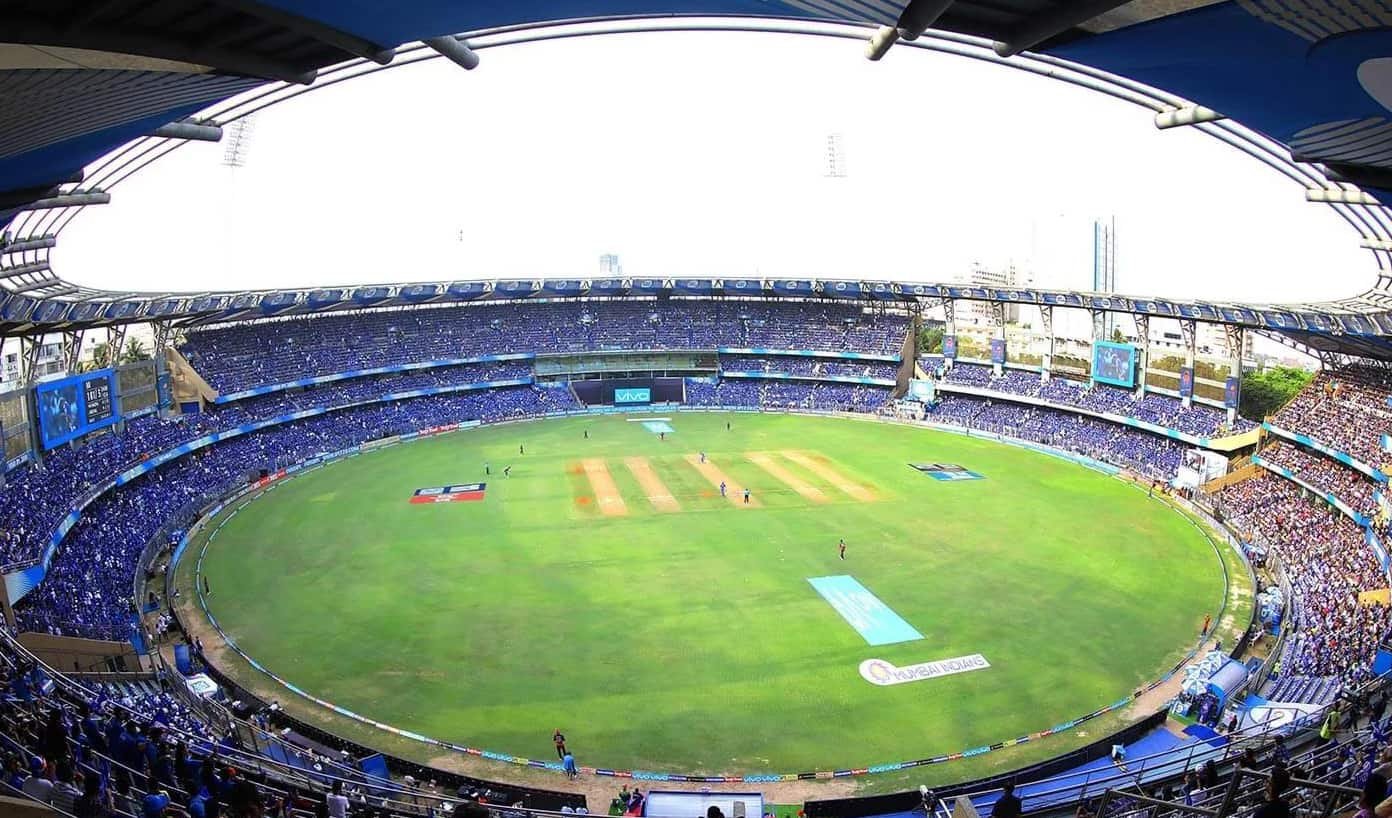
If you’re checking the Wankhede Stadium pitch report and records today, you want to know one thing: will batters dominate or can bowlers fight back? The answer depends on timing, weather, and how well teams use the conditions.
How does the Wankhede Pitch Actually Play?
The Wankhede Stadium pitch report shows a surface that rewards good batting. The bounce is true. The ball comes onto the bat cleanly. Batters can trust their shots here.
But this doesn’t mean bowlers have no chance. Fast bowlers get swing in the first 10 overs, especially under lights. The sea breeze helps with movement. If you pitch it up and bowl full, edges come into play.
Spinners have a tougher time. The pitch doesn’t grip as it does in Chennai or Pune. Wrist spinners who flight the ball can get some turn. But finger spinners need to be really accurate, or they’ll get hammered.
What Batters Love About This Ground?
The boundaries are short, particularly the square of the wicket. A mistimed pull shot still clears the rope. That’s gold for power hitters.
The outfield is quick. Good timing beats power here. Virat Kohli and Rohit Sharma have scored heavily at Wankhede because they place the ball well and run hard between wickets.
In T20 cricket, scores above 180 are normal. In ODIs, teams regularly post 300-plus totals. The pitch stays flat throughout the innings in white-ball games.
Where Bowlers Can Strike?
Early morning Tests give seamers some help. The ball swings more when there’s moisture in the air.
Zaheer Khan and Jasprit Bumrah have both used these conditions well.
Death overs become a test of skill. With short boundaries, yorkers need to be perfect. One inch off line and the ball disappears.
Bumrah’s ability to nail yorkers consistently makes him dangerous here, even when batters are set.
Spinners work better in partnerships. One spinner attacks while the other holds an end. Ravindra Jadeja’s accuracy has been valuable in this role.
Wankhede Stadium Pitch Report: Batting or Bowling Surface?

Let’s be direct. This is a batting pitch. The numbers don’t lie.
Why batters thrive:
- The ball comes onto the bat at a good pace
- Boundaries are within reach for most players
- Pitch doesn’t break up in limited-overs cricket
- Even bounce means fewer surprises
- Quick outfield adds 10-15 runs to most totals
How bowlers can compete:
- New ball movement in the first 6 overs
- Slower balls and cutters work in the middle overs
- Yorkers are vital in death overs
- Varying pace unsettles batters
- Smart field placement saves 15-20 runs
Take the 2019 T20I between India and the West Indies. India scored 240/4.
The pitch was flat, boundaries were short, and Rohit Sharma made 71 off just 34 balls. That’s Wankhede in a nutshell.
But in the same match, Bhuvneshwar Kumar took early wickets by swinging the new ball. Even on batting paradises, good bowling gets results.
Wankhede Stadium Pitch Report: Spin or Fast Bowling Friendly?
Fast bowlers have more impact here than spinners. The pitch doesn’t offer a sharp turn. It doesn’t slow down much either.
| Bowling Type | Best Phase | Success Rate |
|---|---|---|
| Fast (new ball) | Overs 1-6 | High (swing available) |
| Fast (death) | Overs 16-20 | Medium (needs variations) |
| Spin (wrist) | Overs 7-15 | Medium (some turn) |
| Spin (finger) | Overs 7-15 | Low (gets hit) |
In T20 internationals, pace bowlers take more wickets at Wankhede.
They’re also more economical if they execute well.
Bumrah, Boult, and Malinga have all been effective here with pace variations.
Spinners like Kuldeep Yadav and Yuzvendra Chahal have had moments.
But they need batters to make mistakes rather than the pitch doing the work.
In Test matches, the story changes slightly. By day four, spinners get more assistance.
Ravichandran Ashwin has picked up five-wicket hauls here when the pitch wears down.
Complete Wankhede Stadium T20I Records
T20 cricket at Wankhede is entertainment packed into four hours. Big hits, tight finishes, and scores that keep climbing.
Key T20I Statistics:
- First T20I played: India vs England (December 2012)
- Most recent T20I: India vs England (February 2025)
- Average first innings score: 175-180
- Highest team total: 244/4 (India vs West Indies, 2019)
- Teams prefer chasing (dew helps)
India has won most T20Is here. Home advantage matters. The crowd creates pressure. Players know the dimensions. Local knowledge counts.
Rohit Sharma holds multiple records at this venue. His understanding of where fielders stand and which bowlers to target gives India an edge.
Notable T20I Performances
Batting highlights:
- Rohit Sharma: 118 vs Sri Lanka (2017)
- KL Rahul: Multiple fifties with high strike rates
- Virat Kohli: Consistent 40-50 run knocks
Bowling highlights:
- Jasprit Bumrah: Regular three-wicket hauls
- Yuzvendra Chahal: Economical spells in middle overs
- Bhuvneshwar Kumar: Early wickets with swing
Full Records Across International Cricket
Wankhede has hosted Tests, ODIs, T20Is, and women’s cricket for decades. Here’s the complete breakdown.
| Format | First Match | Last Match | Key Feature |
|---|---|---|---|
| Men’s Tests | January 1975 | November 2024 | Fourth-innings collapses are common |
| Men’s ODIs | January 1987 | November 2023 | 300+ scores regular |
| Men’s T20Is | December 2012 | February 2025 | Chasing success rate 55-60% |
| Women’s Tests | February 1984 | December 2023 | Lower scoring than men’s games |
| Women’s ODIs | December 1997 | January 2024 | Balanced contests |
| Women’s T20Is | March 2016 | December 2023 | Scores around 150-160 |
Test cricket at Wankhede produces results. Matches rarely end in draws. The pitch starts flat but deteriorates by day four. Spinners then take control.
The 2021 Test between India and New Zealand saw India lose after being bowled out for 325 and 167. New Zealand’s spinners used the wearing pitch perfectly.
Wankhede Stadium Weather Report Today
Weather changes everything at Wankhede. The Arabian Sea sits barely 200 meters away. This creates conditions you don’t see at other Indian grounds.
Current weather patterns:
- Morning matches (10 AM-6 PM): Hot, clear, some swing
- Evening matches (3 PM-11 PM): Cooler, dew sets in after 8 PM
- Winter months (Nov-Feb): Best cricket weather, 22-28°C
- Summer months (Mar-May): Hot and humid, 30-35°C
The sea breeze picks up around 4-5 PM. This helps swing bowlers. If you’re a seamer and get the evening session, you’re lucky.
Dew is the biggest weather factor. By 8-9 PM in night games, the ball gets wet. Spinners can’t grip it. Fast bowlers struggle with yorkers. Batters love it.
Check today’s forecast before predicting match outcomes. If the dew is heavy, the team chasing has a huge advantage.
How Weather Affect Match Strategy?
Teams winning the toss in day games often bat first. Build a total and defend without dew.
Teams winning the toss in night games bowl first. Let dew help your chase.
In IPL matches at Wankhede, 58% of teams batting second have won. Weather plays a bigger role than the pitch itself.
Wankhede Stadium Pitch Report and Records T20
T20 cricket brings out Wankhede’s true nature. Short boundaries favor big hitters. Flat pitches favor aggressive batting. Dew favors chasing.
In IPL history, the Mumbai Indians have dominated here. They’ve won 60+ matches at their home ground. That’s not just team quality. That’s understanding conditions better than opponents.
The 2022 IPL season saw multiple 200+ scores at Wankhede. The pitch was fresh, boundaries were short, and batters attacked from ball one.
Bowlers who succeed here use intelligence over raw pace. Lasith Malinga’s slower ball yorkers were deadly. Bumrah’s pinpoint accuracy at the death saves matches.
The Dew Factor Nobody Talks About
Here’s something most fans miss. Dew doesn’t just make the ball slippery. It changes field settings, too.
When the ball is wet, fielders can’t dive aggressively. A sliding stop becomes risky. The ball might slip through. So, captains keep fielders inside the circle longer.
This creates gaps in the outfield. Smart batters exploit these. Instead of going for big hits, they push for twos in the deep. That’s how teams score 10-12 runs per over without hitting boundaries.
Watch how Virat Kohli plays at Wankhede after 8 PM. He targets the gap between long-on and deep midwicket. Fielders can’t stop the ball cleanly. Two runs become three. Singles become two.
That’s tactical awareness. That’s using weather as a weapon.
Wankhede Stadium Pitch Report Ind vs Eng Today
When India plays England at Wankhede, expect runs. Both teams have strong batting lineups. Both know how to attack.
The most recent India vs England T20I (February 2025) showed typical Wankhede patterns:
- England batted first and scored 180+
- India chased comfortably with the dew helping
- Boundaries came regularly in the final 10 overs
- Spinners struggled to grip the wet ball
England’s pace attack with Mark Wood and Jofra Archer can trouble Indian batters early. But once the ball gets old, Indian batters take control.
India’s spinners need to bowl during overs 7-14 before dew arrives. After that, Bumrah and Mohammed Shami have to defend with yorkers.
Comparing Wankhede to Other Indian Venues
- Eden Gardens (Kolkata): Bigger ground, more help for spinners, and dew also plays a role
- M. Chinnaswamy (Bangalore): Similar batting paradise, but a higher altitude helps pace bowlers
- MA Chidambaram (Chennai): Complete opposite, spin-friendly, lower scores
- Feroz Shah Kotla (Delhi): Slower pitch, favors spinners more than Wankhede
Wankhede ranks as the second-best batting venue in India after Bangalore. If you’re a batter, you want to play here. If you’re a bowler, you need a smart plan.
Frequently Asked Questions
- What type of pitch does Wankhede have?
Wankhede has a batting-friendly pitch with true bounce and a fast outfield. Bowlers get help early with the new ball but struggle as the game goes on.
- What’s a winning score in ODIs at Wankhede?
Teams batting first need 320+ to feel safe. Teams have chased 300+ here multiple times. Anything under 300 is risky.
- Why is dew so important at Wankhede?
Dew makes the ball wet and slippery by 8-9 PM. Bowlers lose control. Batters get easy runs. It’s a 20-30 run advantage for the chasing team.
- Do spinners work at Wankhede?
In white-ball cricket, spinners struggle unless conditions suit them. In Tests, they become effective from day four onwards when the pitch wears.
- Has Wankhede hosted World Cup matches?
Yes, including the 2011 World Cup final, where India beat Sri Lanka. It’s also hosted multiple World Cup group matches and semifinals.
Why Wankhede Remains Special?
Numbers tell part of the Wankhede story. The pitch report explains another part. But standing in the crowd when India bats explains everything.
This ground has witnessed history. Sachin’s final Test. India’s World Cup win. Rohit’s multiple T20I hundreds. These moments make Wankhede more than a cricket venue.
The pitch might favor batters. The weather might help chasers. But the atmosphere creates pressure that stats can’t measure. Visiting teams feel it. Home players feed off it.
That’s what makes checking the Wankhede Stadium pitch report and records today worthwhile. You’re not just learning about bounce and swing. You’re understanding a ground where cricket history happens regularly.
Whether you’re watching India vs England or a tight IPL game, Wankhede delivers. The runs flow. The crowd roars. And somewhere in those 22 yards, another memorable moment waits to unfold.
About the Author
