Picture this: it’s March 16, 2007, at Warner Park in St. Kitts.
South Africa are already comfortably placed against the Netherlands, and Herschelle Gibbs is in full flow. Dutch leg-spinner Daan van Bunge runs in to bowl the 30th over.
What happened next became instant cricketing folklore.
Gibbs smashed six consecutive sixes in that single over, becoming the first player to hit six sixes in the 2007 World Cup.
More significantly, he became the first batsman ever to achieve this feat in international cricket.
It wasn’t just a show of power—it was history being written in real-time, witnessed by fans worldwide who could barely believe what they were seeing.
Who Was the First Player to hit Six Sixes in the 2007 World Cup
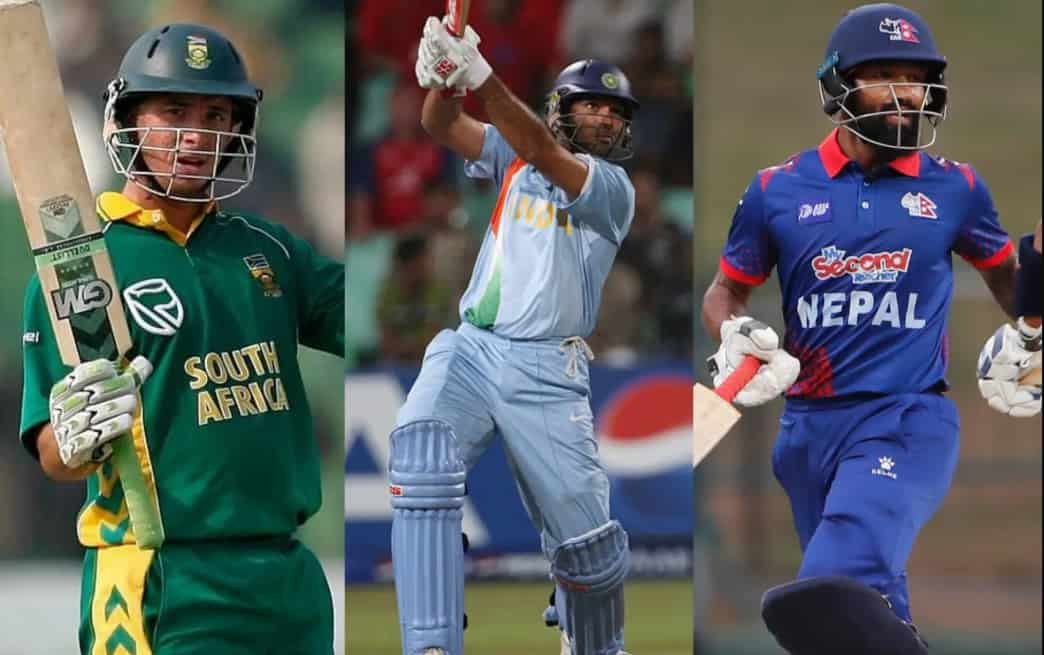
Breaking Down Cricket’s Most Explosive Over
- The assault on van Bunge’s bowling was systematic yet brutal. Gibbs didn’t just swing blindly—he picked his spots with clinical precision.
- The first ball sailed over long-on. The second disappeared over long-off. By the third delivery, smashed over mid-wicket, the crowd sensed something extraordinary was unfolding. The fourth ball, a full toss, was hammered back over long-on. The fifth flew over wide long-off.
- And then came the sixth. With 30 runs already plundered, Gibbs faced enormous pressure to complete the set. He launched it straight down the ground, and history was made. The over yielded 36 runs—a modern-day assault that changed how cricketers viewed the possibilities of limited-overs batting.
Match Context: When Records Fall
- South Africa were already dominant in this group-stage encounter. They’d won the toss and elected to bat on a good surface. By the time Gibbs unleashed his assault, the Proteas were building toward a massive total.
- His six-sixes-over came during a partnership where South Africa’s batting lineup was firing on all cylinders. The team eventually posted 353/3 in just 40 overs—a rain-affected match that demonstrated complete batting superiority. The Netherlands, in response, managed only 132, losing by 221 runs.
- What made Gibbs’ feat remarkable wasn’t just the boundary hitting. It was the awareness that he could push the game’s boundaries on cricket’s biggest stage. The World Cup spotlight magnified everything, and Gibbs didn’t flinch.
Gibbs’ International Cricket Career Overview
| Format | Matches | Runs Scored | Batting Average | Strike Rate | Centuries |
|---|---|---|---|---|---|
| Test Cricket | 90 | 6,167 | 41.95 | 55.24 | 14 |
| ODI Cricket | 248 | 8,094 | 36.13 | 83.26 | 21 |
| T20I Cricket | 23 | 400 | 18.18 | 125.00 | 0 |
Herschelle Gibbs wasn’t a one-trick pony. His ODI strike rate of 83.26 might seem modest by today’s standards, but during his era, it marked him as an aggressive, match-winning batsman. His Test average of nearly 42 showed he could adapt across formats.
Understanding the Six Sixes Achievement in International Cricket
- Before Gibbs’ historic moment, only two players had managed six sixes in an over in professional cricket—Sir Garfield Sobers (1968, first-class cricket) and Ravi Shastri (1985, domestic cricket). However, neither had done it in international cricket.
- That’s what made March 16, 2007, so special. This wasn’t a domestic game with lesser pressure. This was the World Cup—the tournament where reputations are made or broken. Gibbs faced the scrutiny of global television coverage and still executed perfectly.
- The feat is so rare that even today, only a handful of players have managed it in international matches. Yuvraj Singh joined the list later in 2007 during the inaugural T20 World Cup, hitting Stuart Broad for six consecutive sixes. But Gibbs got there first on the international stage.
Complete List of Six Sixes in International Cricket
Here’s who’s achieved this extraordinary milestone:
- Herschelle Gibbs – March 16, 2007, vs Netherlands (ODI, World Cup)
- Yuvraj Singh – September 19, 2007, vs England (T20I, World Cup)
- Ross Taylor – February 15, 2011, vs Pakistan (ODI, domestic)
- Hazratullah Zazai – October 19, 2018, vs Ireland (T20I)
- Kieron Pollard – March 6, 2021, vs Sri Lanka (T20I)
- Dipendra Singh Airee – August 9, 2021, vs Papua New Guinea (T20I)
- Jaker Ali – March 18, 2024, vs Zimbabwe (T20I)
While the 6 ball 6 sixes record list in international cricket continues to grow, Gibbs’ achievement remains unique for happening first and on the World Cup stage.
The First Indian Player to Hit Six Sixes
- Yuvraj Singh became the first Indian player to hit 6 sixes in an over in international cricket. His victim was England’s Stuart Broad during the 2007 T20 World Cup in Durban—ironically, just six months after Gibbs’ feat.
- Yuvraj’s assault came with added drama. He’d had a heated exchange with England’s Andrew Flintoff the previous over, and the adrenaline fueled one of cricket’s most memorable moments. Each six seemed to carry the weight of personal vindication.
- India went on to win that inaugural T20 World Cup, and Yuvraj’s six sixes became a defining image of the tournament. The 6 ball 6 six Indian player name that every fan remembers from that era is undoubtedly Yuvraj Singh.
The Million-Dollar Over
- Tournament sponsors Johnnie Walker had announced a promotional prize:
- $1 million for anyone who could hit six sixes in an over during the World Cup. When Gibbs achieved it, the question wasn’t whether he’d get paid—it was how quickly.
- This financial reward added another layer to the achievement. Gibbs didn’t just create a cricketing record; he secured life-changing money in about three minutes of batting.
- The sponsorship activation became one of the most successful in World Cup history, generating massive publicity.
Tactical Insight: Why This Happened
- From a bowling perspective, van Bunge was in an impossible position. Once Gibbs hit the first three sixes, the pressure shifted entirely to the bowler. Every delivery became about damage limitation rather than wicket-taking.
- Leg-spinners rely on flight and variation, but against a set batsman in full flow, those weapons can become liabilities.
- Van Bunge couldn’t bowl short without being pulled, couldn’t bowl full without being driven, and couldn’t find a length that offered safety.
- Gibbs, meanwhile, showed remarkable composure. After five sixes, most batsmen would feel the weight of history. He stayed calm, picked his spot, and executed. That’s champion mentality.
The Myth of Ten Sixes in an Over
- Some cricket fans wonder: who hit 10 sixes in an over? The answer is nobody—not in professional cricket with standard rules.
- An over consists of six legal deliveries. If there are no-balls or wides, extra deliveries are bowled, theoretically allowing for more than six sixes.
- However, in recognized cricket, the record remains six sixes from six balls.
- The confusion often stems from local matches or exhibition games where rules differ, but in official international or first-class cricket, six is the maximum from a single over.
Frequently Asked Questions
- Who was the first player to hit six sixes in the 2007 World Cup?
Herschelle Gibbs achieved this feat on March 16, 2007, against the Netherlands during a group-stage match in St. Kitts.
- What happened to the bowler Daan van Bunge?
Van Bunge finished with figures of 0-91 from his 10 overs. Despite the punishment, he continued playing for the Netherlands and remained a regular in their squad.
- Did Gibbs receive the $1 million prize?
Yes, tournament sponsors Johnnie Walker honored their promotional offer and awarded Gibbs the full prize amount.
- How many players have hit six sixes in international cricket?
Seven players have achieved this in official international matches across ODIs and T20Is as of 2024.
- Was this Gibbs’ highest ODI score?
No, Gibbs scored 175 against Australia in 2006, which remains his highest ODI score. Against the Netherlands in 2007, he made 72 off 40 balls.
A Moment That Defined Modern Cricket
Herschelle Gibbs’ six sixes didn’t just break a record—it shifted cricket’s attacking mindset.
Suddenly, what seemed impossible became a target for aggressive batsmen worldwide.
The over demonstrated that boundaries could be pushed, records could fall, and entertainment could coexist with elite competition.
Years later, fans still watch replays of that over, marveling at the clean striking and the boldness of intent.
It remains a benchmark moment in World Cup history—not because of the match result, which was already decided, but because it showed what cricket could be when talent met courage. Gibbs gave us permission to dream bigger about what batsmen could achieve, and the game’s never looked back.
Also Check:
About the Author
