When the Bangladesh Cricket Board renovated Shere Bangla National Stadium in 2006, they converted a rectangular football ground into a circular cricket venue.
The change brought proper drainage, 25,000 seats, and a pitch that’s become one of the most talked-about surfaces in subcontinental cricket.
The Shere Bangla National Stadium, Dhaka pitch report shows why teams treat the toss like a mini-lottery here.
Win it, bat first, and you’re halfway home. Lose it, and you’re chasing on a surface that gets tougher by the hour.
This pitch doesn’t lie. It tells you exactly what’s coming, but only if you know how to read it.
Shere Bangla National Stadium Dhaka Pitch Report
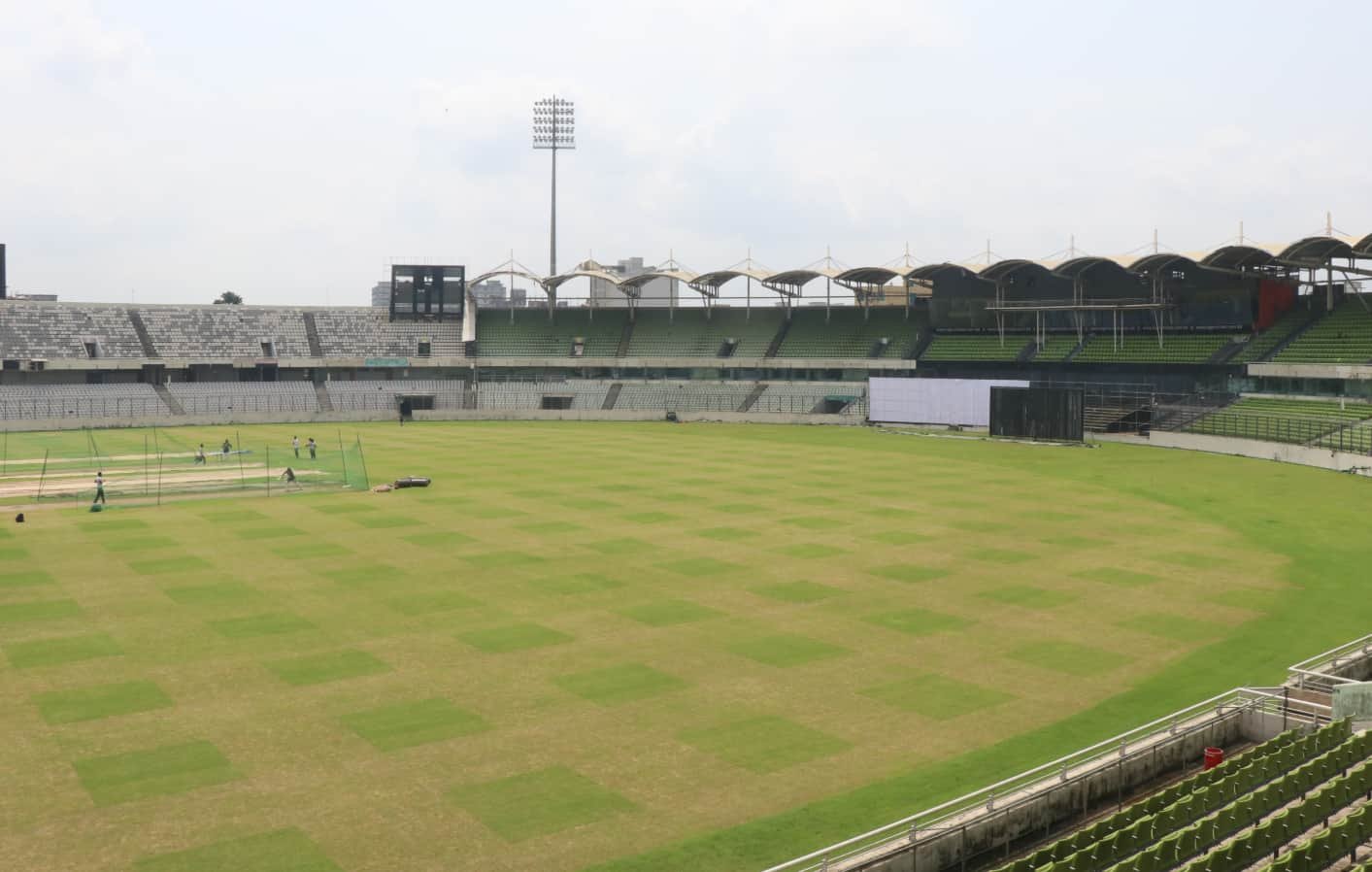
Ground Overview and Key Features
Shere Bangla sits on Mirpur Road in Dhaka, earning it the nickname Mirpur Stadium.
The Bangladesh Cricket Board uses it exclusively for cricket now, hosting everything from Test matches to T20 internationals and Bangladesh Premier League games.
The ground measures 63 meters at its shortest boundary and stretches to 70 meters at the longest.
Two bowling ends, Aqua Paints End and Ispahani End, serve the venue. Floodlights allow day-night cricket across formats.
| Ground Detail | Information |
|---|---|
| Location | Mirpur Road, Dhaka 1216, Bangladesh |
| Alternative Name | Mirpur Stadium |
| Year Opened | 2006 |
| Spectator Capacity | 25,000 |
| Boundary Range | 63-70 meters |
| Bowling Ends | Aqua Paints End, Ispahani End |
| Floodlights | Yes |
| Surface Type | Grass on black clay |
Understanding the Playing Surface
The shere bangla national stadium mirpur dhaka pitch report reveals a black clay base that creates two different cricket matches in one.
Early on, it’s a fast bowler’s dream with seam movement and genuine bounce. By the middle overs, it transforms into spin bowling heaven.
This split personality comes down to how the surface ages. Fresh pitches offer pace and carry.
As matches wear on, the black clay grips the ball harder, slows everything down, and gives spinners serious turn.
First Innings Conditions
Teams batting first get the best of both worlds. The ball comes onto the bat nicely while there’s still pace in the surface.
Batters can trust the bounce and play their shots without second-guessing whether the ball will skid or grip.
Fast bowlers find movement off the seam early. They can swing it conventionally, too, especially under lights when there’s moisture in the air. But their window closes fast once the pitch settles.
How does it change during the Match?
Spin takes over as the game progresses. The pitch slows down noticeably, making timing difficult. Batters who cruise in the first session suddenly struggle to put the bat on the ball in the third.
Turn increases sharply after 30-40 overs. What started as a slight grip becomes a serious rip. Bowlers who can flight the ball and vary their pace become unplayable on wearing surfaces.
Format-Wise Performance Records
Since hosting its first ODI in December 2006, the venue has staged 250 international matches. The numbers tell clear stories about what works here and what doesn’t.
| Cricket Format | Total Games | Bat First Wins | Bowl First Wins | First Match |
|---|---|---|---|---|
| Test Cricket | 29 | 14 | 12 | 25 May 2007 |
| ODI Cricket | 143 | 63 | 76 | 8 December 2006 |
| T20I Cricket | 78 | 38 | 40 | 11 October 2011 |
Test Cricket at Mirpur
Test matches show the clearest batting advantage. Teams batting first average 325 runs in their first innings.
That number drops to 306 in the second innings, 242 in the third, and just 173 in the fourth.
Sri Lanka holds the record for the highest total with 730 for 6 declared.
They batted for 187.5 overs against Bangladesh, showing how patient teams can pile on runs early.
Bangladesh’s 87 all out against Pakistan stands as the lowest Test total here.
The fourth innings average of 173 tells you everything about chasing big targets at Mirpur. It’s brutal.
ODI Trends and Patterns
ODI cricket flips the script. Teams bowling first have won 76 matches compared to 63 for teams batting first.
The difference comes down to dew and pitch behavior under lights.
First innings scores average 217 runs. Chasing sides average 186, but they’ve won more often because they know exactly what they’re chasing.
India’s 370 for 4 remains the highest ODI total. Bangladesh got bowled out for just 58 against the West Indies in under 19 overs.
T20 International Numbers
T20 matches are split almost evenly. Batting first wins 38 times, bowling first wins 40 times. Average scores read 139 batting first and 121 chasing.
Bangladesh posted 211 for 4 against the West Indies for the highest T20I score here.
New Zealand’s 60 all out in 16.5 overs shows how quickly innings can collapse when spinners find their rhythm.
Tactical View: Reading the Conditions
The shere bangla national stadium dhaka pitch report today suggests that captains need clear plans before stepping onto the field.
Winning the toss means choosing between guaranteed good batting conditions or taking a chance on restricting the opposition and chasing.
Most teams bat first in Tests. It’s not even close. The pitch deteriorates too much for comfortable fourth-innings chases.
In limited-overs cricket, the choice gets trickier depending on the weather and match situation.
Smart teams load up on spinners. Three quality slow bowlers aren’t overkill here; it’s necessary.
Having spin variation (off-spin, leg-spin, left-arm orthodox) gives captains options as the pitch changes.
Batting strategy shifts between formats, too. Test teams build partnerships and grind out big first-innings totals.
ODI and T20 teams need aggressive intent early before spin chokes the run rate.
Weather Forecast for Dhaka
Current weather patterns show stable conditions ahead. No significant rainfall is expected over the coming days, which means the pitch will play true to form without rain interruptions.
| Venue | Conditions | Temperature Range | Humidity Level | Rain Chance |
|---|---|---|---|---|
| Shere Bangla National Stadium | Heavy thunderstorm | 24-27°C | 64% | Light Rain |
Temperatures sit between 24 and 27 degrees Celsius. Wind speeds stay around 16 km/h. Humidity at 64% can help swing bowlers early, particularly during morning sessions in Test cricket.
Mostly sunny or partly cloudy skies mean the pitch will dry out naturally. No dampness to slow down the deterioration process or give fast bowlers extra help beyond the first session.
What Makes This Pitch Different?
Compared to other Asian venues, Mirpur stands out for how dramatically it changes.
Other grounds might favor spin slightly or offer some turn on day four. This pitch goes from pace-friendly to spinner’s paradise in the same match.
The black clay composition creates that shift. Unlike red soil tracks that crack and crumble, black clay grips and turns.
It doesn’t break up into rough patches as much as it gets slower and lower.
Boundary sizes at Mirpur favor batters in one sense; they can clear the rope more easily.
But short boundaries don’t help when the ball’s turning square and keeping low. Spinners still dominate despite giving up the occasional six.
Frequently Asked Questions
- How many people can Shere Bangla National Stadium hold?
The venue seats 25,000 spectators comfortably.
- What’s the boundary size of this ground?
Boundaries range from 63 meters at the shortest point to 70 meters at the longest.
- Should teams bat or bowl first here?
Batting first works better in Tests due to pitch deterioration. ODIs and T20s depend on conditions and team strength.
- Which bowlers succeed at Mirpur?
Spinners dominate as matches progress. Fast bowlers get a brief window early but lose effectiveness quickly.
- What’s the highest score ever made here?
Sri Lanka’s 730 for 6 declared in Test cricket. India’s 370 for 4 in ODIs. Bangladesh’s 211 for 4 in T20Is.
Wrapping Up
The Shere Bangla National Stadium Dhaka pitch report makes one thing clear: timing matters more than talent here.
Teams that cash in early build winning totals. Teams that wait too long find themselves battling conditions instead of opponents.
Test cricket heavily favors the side batting first. ODI and T20 cricket offer more balance, but even there, setting targets beats chasing them more often than not.
Weather looks stable, pitch behavior stays predictable, and the pattern holds across formats. Win the toss, read the conditions right, and you control the match from ball one.
Also Check:
- BAN vs PAK Dream11 Prediction Today Match 2nd ODI
- Pakistan Tour of Bangladesh 2026 Match Schedule, Squads & Where to Watch Live
About the Author
