Money talks in cricket. And in 2025, a handful of cricket boards don’t just talk, they shout.
The richest cricket boards in the world shape everything from player salaries to tournament schedules, and their financial muscle often decides which teams tour where and when.
The gap between cricket’s financial giants and the rest isn’t just wide, it’s a canyon.
While some boards operate billion-dollar empires with broadcasting deals that make headlines, others struggle to fund basic infrastructure.
Understanding who sits at the top of this financial pyramid reveals a lot about cricket’s power structure.
The wealth of these boards doesn’t come from thin air. It’s built on broadcasting rights, sponsorships, packed stadiums, and the global appeal of their domestic leagues.
But here’s the thing: financial power also brings responsibility, and not every rich board uses its resources the same way.
Richest Cricket Boards In The World
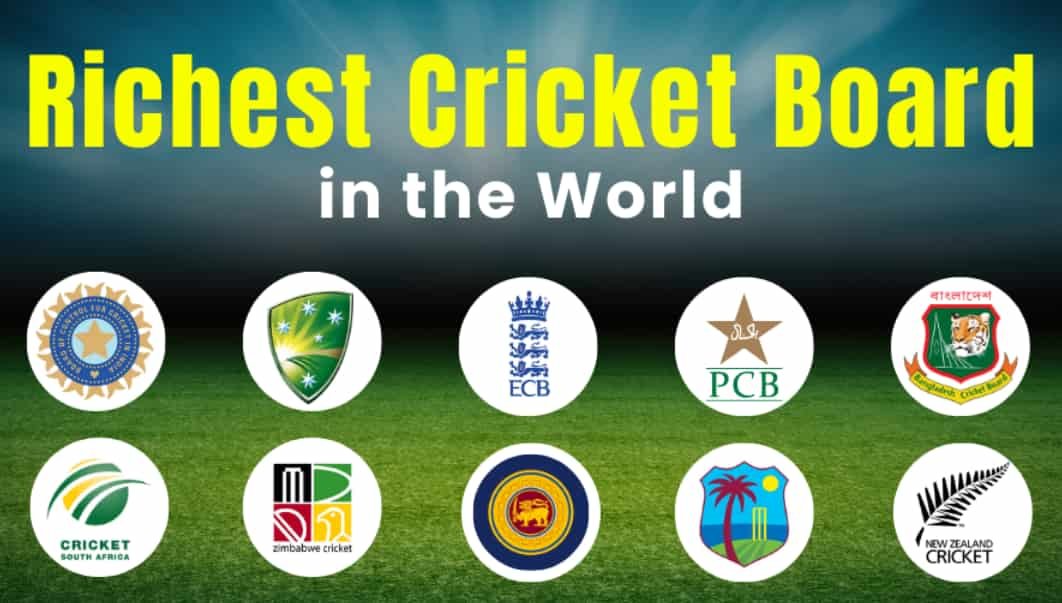
The Financial Heavyweight: BCCI
The Board of Control for Cricket in India (BCCI) isn’t just the richest cricket board—it’s in a league of its own.
With an estimated annual revenue exceeding $500 million, the BCCI dwarfs every other cricket administration in the world.
The Indian Premier League (IPL) is the golden goose.
Broadcasting rights alone for the IPL have crossed billions of dollars, with Disney-Star and Viacom18 paying massive sums for television and digital rights.
Add sponsorship deals, ticket sales, and merchandise, and you’ve got a commercial juggernaut.
India’s massive cricket-loving population makes every bilateral series a money-spinner.
When India tours Australia or England, stadiums sell out.
When India hosts anyone, viewership numbers break records. The BCCI leverages this demand brilliantly, negotiating broadcasting deals that other boards can only dream about.
But it’s not just about the IPL. The BCCI also benefits from:
- Massive domestic viewership (over 1.4 billion potential fans)
- Premium sponsorship deals with global brands
- High-value bilateral series hosting rights
- Commercial partnerships with major corporations
There’s a tactical observation worth noting here: the BCCI’s wealth allows it to retain top players by offering central contracts that compete with global T20 leagues.
This isn’t just smart business—it’s strategic player management that keeps India’s best talent invested in national duty.
England and Australia: The Traditional Powers
England and Wales Cricket Board (ECB)
The ECB sits comfortably in second place with annual revenues around $300 million. The Hundred, England’s franchise tournament, has added a new revenue stream, though it hasn’t reached IPL-level returns yet.
England’s advantage lies in history and infrastructure. Lord’s, The Oval, and other iconic venues generate substantial income.
Broadcasting deals with Sky Sports and the BBC ensure cricket remains commercially viable, even if viewership has shifted more toward subscription models.
The County Championship system, while not a massive money-maker, maintains grassroots development.
The ECB balances tradition with innovation, though critics argue they could do more to grow the game domestically.
Cricket Australia (CA)
Cricket Australia pulls in roughly $250-280 million annually.
The Big Bash League (BBL) started strong but has seen viewership dips in recent years, which affects broadcasting revenue.
Australia’s strength is in hosting major ICC events and high-profile Test series.
The Boxing Day Test at the MCG and the New Year’s Test in Sydney are cultural fixtures that fill stadiums and drive broadcasting income.
CA also benefits from:
- Strong grassroots participation rates
- Lucrative broadcasting agreements with Channel Seven and Fox Sports
- International touring revenue (teams love touring Australia despite the challenges)
- State cricket association partnerships
One thing Australia does well: they’ve kept Test cricket commercially relevant. While T20 leagues dominate elsewhere, Australia maintains strong Test match attendance, especially during the Ashes.
The Rising Contenders
Pakistan Cricket Board (PCB)
The PCB’s revenue sits around $100-130 million. The Pakistan Super League (PSL) has grown steadily, attracting international stars and increasing broadcasting value.
Pakistan’s challenge isn’t talent or fan interest—it’s hosting.
Security concerns have limited home series for years, forcing neutral venues. That’s changed recently, with more teams willing to tour, but the financial impact of those lost years lingers.
Cricket South Africa (CSA)
CSA generates approximately $80-100 million annually. The SA20 league launched in 2023 brought fresh investment, but South Africa’s domestic cricket economy still faces challenges.
Political and administrative issues have plagued CSA, affecting sponsorship confidence.
Despite producing world-class players, South Africa hasn’t capitalized on their talent pool as effectively as they could.
| Cricket Board | Estimated Annual Revenue | Primary Revenue Source |
|---|---|---|
| BCCI (India) | $500+ million | IPL broadcasting rights |
| ECB (England) | ~$300 million | Broadcasting deals, The Hundred |
| CA (Australia) | ~$250-280 million | Broadcasting rights, BBL |
| PCB (Pakistan) | ~$100-130 million | PSL, bilateral series rights |
| CSA (South Africa) | ~$80-100 million | Broadcasting, SA20 |
Expert Insight: Why Financial Power Matters
Financial strength determines more than just player salaries. Rich boards invest in academies, coaching, technology, and analytics.
They afford better medical facilities, sports science teams, and mental health support.
When the BCCI negotiates with the ICC, it carries weight. India’s veto power in cricket administration isn’t official, but everyone knows the reality: what’s bad for Indian cricket is usually bad for world cricket’s finances.
That’s not arrogance—it’s mathematics.
However, wealth also brings expectation. India’s World Cup drought (in ICC events since 2013) despite massive resources raises questions.
Money buys infrastructure and talent access, but it doesn’t guarantee trophies.
The psychological pressure on Indian players during ICC tournaments is real, partly because the board’s investment creates expectation.
Compare that to how Australia manages resources. They’ve won recent World Cups despite lower revenues than India.
Efficiency matters. Cricket Australia’s focus on performance pathways and competitive domestic structures produces results that punch above their financial weight class.
The Wealth Gap and Its Impact
The disparity between cricket’s richest boards and the rest creates real problems. Smaller boards like Zimbabwe, Afghanistan, and Ireland struggle to retain players who chase lucrative T20 contracts abroad.
This affects competitive balance.
When a player can earn more in two months of IPL cricket than a year playing for their country, loyalty gets tested. Associates and smaller Full Members lose talent to leagues and Kolpak deals.
The ICC’s revenue distribution model attempts to balance this, but it’s contentious.
The Big Three (India, England, Australia) receive significantly larger shares, justified by their revenue generation but criticized for entrenching inequality.
Some argue this mirrors broader patterns in sports economics. Others believe cricket has a duty to grow globally, which requires financial support for emerging nations. Both perspectives have merit, though finding middle ground remains difficult.
Broadcasting Rights: The Real Game Changer
Broadcasting deals separate the rich from the super-rich. India’s population and cricket obsession create a market no other nation can match.
When billions of dollars flow from broadcasting rights, everything else—sponsorships, merchandise, ticket sales—follows.
The shift to digital streaming has opened new revenue avenues.
Younger audiences consume cricket differently than previous generations, and boards that adapt benefit financially. The ECB’s partnership with Sky Sports brings stability, but it also limits cricket’s free-to-air presence, potentially affecting long-term growth.
Australia’s hybrid model—free-to-air for key matches, pay TV for comprehensive coverage—tries to balance accessibility with revenue maximization.
It’s not perfect, but it acknowledges that cricket’s future depends on remaining visible to casual fans and kids discovering the game.
Frequently Asked Questions
- Which is the richest cricket board in 2025?
The BCCI is by far the richest, with annual revenues exceeding $500 million, primarily from the IPL.
- How does the IPL generate so much money?
Broadcasting rights, sponsorships, ticket sales, and franchise fees combine to create India’s most lucrative sporting property.
- Why can’t other boards replicate India’s financial model?
India’s population, cricket culture, and market size are unique. No other nation has 1.4 billion potential fans.
- Do richer boards always produce better teams?
Not necessarily. Australia wins consistently despite lower revenues than India. Efficiency and culture matter as much as money.
- How is broadcasting revenue distributed globally?
The ICC distributes revenue from global events, with larger shares going to Full Members, particularly the Big Three, based on contribution to overall revenue.
Where the Money Actually Goes
Looking beyond revenue totals reveals interesting patterns. The richest cricket boards in the world don’t just hoard wealth—they redistribute it through player contracts, domestic competitions, and grassroots programs.
The BCCI funds state associations, runs age-group tournaments nationwide, and maintains the world’s highest player retainers.
England invests heavily in county cricket infrastructure. Australia’s pathways from club to state to national level are well-funded and structured.
But challenges remain. Even wealthy boards face criticism over spending priorities. Should more money go to women’s cricket? To associate nation development? To lowering ticket prices so more fans can attend?
These questions don’t have easy answers. What’s clear is that cricket’s financial landscape will keep evolving.
New leagues emerge, broadcasting platforms shift, and younger audiences demand different experiences.
The boards that adapt while maintaining cricket’s integrity will thrive. The ones that don’t might find their wealth declining faster than they expect.
The richest cricket boards in the world today earned their position through smart commercialization and fortunate circumstances.
Staying there requires continuing to innovate while remembering that cricket’s long-term health depends on more than just profit margins.
Also Check:
About the Author
