March 15, 2026, adds another name to Indian cricket’s most exclusive list.
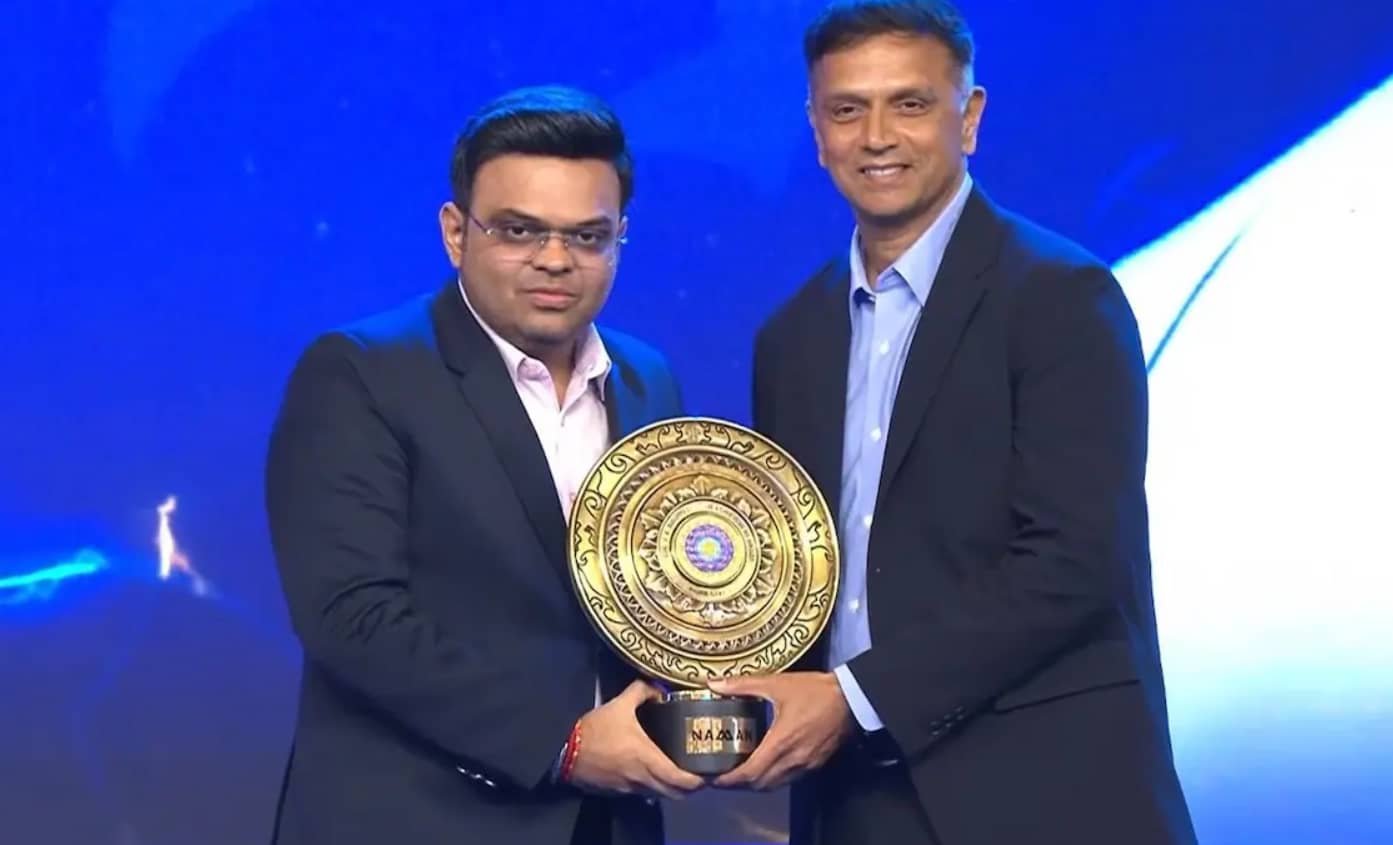
Rahul Dravid receives the CK Nayudu Lifetime Achievement Award at the NAMAN ceremony in New Delhi. He’s the 32nd recipient since the BCCI started this tradition in 1994.
The timing fits. Dravid just coached India to a T20 World Cup title. His playing career gave India 13,288 Test runs and victories in England as captain.
Now he joins legends like Gavaskar, Kapil Dev, and Sachin Tendulkar on the BCCI Lifetime Achievement Award winners list.
BCCI Lifetime Achievement Award Winners List
What does the Award Represent?
The BCCI names this honor after CK Nayudu, India’s first Test captain. It recognizes careers that shaped Indian cricket beyond just match stats.
Playing ability matters, but so does overall impact on the game’s development in India.
Winners are typically selected 10-20 years after retirement. The BCCI doesn’t rush these decisions.
They want time to assess a player’s full contribution, including post-playing roles.
Shubman Gill picks up the Polly Umrigar Award at the same ceremony.
He led India’s comeback in England while scoring heavily himself. Jasprit Bumrah won that award in 2024.
Year-by-Year Winners List of BCCI Lifetime Achievement Award
The list started with pioneers and expanded to include modern greats. Every decade of Indian cricket has representation. From Test cricket’s early struggles to World Cup triumphs, these names tell the story.
| Award Year | Recipient | Role Type | Playing Years | Format Strength | Signature Moment |
|---|---|---|---|---|---|
| 1994 | Lala Amarnath | All-rounder | 1933-1952 | Tests | First Indian Test century (1933) |
| 1995 | Syed Mushtaq Ali | Batsman | 1934-1952 | Tests | First overseas Test century for India |
| 1996 | Vijay Hazare | Batsman | 1946-1953 | Tests | 309 vs Australia (Ranji Trophy) |
| 1997 | KN Prabhu | Wicketkeeper | 1934-1936 | Tests | Early wicketkeeping pioneer |
| 1998 | Polly Umrigar | Batsman | 1948-1962 | Tests | India’s top scorer until Gavaskar |
| 1999 | Hemu Adhikari | All-rounder | 1947-1959 | Tests | Captain and administrator |
| 2000 | Subhash Gupte | Bowler (Leg-spin) | 1951-1962 | Tests | 149 wickets, avg 29.55 |
| 2001 | Mansoor Ali Khan Pataudi | Batsman | 1961-1975 | Tests | Youngest Indian captain at 21 |
| 2002 | BB Nimbalkar | Batsman | 1940s-1950s | Domestic only | 443* in Ranji Trophy |
| 2003 | Chandu Borde | All-rounder | 1958-1970 | Tests | Versatile middle-order contributor |
| 2004 | Bishan Singh Bedi | Bowler (Spin) | 1966-1979 | Tests | 266 wickets, left-arm artistry |
| 2004 | Srinivas Venkataraghavan | Bowler (Spin) | 1965-1983 | Tests | Off-spin quartet member |
| 2004 | EAS Prasanna | Bowler (Spin) | 1962-1978 | Tests | Off-spin quartet member |
| 2004 | BS Chandrasekhar | Bowler (Spin) | 1963-1979 | Tests | 242 wickets, leg-spin quartet member |
| 2007 | Nari Contractor | Batsman | 1955-1962 | Tests | Survived career-ending injury |
| 2008 | Gundappa Viswanath | Batsman | 1969-1983 | Tests | Elegant middle-order technique |
| 2009 | Mohinder Amarnath | All-rounder | 1969-1989 | Tests/ODIs | 1983 World Cup final hero |
| 2010 | Salim Durani | All-rounder | 1960-1973 | Tests | Left-arm spin and big hitting |
| 2011 | Ajit Wadekar | Batsman | 1966-1974 | Tests | Captain of 1971 England win |
| 2012 | Sunil Gavaskar | Batsman | 1971-1987 | Tests | First to 10,000 Test runs |
| 2013 | Kapil Dev | All-rounder | 1978-1994 | Tests/ODIs | 1983 World Cup captain |
| 2014 | Dilip Vengsarkar | Batsman | 1976-1992 | Tests | Three centuries at Lord’s |
| 2015 | Syed Kirmani | Wicketkeeper | 1976-1986 | Tests | 198 Test dismissals |
| 2016 | Rajinder Goel | Bowler (Spin) | 1957-1985 | Domestic only | 750+ first-class wickets |
| 2016 | Padmakar Shivalkar | Bowler (Spin) | 1964-1987 | Domestic only | 589 first-class wickets |
| 2017 | Pankaj Roy | Batsman | 1951-1961 | Tests | World record opening stand |
| 2018 | Anshuman Gaekwad | Batsman | 1974-1987 | Tests | Tough opener, later coach |
| 2019 | Krishnamachari Srikkanth | Batsman | 1981-1992 | Tests/ODIs | Aggressive 1983 WC opener |
| 2023 | Farokh Engineer | Wicketkeeper | 1961-1975 | Tests | Attacking keeper-batsman style |
| 2023 | Ravi Shastri | All-rounder | 1981-1992 | Tests/ODIs | 1985 World Championship winner |
| 2024 | Sachin Tendulkar | Batsman | 1989-2013 | All formats | 15,921 Test runs, 51 centuries |
| 2026 | Rahul Dravid | Batsman | 1996-2012 | All formats | 13,288 Test runs, WC coach |
The 2004 Spin Quartet Honor
One year stands out in the timeline. The BCCI honored all four spin quartet members in 2004.
Bedi, Prasanna, Venkataraghavan, and Chandrasekhar received their awards together.
These four bowlers dominated the 1960s and 70s. They picked up 853 Test wickets combined.
India won matches on turning tracks when pace bowling ruled most of world cricket.
The group recognition made sense. Their careers overlapped and complemented each other.
Bedi’s left-arm flight. Prasanna’s off-spin variations. Chandra’s attacking leg-spin.
Venkat’s accuracy. Together they formed cricket’s most famous spin attack.
Gaps in the BCCI Lifetime Achievement Award Winners List
No awards happened in 2020, 2021, or 2022. The BCCI skipped those years entirely.
COVID disruptions probably played a role, but the board hasn’t explained the gap officially.
Similar breaks appear elsewhere in the timeline. Nothing between 2004 and 2007.
The gap from 2019 to 2023 lasted four years. These pauses don’t follow any pattern related to eligible retirees.
When the BCCI resumes after breaks, they often give multiple awards.
Two recipients in 2016 (Goel and Shivalkar). Two in 2023 (Engineer and Shastri).
The clustering suggests they’re catching up after delays.
Domestic Cricket Recognition
Three winners never played Test cricket. BB Nimbalkar, Rajinder Goel, and Padmakar Shivalkar built their legends in domestic competitions.
Goel’s 750+ first-class wickets came entirely in Ranji Trophy and other domestic matches.
Shivalkar took 589 first-class wickets without getting a single Test cap. Nimbalkar’s 443 not out remains a Ranji Trophy monument.
Their inclusion sends a clear message. The BCCI values domestic cricket contribution.
These players dominated the Ranji Trophy for decades. They trained future Indian stars and maintained high standards in domestic competitions.
Expert Insight: T20 Format Impact on Selection
The award name doesn’t mention format. Early winners played only Tests because that’s all that existed.
ODI cricket started in the 1970s. T20 internationals began in 2005.
Recent winners like Tendulkar and Dravid excelled across all three formats.
Tendulkar holds ODI records alongside his Test achievements. Dravid captained India in T20s despite being known for Test batting.
Future selections will weigh T20 success more heavily. The format has grown from an experiment to a major revenue source.
Players who shape T20 cricket for India deserve recognition alongside Test legends.
Rohit Sharma’s eventual selection will test this. His T20 captaincy and World Cup success matter as much as his Test hundreds.
The BCCI will need to balance traditional Test focus with modern format reality.
My Take: The Waiting Period Question
Why does the BCCI wait 10-15 years after retirement? Part of it is perspective.
Time reveals which achievements matter most. Dravid’s coaching success wouldn’t factor into his award if given immediately after playing retirement.
The delay also ensures players have truly finished their cricket involvement.
Some legends return as coaches or administrators. The BCCI wants to assess the complete cricket life, not just playing years.
But the system has accelerated. Lala Amarnath waited 42 years.
Tendulkar got his after 11 years. The BCCI now moves faster, so recipients can enjoy recognition while still active in cricket circles.
Role Distribution Across Winners
Batsmen lead with 15 awards total. Cricket’s scoring emphasis explains this.
Fans remember centuries more than five-wicket hauls. Opening batsmen and middle-order anchors dominate the list.
Bowlers account for 10 selections. Spinners outnumber fast bowlers because India produced fewer world-class pacers in earlier eras.
The four spin quartet members in 2004 skew these numbers.
All-rounders grabbed 6 spots. Kapil Dev stands tallest here. His 1983 World Cup captaincy changed Indian cricket’s trajectory.
Mohinder Amarnath’s all-round performance in that tournament earned his 2009 award.
Wicketkeepers remain underrepresented with just 3 awards. The position demands intense physical effort.
Few keepers maintained long enough careers to build award-worthy records.
BCCI NAMAN Awards 2026: Complete Event Details
The March 15 ceremony covers more than lifetime achievement.
The full BCCI NAMAN awards 2026 list includes multiple categories.
Gill gets the Polly Umrigar Award for best men’s international cricketer.
Women’s awards recognize the ODI World Cup champions. Domestic player awards honor Ranji Trophy and other tournament performers.
Jay Shah confirmed they’re celebrating all three recent World Cup wins.
The T20 World Cup 2026 champions get special recognition. So do the women’s ODI winners and Under-19 boys who won in February.
The ceremony invites all ICC tournament winners and coaches.
That includes Dravid as both an award recipient and a T20 World Cup-winning coach.
The dual recognition makes his selection particularly fitting.
Finding the PDF Version
Many people search for a BCCI lifetime achievement award winners list PDF download.
The BCCI website maintains official records but doesn’t always provide downloadable files.
Cricket news websites compile updated lists after each NAMAN ceremony.
ESPNcricinfo and other major portals track these awards annually. Their databases offer searchable records.
Social media verification helps, too. The BCCI’s official Twitter and Instagram accounts post ceremony highlights.
These posts confirm winners and often include full lists of all NAMAN award recipients.
Award Evolution Since 1994
The first decade focused on pioneers. Players from the 1930s through the 1950s got recognition.
Lala Amarnath, Mushtaq Ali, and Vijay Hazare represented cricket’s foundation years in India.
The 2000s brought the golden generation. Gavaskar started this wave in 2012. Kapil Dev followed in 2013.
These winners represented India’s rise from underdogs to world beaters.
Recent years target modern greats. Tendulkar in 2024 and Dravid in 2026 show faster recognition for contemporary legends.
The BCCI now honors players while they remain visible in cricket administration and coaching.
FAQs
- Q: Who received the first BCCI Lifetime Achievement Award?
Lala Amarnath won the first award in 1994. He was India’s first Test centurion and played from 1933 to 1952.
- Q: Did anyone win the award in 2020 or 2021?
No. The BCCI didn’t present the award in 2020, 2021, or 2022. The previous winner was Srikkanth in 2019, followed by Engineer and Shastri in 2023.
- Q: Can players who never played international cricket win this award?
Yes. BB Nimbalkar, Rajinder Goel, and Padmakar Shivalkar won despite never playing Tests. Their domestic cricket records earned the honor.
- Q: How many people have won the BCCI Lifetime Achievement Award till 2026?
32 cricketers have received the award from 1994 through 2026, with Rahul Dravid being the most recent recipient.
- Q: What is the connection between this award and T20 cricket?
The award recognizes overall contribution regardless of format. Recent winners like Tendulkar and Dravid played all formats. Future selections will likely weigh T20 success more heavily.
Looking Ahead
The list will keep growing as more modern stars retire. Virat Kohli sits on the horizon.
Rohit Sharma and Ravichandran Ashwin aren’t far behind. MS Dhoni’s eventual selection seems certain given his World Cup captaincy success.
The award has evolved from honoring pioneers to celebrating contemporary champions.
The 32-year tradition continues, adapting to cricket’s changing formats and India’s growing dominance.
Dravid’s 2026 selection bridges playing excellence with coaching success, setting a template for future honorees who contribute beyond their playing days.
Also Check:
About the Author
