Ask most casual fans who scored the first-ever double century in One Day International cricket, and you’ll likely hear Sachin Tendulkar’s name.
It’s understandable—his 200 not out against South Africa in 2010 was broadcast to millions and celebrated as a monumental achievement.
But here’s the thing: by the time Tendulkar reached that milestone, the record had already stood for 13 years.
The actual first cricketer to score a double century in ODI cricket was Belinda Clark, who demolished Denmark’s bowling attack with an unbeaten 229 during the 1997 Women’s World Cup.
Clark’s innings wasn’t just a record; it was a statement.
At a time when scoring 200 runs in a single ODI seemed almost mythical, she casually proved it could be done. And she did it on the biggest stage—the World Cup.
Which Cricketer Scored the First ODI Double Century
The Match That Changed Cricket History
- December 16, 1997. Mumbai’s Brabourne Stadium. Australia versus Denmark in a Women’s World Cup group match. What followed was one of the most dominant individual performances cricket has ever witnessed.
- Australia won the toss and chose to bat first. Opening the innings, Belinda Clark started cautiously before shifting gears with surgical precision. The Danish bowlers had no answers. Her footwork was clean, her timing immaculate, and her shot selection ruthless. She reached her century off 103 balls, then accelerated brilliantly to bring up the double hundred off just 141 deliveries.
Breaking Down the Innings
- Clark’s unbeaten 229 came off 155 balls and included 22 boundaries.
- There were no sixes—just pure cricketing technique and intelligent batting. She manipulated the field, found gaps effortlessly, and rotated strike with the composure of someone playing a practice match.
- Her partnership building was equally impressive, allowing Australia to post a mammoth 412 for 3 in their 50 overs.
- Denmark, facing an impossible chase, were bowled out for just 49 runs.
- Australia won by 363 runs—the kind of margin that underscores complete dominance. But beyond the victory, this match became a turning point in how women’s cricket was perceived globally.
Who Was Belinda Clark?
- Belinda Jane Clark wasn’t just a batter; she was a leader, tactician, and ambassador for women’s cricket.
- Born in Newcastle, New South Wales, Clark made her ODI debut in 1991 and quickly established herself as Australia’s batting cornerstone.
- She captained the Australian women’s team with distinction, leading them to two World Cup titles (1997 and 2005) and instilling a culture of excellence that continues today. Her aggressive yet calculated approach to batting set her apart—she didn’t just accumulate runs; she controlled matches.
Belinda Clark’s ODI Career at a Glance
| Statistic | Value |
|---|---|
| Matches Played | 118 |
| Innings Batted | 114 |
| Total Runs | 4,844 |
| Highest Score | 229* |
| Batting Average | 47.49 |
| Centuries/Half-Centuries | 5/30 |
| Strike Rate | ~90.0 |
| Career Span | 1991–2005 |
These numbers tell a story of consistency and class. An average nearing 50 and a strike rate around 90 in the 1990s and early 2000s was exceptional, especially when women’s cricket received far less attention and resources.
When Did Men’s Cricket Catch Up?
- It took until February 24, 2010, for a male cricketer to match Clark’s achievement.
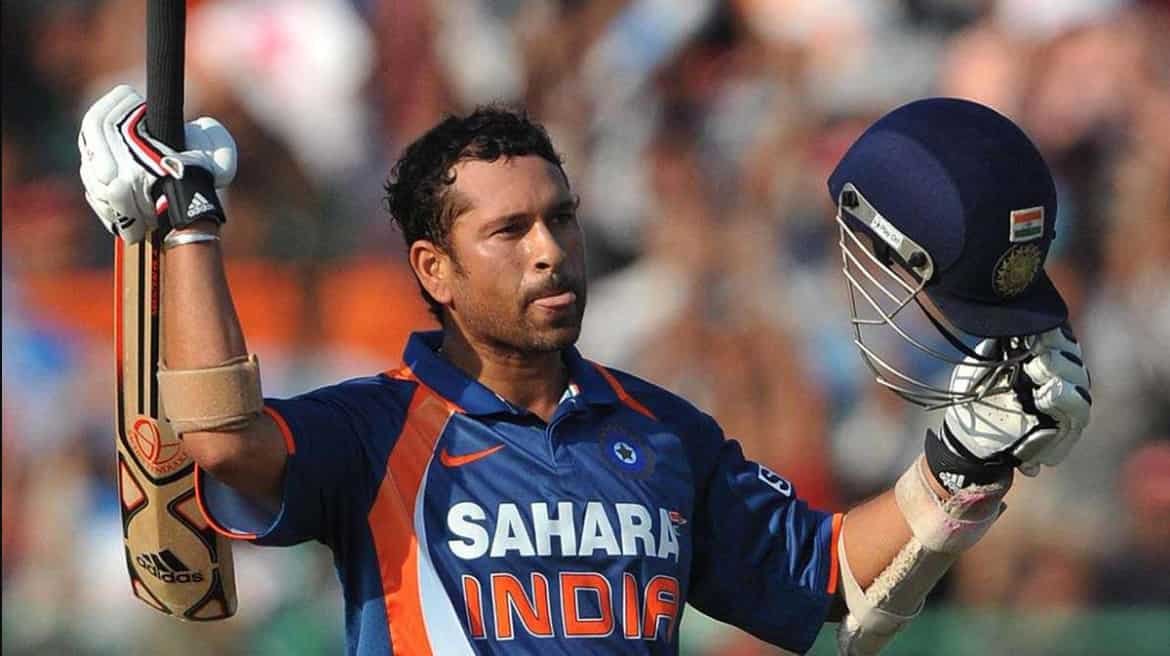
- Sachin Tendulkar, playing against South Africa in Gwalior, became the first man to score an ODI double century with his unbeaten 200 off 147 balls.
- The innings was magnificent—full of elegant strokeplay, innovative batting, and sheer determination.
- Tendulkar’s achievement was groundbreaking for men’s cricket, and he deserves every accolade.
- But it’s worth noting that Clark had already shown it was possible more than a decade earlier, under different conditions and with far less global attention.
Double Century in ODI Indian Player
Among Indian cricketers, Sachin Tendulkar remains the pioneer.
Following him, Rohit Sharma has become the modern master of ODI double hundreds, scoring three of them—the most by any player in the format.
Virender Sehwag also joined the exclusive club with his explosive 219 against the West Indies in 2011.
The Complete List: ODI Double Centuries Across Cricket
Since Clark’s historic innings, several cricketers have crossed the 200-run mark in ODIs. Here’s the comprehensive breakdown:
200 Runs in ODI Player List with Year
| Player | Score | Opposition | Year | Gender |
|---|---|---|---|---|
| Belinda Clark | 229* | Denmark | 1997 | Women |
| Sachin Tendulkar | 200* | South Africa | 2010 | Men |
| Virender Sehwag | 219 | West Indies | 2011 | Men |
| Rohit Sharma | 209 | Australia | 2013 | Men |
| Rohit Sharma | 264 | Sri Lanka | 2014 | Men |
| Rohit Sharma | 208* | Sri Lanka | 2017 | Men |
| Martin Guptill | 237* | West Indies | 2015 | Men |
| Amelia Kerr | 232* | Ireland | 2018 | Women |
| Chris Gayle | 215 | Zimbabwe | 2015 | Men |
| Fakhar Zaman | 210* | Zimbabwe | 2018 | Men |
How Many Double Centuries in ODI Cricket?
As of now, there have been 10 ODI double centuries across men’s and women’s cricket. Rohit Sharma leads the charts with three, showcasing his ability to convert starts into massive scores. The achievement remains rare—testament to the physical and mental demands of batting for extended periods in limited-overs cricket.
Who Has the Fastest Double Century in ODI?
Chris Gayle holds the record for the fastest double century in ODI cricket, reaching 200 runs off just 138 balls against Zimbabwe in 2015. His innings was explosive, filled with towering sixes and brutal hitting. In second place is Virender Sehwag, who took 140 balls, followed closely by Sachin Tendulkar’s 147-ball effort.
Expert Insight: Why Double Centuries Are So Rare
From a tactical perspective, scoring 200 in an ODI requires an almost perfect alignment of factors. You need:
- Early entry: Opening batters or those coming in within the first 10 overs have the best chance.
- Sustained concentration: Maintaining focus for 40-45 overs is mentally exhausting.
- Favorable pitch: A good batting surface with predictable bounce helps immensely.
- Weak or tired bowling: Even great batters need some luck with opposition quality.
- Team support: Partners who can rotate strike without getting out.
Clark had all these elements working in her favor in 1997, but she still had to execute perfectly. That’s what separates historic innings from missed opportunities.
Why Clark’s Record Deserves More Recognition
- Here’s the uncomfortable truth: Belinda Clark’s achievement has been overshadowed simply because it came in women’s cricket. Despite being the absolute first across all of cricket, her innings is often relegated to footnotes or “fun facts” sections.
- This isn’t just unfair—it’s historically inaccurate. Clark didn’t score the first women’s double century; she scored the first double century in ODI cricket, period. The distinction matters because it honors the actual timeline of the sport and recognizes excellence without gender-based asterisks.
- The fact that it took 13 years for men’s cricket to reach the same milestone only amplifies how ahead of her time Clark was.
Frequently Asked Questions
- Who scored the first double century in cricket history across all formats?
The first double century in international cricket was scored in Test cricket, dating back to the late 1800s. In limited-overs cricket specifically, Belinda Clark was the first in ODIs (1997), while Chris Gayle was the first in T20Is (2007).
- Did any Indian woman cricketer score an ODI double century?
Not yet. The highest individual score by an Indian woman in ODIs is Deepti Sharma’s 188 against Ireland in 2017.
- What happened to Belinda Clark after retirement?
Clark remained heavily involved in cricket administration. She served as CEO of Cricket Australia’s community cricket division and has been a powerful advocate for growing the women’s game.
- How does Rohit Sharma have three ODI double centuries?
Rohit possesses a unique combination of timing, power, and temperament that allows him to pace his innings perfectly. Once set, he accelerates without taking unnecessary risks—a rare skill even among great batters.
- Is scoring 200 easier now than in the 1990s?
Modern bats, shorter boundaries, fielding restrictions, and flat pitches have arguably made run-scoring easier. However, bowlers have also evolved with better variations and fitness, so it remains an exceptional achievement.
Final Thoughts
When you ask, “Which cricketer scored the first ODI double century?” the answer is clear: Belinda Clark, not Sachin Tendulkar.
Her unbeaten 229 against Denmark in 1997 broke barriers and set a standard that took over a decade for men’s cricket to reach.
Clark’s innings wasn’t just about runs—it was about expanding what people believed was possible in one-day cricket.
It inspired future generations and proved that women’s cricket deserved to be taken seriously at the highest level.
So the next time someone celebrates Tendulkar’s double hundred—and they should, because it was brilliant—remember to also mention the Australian legend who got there first.
Cricket history belongs to those who make it, regardless of which version of the game they play.
Also Check:
About the Author
