Cricket grounds vary wildly in size. Some have short boundaries that favor batters.
Others stretch out like football fields. The playing surface matters just as much as capacity when analyzing a venue’s true scale.
Boundary length directly impacts scoring rates and match dynamics.
A ground with 90-meter boundaries plays completely different than one with 65-meter ropes.
Largest Cricket Stadium in the World By Boundary
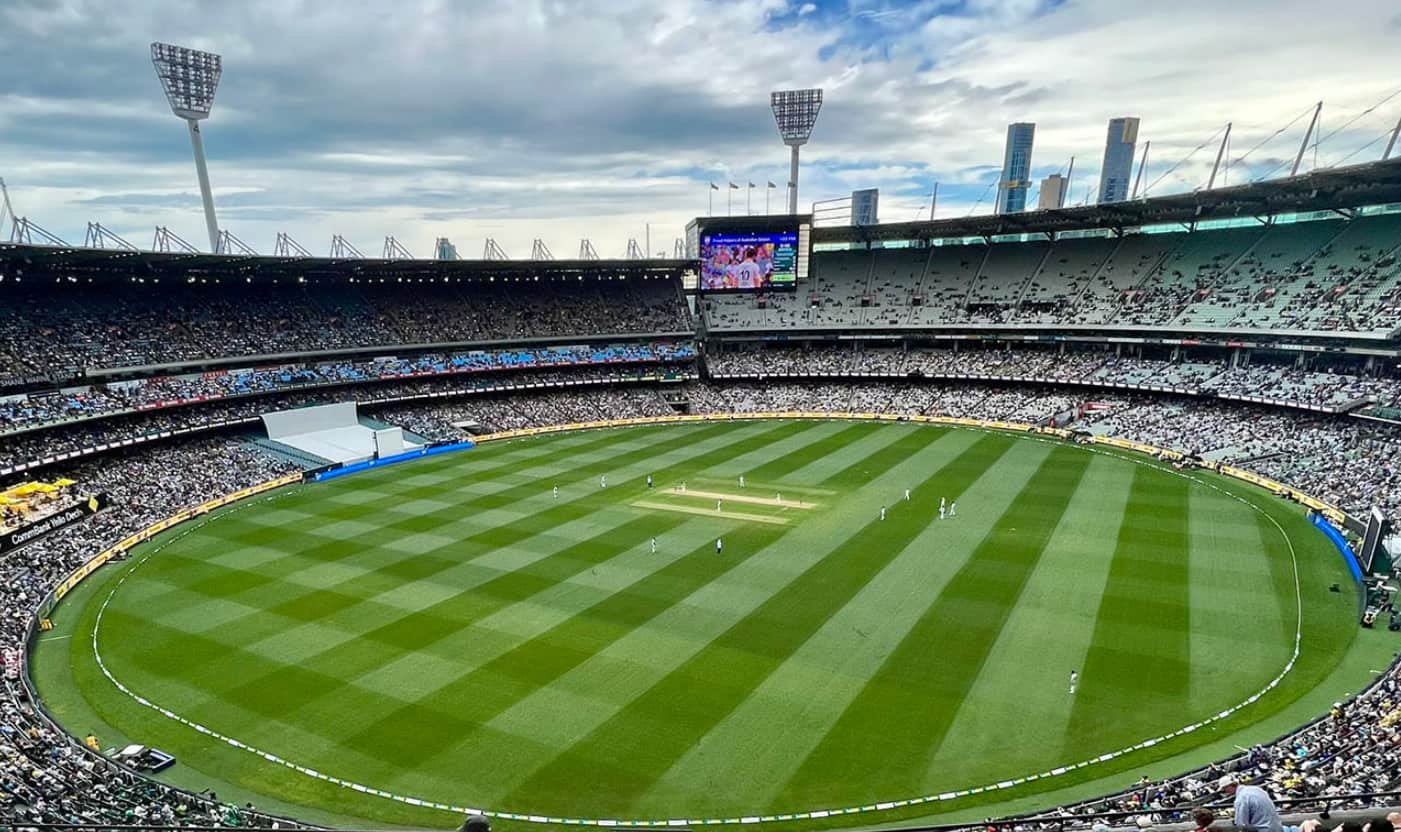
This guide ranks the top cricket stadiums based on their actual playing dimensions.
We’ll examine straight boundaries, square boundaries, and total surface area.
You’ll discover which venues give bowlers the most room to work with.
Quick Summary: Top Cricket Grounds By Boundary Size
Key Highlights:
- Melbourne Cricket Ground leads with the largest overall playing surface
- Australian venues dominate the top positions
- Boundary lengths can differ by format (Tests vs T20s)
- Straight boundaries often exceed 80 meters at major venues
- New Zealand grounds feature prominently in top rankings
How We Rank The Largest Cricket Stadiums in the World By Boundary?
Ranking grounds by boundary size requires looking at two measurements. The straight boundary runs from the bowler to the sight screen. The square boundary extends from one side of the ground to the other.
We multiply these dimensions to calculate the total playing area. This gives us a fair comparison across different ground shapes. Some venues are perfectly round, while others are oval or even rectangular.
The final rankings combine both metrics. A ground might have a massive straight boundary but modest square dimensions. We factor in both to determine which is the biggest cricket stadium in the world by boundary.
Top 10 Biggest Cricket Ground By Boundary Length in World
Here’s the complete breakdown of cricket’s largest playing surfaces.
| Rank | Stadium | Location | Straight Boundary | Square Boundary |
|---|---|---|---|---|
| 1 | Melbourne Cricket Ground | Australia | 83.43m | 86.24m |
| 2 | Sydney Cricket Ground | Australia | 93.72m | 72.83m |
| 3 | Singhalese Sports Club | Sri Lanka | 86.10m | 77.02m |
| 4 | Hagley Oval | New Zealand | 83.58m | 77.46m |
| 5 | Basin Reserve | New Zealand | 81.70m | 72.48m |
| 6 | Lord’s Cricket Ground | England | 88.87m | 65.21m |
| 7 | Imperial Wanderers | South Africa | 86.76m | 64.14m |
| 8 | Kensington Oval | Barbados | 76.65m | 69.03m |
| 9 | Eden Gardens | India | 76.23m | 66.26m |
| 10 | Narendra Modi Stadium | India | 75.00m | 75.00m |
#1 Melbourne Cricket Ground, Australia
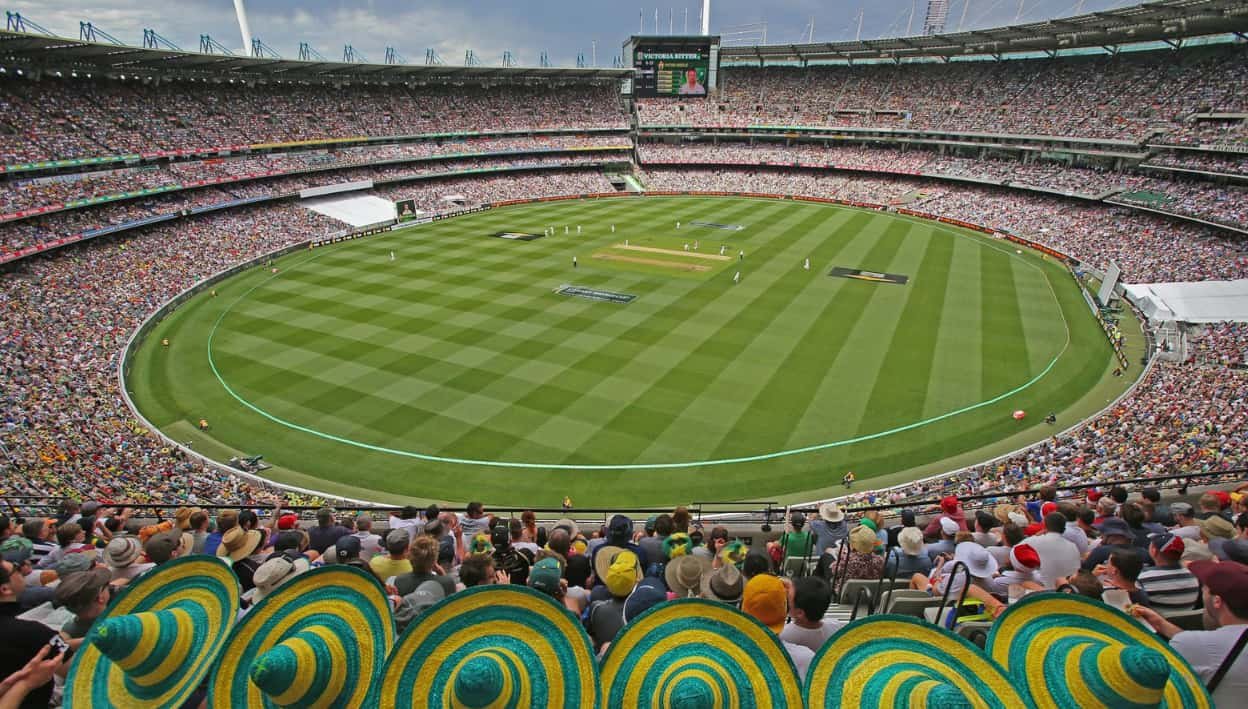
- Straight Boundary: 83.43 metres
- Square Boundary: 86.24 metres
The MCG hosted cricket’s very first Test match back in 1877. Australia faced England in that historic encounter. The ground has changed dramatically since those early days.
Today it stands as the largest cricket stadium in the world by boundary measurements. The playing surface area exceeds all other international venues. The MCG traditionally hosts Australia’s Boxing Day Test each year.
The Centenary Test was played here in 1977, exactly 100 years after that first match. The ground has witnessed countless memorable moments. Its vast dimensions give bowlers extra space to defend.
Why The MCG Tops The Rankings?
The near-equal straight and square boundaries create a massive surface area. Most grounds are lopsided in one direction or the other. The MCG’s balanced design maximizes total playing space.
Fielding teams need superior fitness to patrol these boundaries. Batters must time shots perfectly to reach the rope. Quick singles turn into comfortable twos at this venue.
#2 Sydney Cricket Ground, Australia
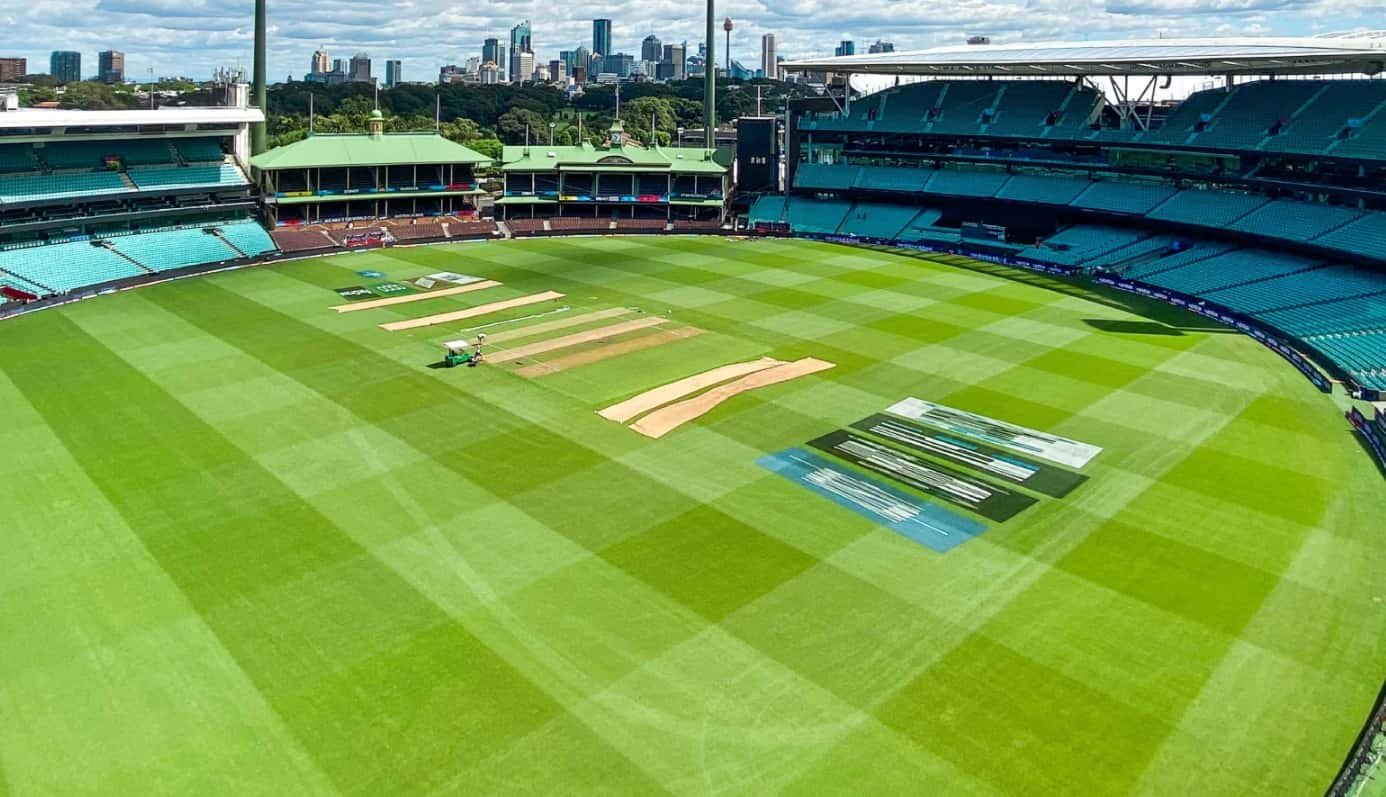
- Straight Boundary: 93.72 metres
- Square Boundary: 72.83 metres
The SCG features one of cricket’s longest straight boundaries. That 93-meter measurement is almost unheard of in modern cricket. T20 matches often bring the ropes in significantly.
This ground hosts the New Year Test in Australia’s home summer. The large playing surface allows for other sports, too. Rugby league teams regularly use the venue between cricket seasons.
The extreme straight boundary creates unique tactical situations. Bowlers can push fielders back without worrying about gaps. Batters need real power to clear that distant rope.
#3 Singhalese Sports Club Cricket Ground, Sri Lanka

- Straight Boundary: 86.10 metres
- Square Boundary: 77.02 metres
The SSC serves as cricket’s headquarters in Sri Lanka. The ground opened in 1952 and quickly became the island’s premier venue. Sri Lanka played their first Test here in 1984 against New Zealand.
One famous ODI in 2001 saw remarkable bowling figures. Chaminda Vaas took 8/19 against Zimbabwe. The visitors collapsed to just 38 all out, the lowest ODI total ever recorded.
The ground’s generous dimensions suited Vaas’s bowling style. He could attack with fielders spread wide. The big boundaries made scoring difficult for Zimbabwe’s batters.
#4 Hagley Oval, Christchurch, New Zealand
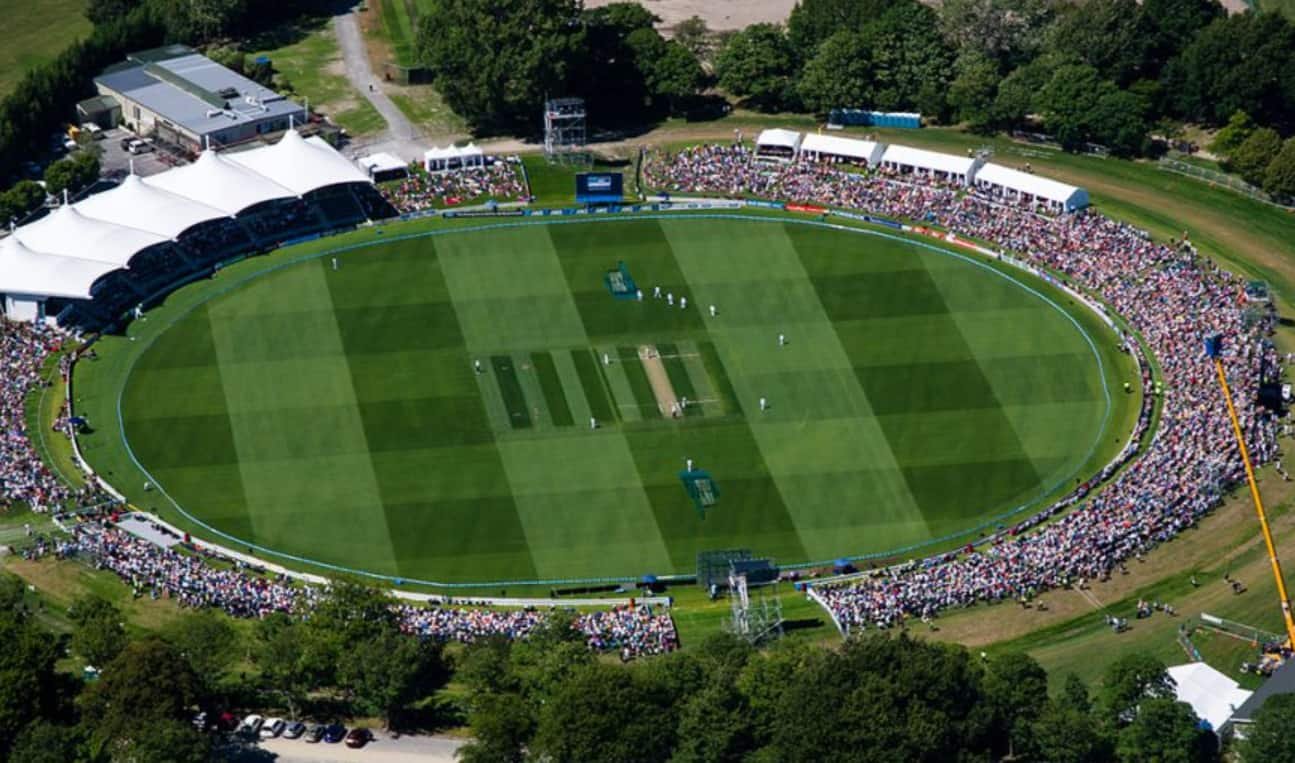
- Straight Boundary: 83.58 metres
- Square Boundary: 77.46 metres
Cricket was played at Hagley Oval as early as 1867. But New Zealand didn’t host a Test here until December 2014. Lancaster Park had been the city’s main venue before this upgrade.
The Hagley Oval offered much larger playing dimensions. International cricket needed the extra space by the 21st century. The ground quickly became a regular Test venue.
Both boundaries exceed 75 meters, creating a true bowler-friendly environment. Batters must work hard for every run. The open setting also allows wind to impact play.
#5 Basin Reserve, Wellington, New Zealand
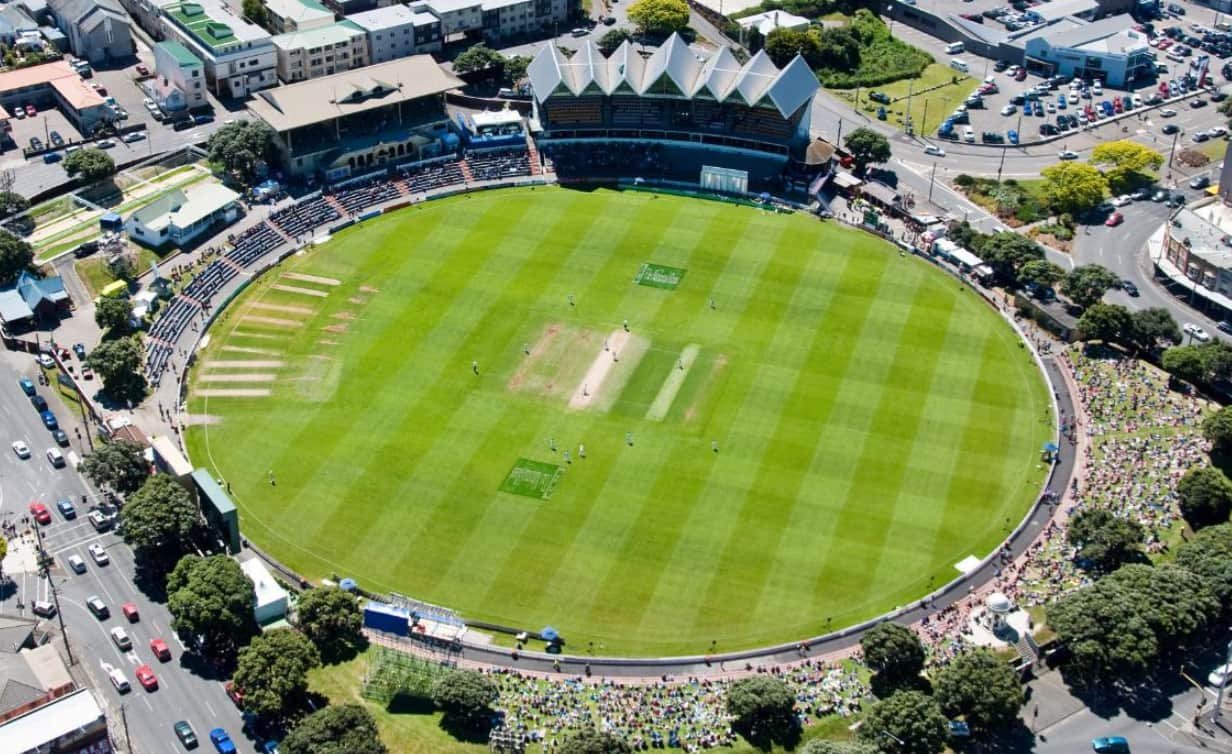
- Straight Boundary: 81.70 metres
- Square Boundary: 72.48 metres
The Basin Reserve sits in an unusual location. It’s effectively in the middle of a traffic roundabout in Wellington. The ground holds heritage status within New Zealand.
Wind is a constant factor at this venue. Combined with long boundaries, batting becomes extremely challenging. Bowlers get natural assistance from the conditions.
New Zealand’s capital hosted its first Test in 1930 against England. The ground remains a regular fixture for touring teams. Its unique character makes it a favorite among cricket purists.
#6 Lord’s Cricket Ground, London, United Kingdom
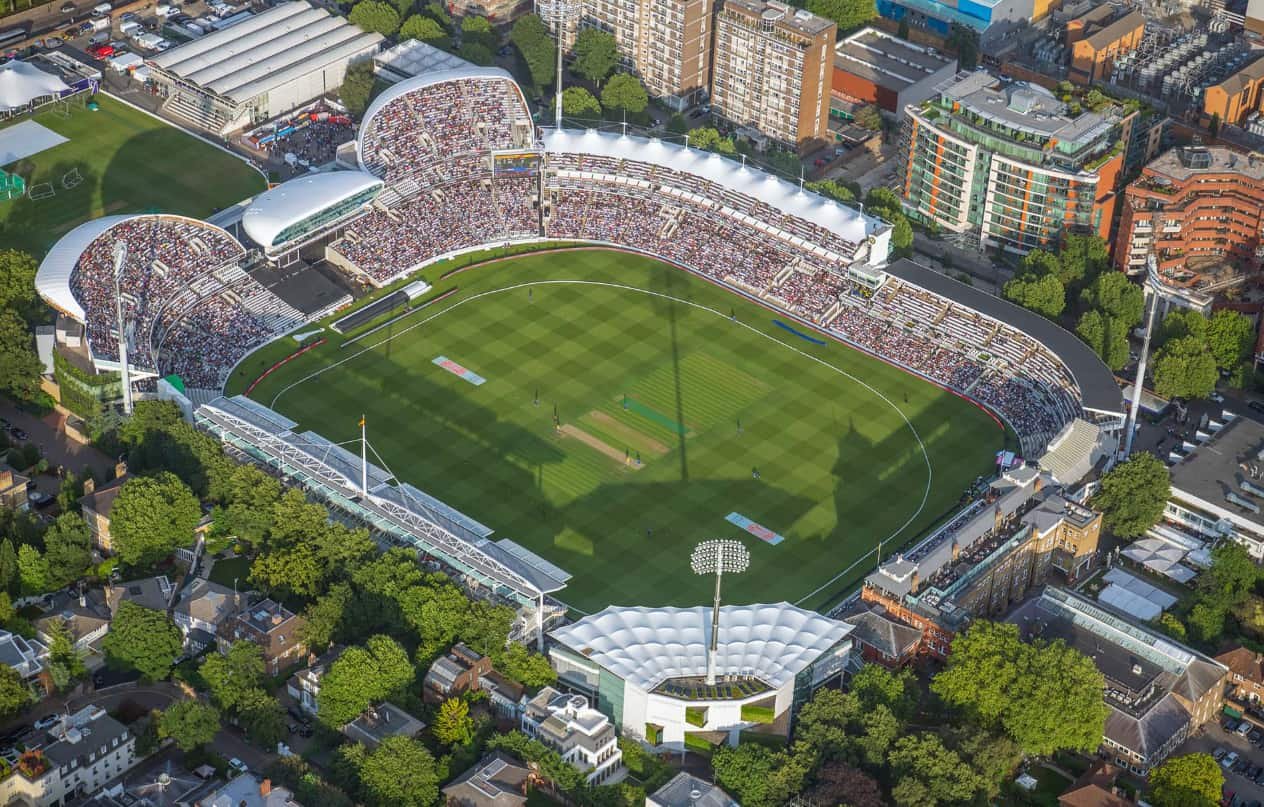
- Straight Boundary: 88.87 metres
- Square Boundary: 65.21 metres
Lord’s is considered the home of cricket by English supporters. The straight boundary nearly reaches 90 meters. The square boundaries are noticeably shorter, creating an oval shape.
The famous Lord’s slope adds another dimension. The ground drops 2.5 meters from north to south. This affects bowling, batting, and fielding in subtle ways.
The long, straight boundaries prevent easy hitting down the ground. Batters often work the ball square where the ropes are closer. This creates tactical battles between bat and ball.
#7 Imperial Wanderers Stadium, Johannesburg, South Africa
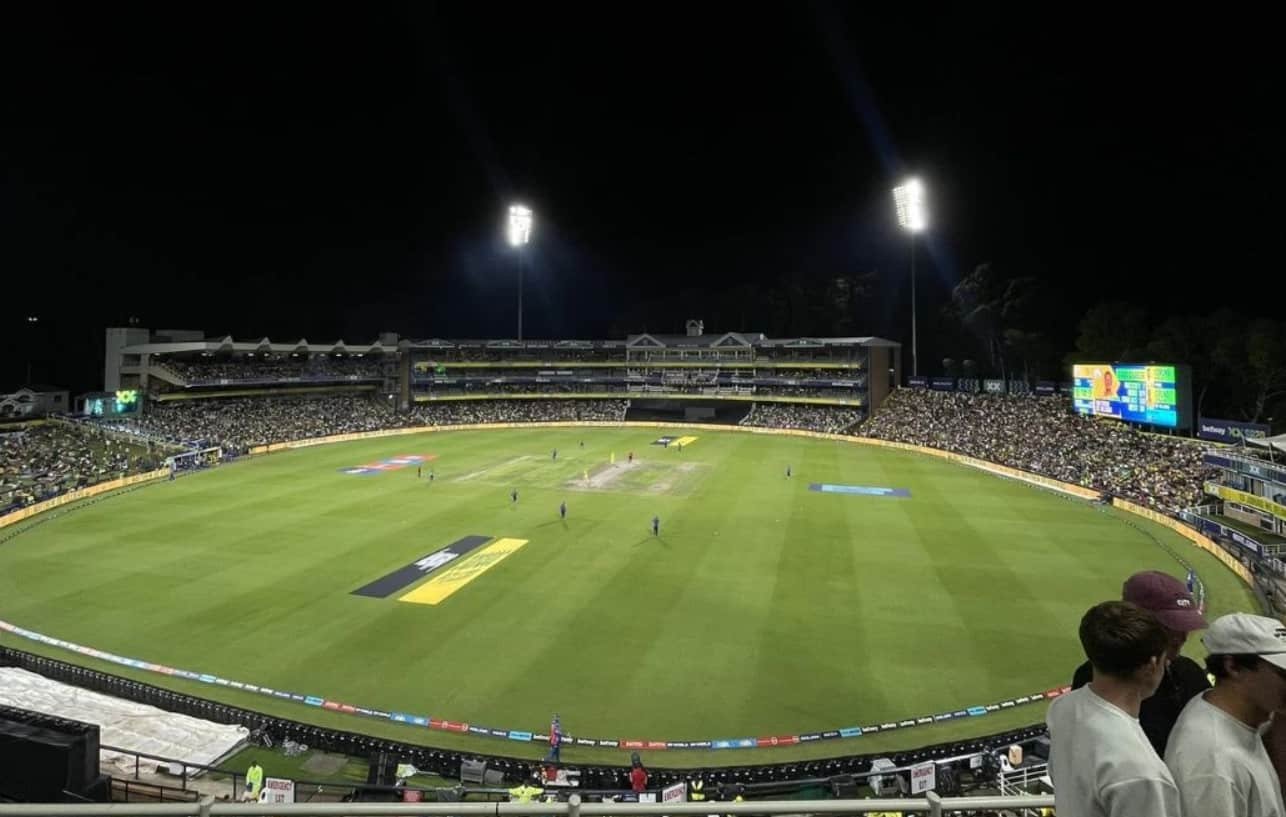
- Straight Boundary: 86.76 metres
- Square Boundary: 64.14 metres
The Wanderers replaced an older stadium in 1956. South Africa’s first Test at the new ground happened that same year. It hosted the 2003 World Cup final.
A 2006 ODI produced cricket’s most famous run chase. Australia scored 434 batting first.
South Africa won by chasing down that total. The ground’s boundaries played a role in the high-scoring affair.
The straight boundary exceeds 85 meters, giving bowlers defensive options. The square boundaries are more compact. This imbalance creates interesting field placements.
#8 Kensington Oval, Bridgetown, Barbados
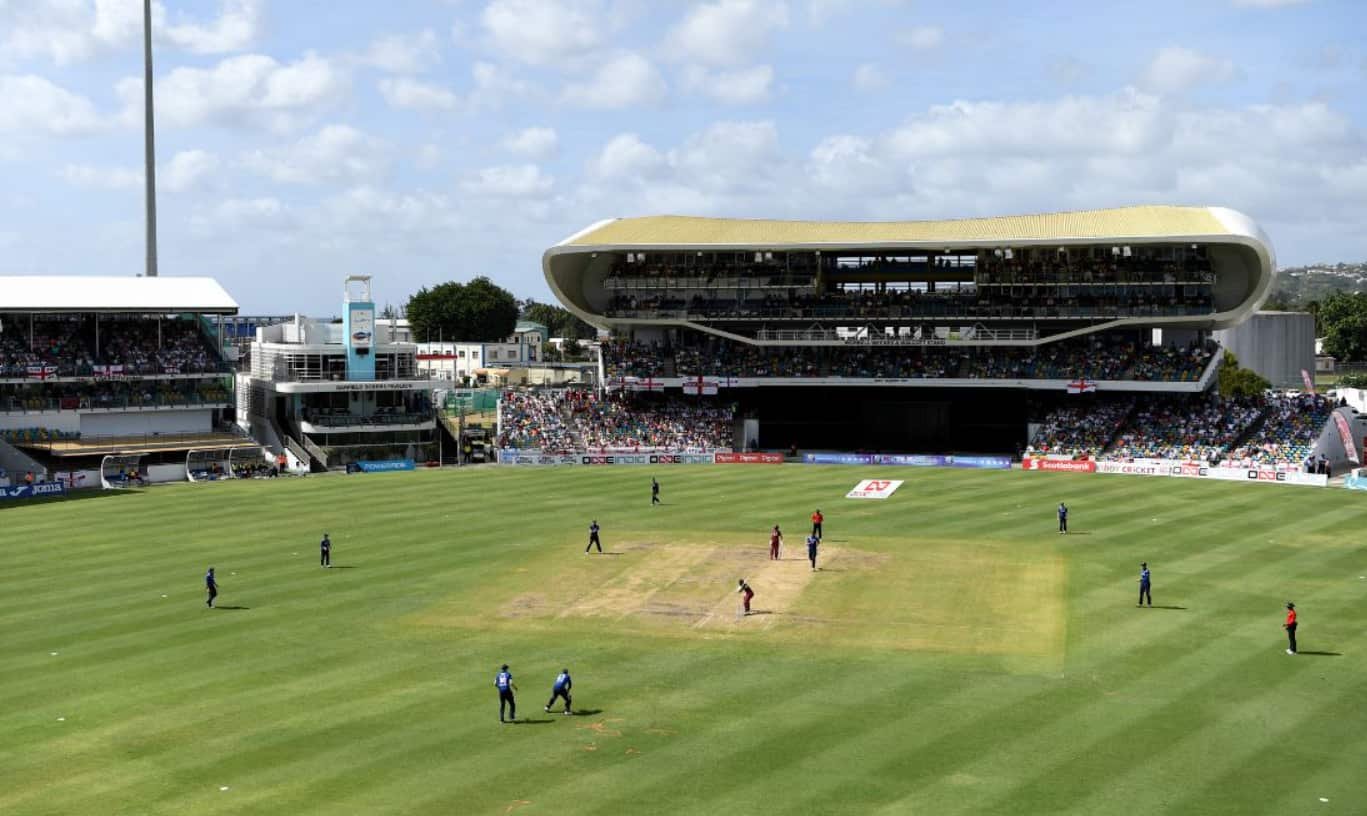
- Straight Boundary: 76.65 metres
- Square Boundary: 69.03 metres
Kensington Oval underwent major renovations before the 2007 World Cup. New stands replaced old structures. The scoreboard and pavilion were completely modernized.
What didn’t change was the expansive playing surface. Both boundaries exceed 65 meters in all directions. This makes it one of the Caribbean’s largest grounds.
The first Test here was played in 1930. The ground has hosted countless West Indies victories. Its size favors teams with strong fielding units.
#9 Eden Gardens, Kolkata, India
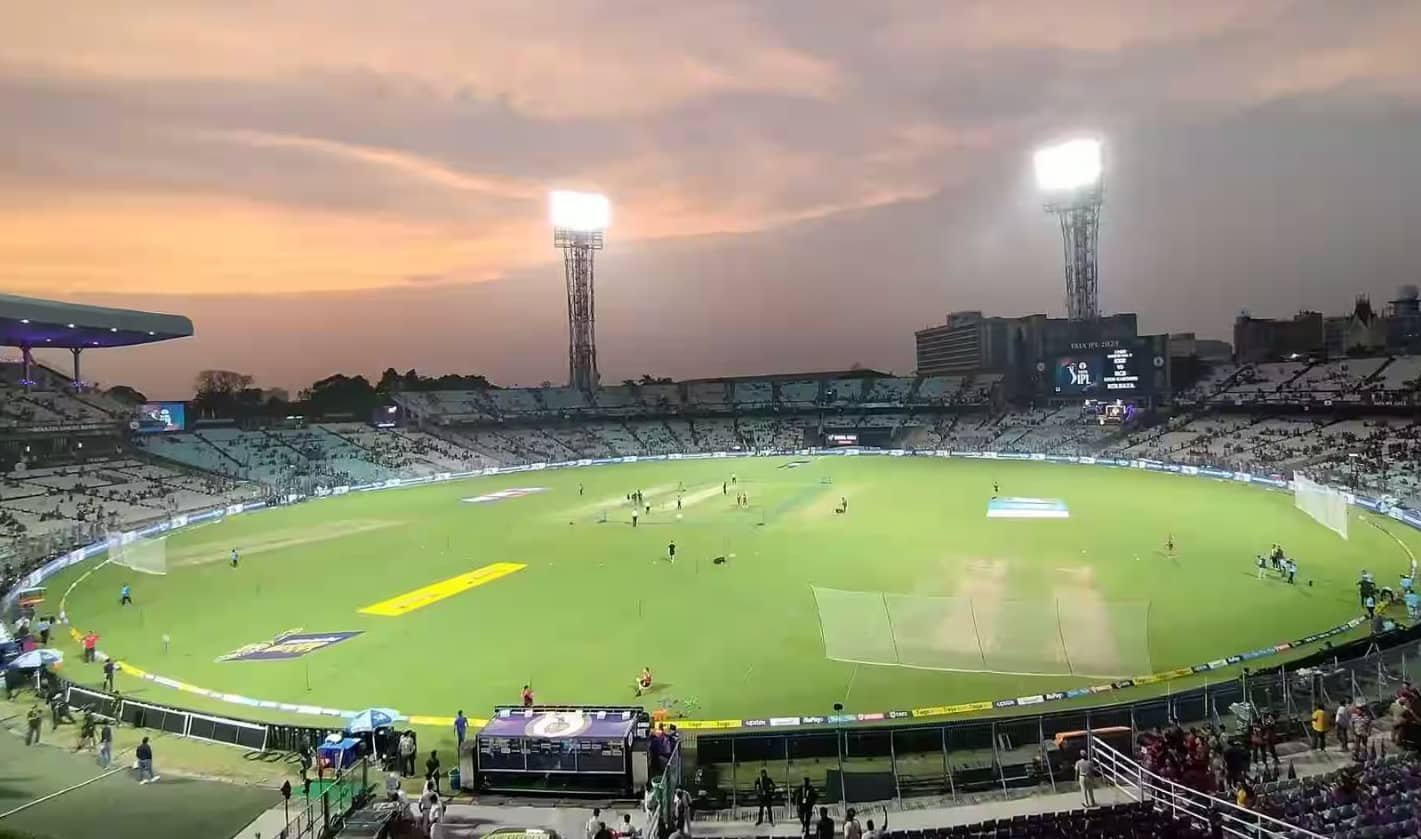
- Straight Boundary: 76.23 metres
- Square Boundary: 66.26 metres
Eden Gardens is India’s oldest Test venue. England toured here for the first time in 1934. The ground has witnessed numerous historic matches since.
The 1987 World Cup final was played at Eden Gardens. It marked the first World Cup final outside England. The 2016 World T20 final also took place here.
Boundaries at Eden Gardens provide a fair contest between bat and ball. Neither discipline gets an unfair advantage. The ground’s size rewards quality cricket over power hitting alone.
#10 Narendra Modi Stadium, Ahmedabad, India
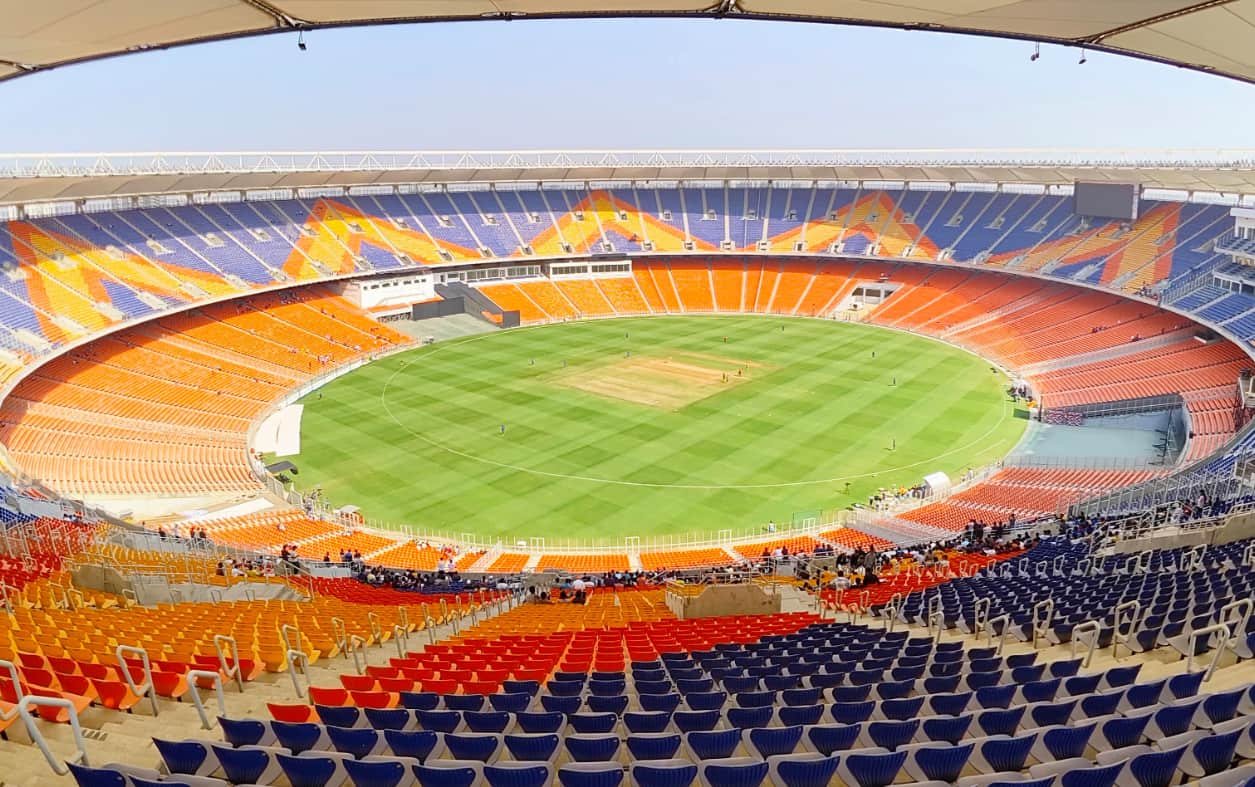
- Straight Boundary: 75.00 metres
- Square Boundary: 75.00 metres
The Narendra Modi Stadium is the world’s largest by seating capacity. But its playing dimensions took time to confirm. The ground dimensions are now established at 180 x 150 yards.
Both boundaries measure exactly 75 meters. This perfect symmetry is rare among cricket grounds. The venue hosted its first Test as an upgraded facility in 2021.
The IPL final was held here in 2022. The ground quickly became a premier venue. Its consistent boundary lengths eliminate any directional advantage for batters.
#11 Eden Park, Auckland, New Zealand
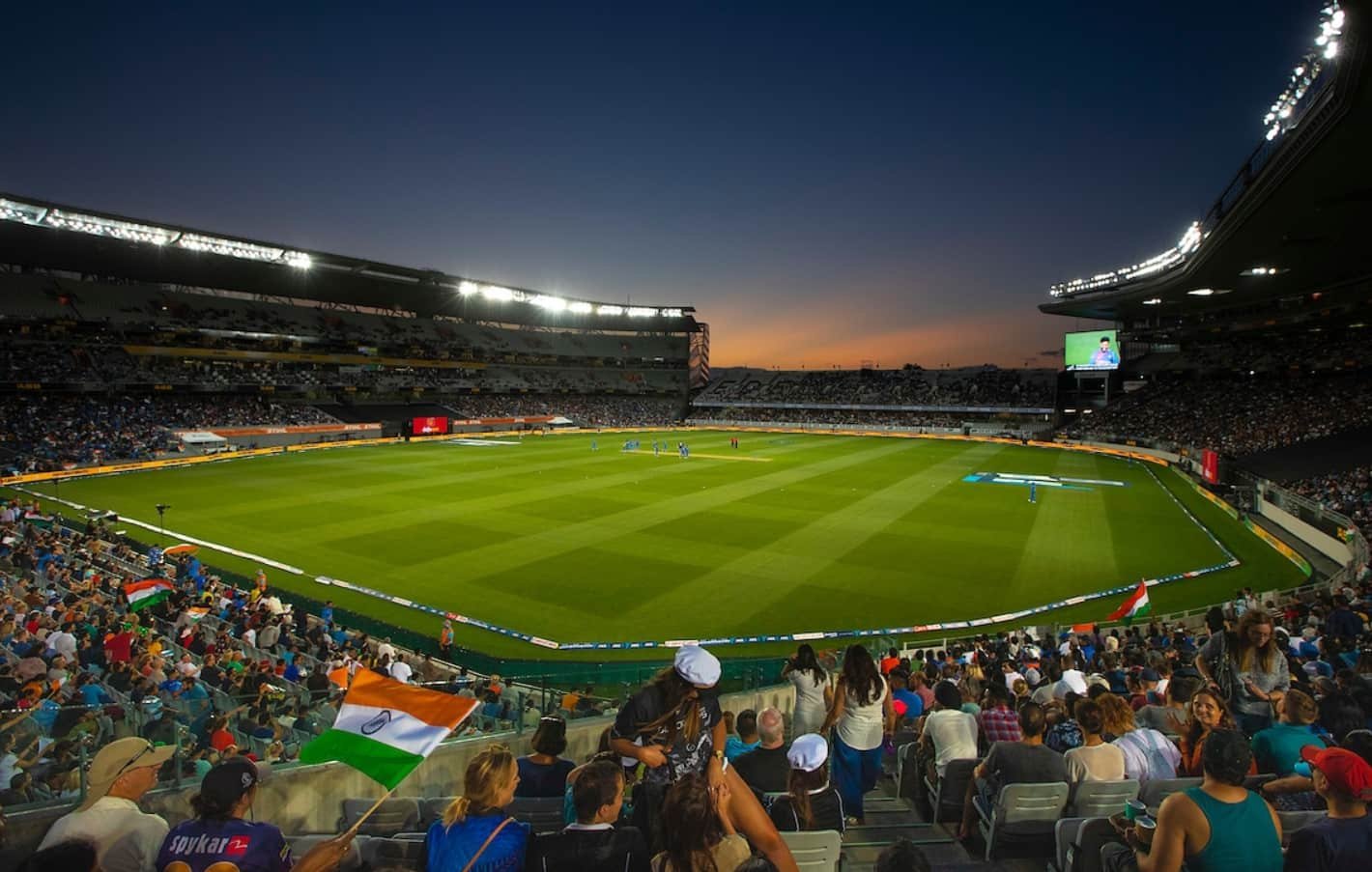
- Straight Boundary: 64.89 metres
- Square Boundary: 68.54 metres
Eden Park rounds out our rankings despite its smaller dimensions. The ground serves multiple sports, including rugby and football. This multi-purpose design influenced its layout.
The first Test was played here in 1930. Eden Park featured prominently during the 2015 World Cup. While smaller than other grounds on this list, it still offers a substantial playing area.
New Zealand grounds appear frequently in these rankings. Many serve multiple sports, requiring larger overall footprints. This translates to bigger cricket boundaries.
Boundary Variations Across Cricket Formats
The entire playing surface doesn’t always equal the boundary area. Teams adjust ropes based on the match format. These changes significantly impact gameplay.
Test Match Boundaries
Test cricket aims for a balanced contest between bat and ball. Boundaries extend to maximum length and width. Grounds use their full playing surface.
This creates proper five-day cricket. Batters must earn their runs through skill. Bowlers get a fair opportunity to take wickets.
Limited Overs Boundaries
ODI and T20 matches prioritize entertainment and scoring. Boundaries are brought in closer to the action. This increases run rates and six-hitting.
The same ground can play very differently in T20s versus Tests.
Melbourne’s boundaries might shrink by 10-15 meters for shorter formats. This completely changes the tactical approach.
Why Boundary Length Matters More Than You Think?
Uneven boundaries add strategic depth to cricket. A cricket square contains multiple pitches. Larger grounds might have 14 or more pitch options.
Groundskeepers rotate pitches throughout the season. This means boundary lengths vary from match to match.
One game might have a 60-meter boundary to the leg side. The next could have 80 meters.
Batters target shorter boundaries naturally. Bowlers and captains must defend them properly. This cat-and-mouse game creates tactical intrigue.
The variation in boundary length affects:
- Shot selection for batters
- Field placement strategies
- Bowling plans and variations
- Game tactics for captains
- Running between wickets
Expert Analysis: What Makes A Ground Truly Big
Surface area tells the real story. A ground with 90-meter straight boundary but 60-meter square isn’t necessarily bigger than one with 80-meter dimensions all around.
The MCG’s balance gives it top ranking. Both measurements exceed 80 meters. When multiplied together, no ground beats its total surface area.
Sydney’s 93-meter straight boundary is impressive in isolation. But the narrow square boundaries reduce overall playing space. It ranks second despite having the longest straight hit.
Perfectly round grounds like the Narendra Modi Stadium maximize efficiency. Equal boundaries in all directions create consistent playing conditions. Batters can’t exploit short sides.
Comparing Australian Grounds vs Rest of World
Australian venues dominate the top positions. The MCG and SCG both feature in the top two. This reflects Australia’s tradition of large sporting venues.
New Zealand grounds also rank highly. Basin Reserve, Hagley Oval, and Eden Park all make the list. These multi-purpose stadiums need space for rugby and cricket.
English and South African grounds tend toward asymmetric designs. Lord’s has a massive straight boundary but a compact square. This creates unique playing characteristics.
Indian grounds show more variation. Eden Gardens and Narendra Modi Stadium both crack the top ten. But many Indian venues have smaller boundaries to fit dense urban areas.
| Region | Average Straight Boundary | Average Square Boundary | Typical Characteristics |
|---|---|---|---|
| Australia | 88.58m | 79.54m | Large, oval-shaped venues |
| New Zealand | 76.73m | 72.82m | Multi-purpose grounds |
| England | 88.87m | 65.21m | Historic, asymmetric designs |
| South Asia | 75.62m | 71.64m | Mixed sizes, urban constraints |
Frequently Asked Questions
- Which is the biggest cricket stadium in the world by boundary?
Melbourne Cricket Ground holds this title with straight boundaries of 83.43 meters and square boundaries of 86.24 meters. The combined playing surface area exceeds all other international cricket venues.
- Do boundary lengths change between formats?
Yes, grounds adjust boundary ropes based on match format. Test matches use full boundary lengths while T20 games bring ropes in closer. This can reduce boundaries by 10-15 meters in shorter formats.
- Why do some grounds have uneven boundaries?
Cricket squares contain multiple pitches that rotate throughout the season. Different pitch selections create varying boundary lengths from match to match. This adds tactical variety to the game.
- What’s the longest straight boundary in cricket?
Sydney Cricket Ground features a 93.72-meter straight boundary, the longest among major international venues. However, its square boundaries are shorter, affecting the overall playing area.
- How do large boundaries affect match outcomes?
Bigger boundaries favor bowlers and fielding teams. Batters must work harder for runs and boundaries. This typically results in lower scoring rates and more balanced contests between bat and ball.
Final Thoughts On Cricket’s Largest Playing Surfaces
The largest cricket stadiums in the world by boundary offer unique challenges.
Melbourne Cricket Ground leads with its massive, balanced playing area.
Sydney Cricket Ground counters with the sport’s longest straight boundary.
These venues test players’ fitness and skill comprehensively. Batters can’t rely on short boundaries for easy runs.
Bowlers get a proper opportunity to defend and create pressure.
Understanding boundary dimensions adds depth to watching cricket.
The next time you see a match from the MCG or Lord’s, you’ll appreciate the strategic implications. Size matters in cricket, and these grounds prove it.
Also Check:
- Highest Individual Scores by an Indian in T20 World Cup History
- Rohit Sharma Centuries In All Format
- Afghanistan Tour of India 2026 Schedule
- T20 World Cup 2026 Semi-Finals Schedule
About the Author
