There’s a reason crowds arrive early when certain openers walk out.
The best ones don’t just survive the new ball—they make bowlers rethink their plans before lunch.
Opening the batting isn’t what it used to be.
You’re no longer just there to block out the first hour and hand over a stable platform.
Modern openers need to score quickly, read conditions on the fly, and know when a 140kph delivery deserves respect or punishment.
The role has evolved from defensive anchor to aggressive match-winner, and only a handful have truly mastered it across formats.
Let’s break down who’s actually earned their spot at the top of the order—and why they’re still talked about in dressing rooms worldwide.
Best Cricket Openers in the World
What Makes an Opener World-Class?
Great openers share a few non-negotiables.
First, they handle movement—both swing and seam—without looking flustered.
Second, they build innings without losing momentum.
You’ll notice the best ones shift gears naturally; they don’t just block for 20 overs and then suddenly start slogging.
Then there’s the mental side. Facing a fresh bowler with a new ball, five slips waiting, and your team at 0-0 isn’t for everyone.
The really good openers thrive there. They don’t just tolerate pressure—they use it to focus.
Top 10 Best Cricket Openers in the World
Here’s the honest ranking, based on impact, consistency, and what they’ve done across conditions:
| Rank | Player | Country | Matches | Total Runs | Playing Status |
|---|---|---|---|---|---|
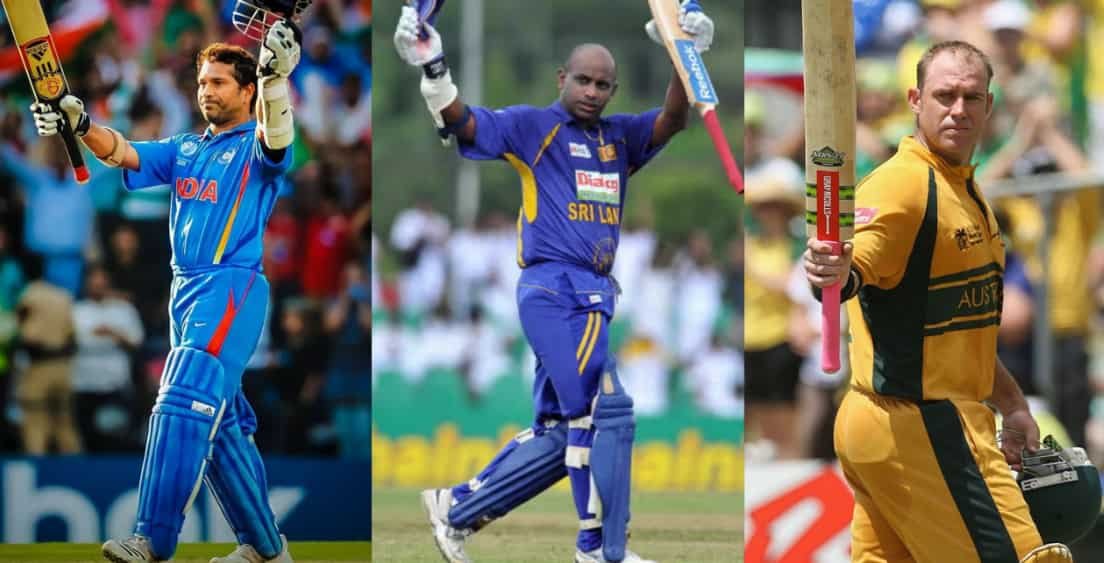
| 1 | Sachin Tendulkar | India | 664 | 34,357 | Retired |
| 2 | Sanath Jayasuriya | Sri Lanka | 586 | 21,032 | Retired |
| 3 | Matthew Hayden | Australia | 273 | 15,066 | Retired |
| 4 | Rohit Sharma | India | 508 | 20,109 | Active |
| 5 | David Warner | Australia | 376 | 18,817 | Retired |
| 6 | Hashim Amla | South Africa | 349 | 18,672 | Retired |
| 7 | Adam Gilchrist | Australia | 396 | 15,461 | Retired |
| 8 | Alastair Cook | England | 257 | 15,737 | Retired |
| 9 | Virender Sehwag | India | 374 | 17,253 | Retired |
| 10 | Chris Gayle | West Indies | 483 | 19,593 | Retired |
1. Sachin Tendulkar – The Gold Standard
Tendulkar didn’t just break records; he rewrote what longevity looks like.
Over 24 years, he faced every bowling attack imaginable and still averaged above 50 in Tests.
His ability to adjust techniques as he aged—switching from aggressive drives early in his career to more calculated strokeplay later—showed true mastery.
In ODIs, he scored nearly 50 centuries, often opening and setting up wins single-handedly.
2. Sanath Jayasuriya – The Game-Changer
Before Jayasuriya, ODI openers treated the first 15 overs like a warm-up.
He flipped that thinking during the 1996 World Cup, smashing boundaries from ball one and putting bowlers on the back foot immediately.
His left-handed power hitting and handy spin bowling made him a dual threat.
Jayasuriya’s approach didn’t just win matches—it influenced how the next generation approached limited-overs cricket.
3. Matthew Hayden – The Intimidator
Hayden walked to the crease like he owned it.
His physical presence alone rattled bowlers, and once he got going, there wasn’t much they could do.
He was particularly brutal on spin, using the sweep and reverse sweep to dominate in Asian conditions.
Hayden’s partnerships with Justin Langer laid the foundation for Australia’s dominance in the 2000s.
His 380 in Tests remains one of the most commanding innings ever played.
4. Rohit Sharma – The Modern Giant
Rohit’s greatest skill isn’t just scoring runs—it’s making big scores look effortless.
He’s hit three ODI double-centuries, a feat no one else has managed.
His timing and shot selection against pace and spin make him dangerous on any surface.
As captain, he’s shown tactical sharpness, balancing aggression with game awareness.
Rohit’s still adding to his legacy, and he’s already cemented himself among the top 5 best cricket openers in the world.
5. David Warner – The Firecracker
Warner’s career started in T20s, where his explosive batting made him a franchise favourite.
He then proved doubters wrong by succeeding in Tests, becoming one of the few left-handers to consistently dominate fast bowling.
His 335 not out against Pakistan showed he could bat long when needed, but he’s most dangerous in the first 30 balls.
Warner’s energy in the field and quick scoring made him a match-winner across formats.
6. Hashim Amla – The Elegant Technician
Amla batted like he had all the time in the world.
His compact technique and wristy strokes through midwicket were textbook.
What made him special was his ability to score quickly without looking rushed—he’d be on 70 before you realized he’d taken control.
Amla’s consistency across all three formats made him South Africa’s most dependable batter for over a decade.
7. Adam Gilchrist – The Revolutionary Keeper-Batter
Gilchrist changed what teams expected from wicketkeeper-batsmen.
He didn’t just keep wickets—he opened the batting and often won matches in a session.
His 149 off 104 balls in the 2007 World Cup final is still one of the most dominant innings in a final.
Gilchrist’s sportsmanship, including walking when he knew he’d edged one, earned him respect beyond his stats.
8. Alastair Cook – The Test Match Wall
Cook’s strength was simple: he just didn’t get out easily.
His technique against swing bowling made him England’s most reliable opener in tough conditions.
He scored heavily in Australia, India, and South Africa—places where many English batters have struggled.
Cook’s 33 Test centuries and calm presence made him the backbone of England’s Test side for over a decade, and he remains one of the top 10 best Test openers of all time.
9. Virender Sehwag – The Fearless Aggressor
Sehwag treated Test cricket like a T20.
His strike rate of over 82 in Tests is unheard of for an opener.
He’d smash the first ball for four and keep going, putting bowlers under immediate pressure.
His triple-centuries showed he could convert starts into massive scores.
Sehwag didn’t care about conventional technique—he cared about runs, and he got plenty of them.
10. Chris Gayle – The Universe Boss
Gayle’s T20 dominance overshadows how good he was in Tests and ODIs.
His 333 in Tests and 215 in ODIs prove he could build innings when required.
But it’s his ability to take apart any bowling attack in T20s that made him a global icon.
Gayle’s six-hitting and swagger changed how franchises valued openers in league cricket.
He’s one of the best cricket openers in the world all time, especially in the shortest format.
How Top Openers Handle Different Formats
The best openers adjust their game depending on the format.
In Tests, patience is key—wearing down bowlers, leaving well outside off-stump, and building partnerships.
ODI openers need to balance the powerplay advantage with not losing early wickets.
T20 openers, meanwhile, are expected to attack from ball one, often scoring at 150+ strike rates.
Players like Rohit Sharma and David Warner excelled across all three because they understood these shifts.
Rohit’s calm approach suits ODIs and Tests, while Warner’s natural aggression worked perfectly in T20s.
The ability to switch mindsets separates good openers from great ones.
The Mental Game: What Sets Elite Openers Apart
Opening isn’t just technical—it’s psychological warfare. Great openers intimidate bowlers before a ball is bowled.
When Hayden or Gayle walked out, bowlers knew they’d get punished for anything loose.
That mental edge matters.
Consistency versus risk-taking is another balance. Sehwag attacked everything, while Cook built patiently.
Both approaches worked because they stayed true to their strengths.
The best openers don’t try to be something they’re not—they refine what works for them.
Handling pressure is the ultimate test.
The world best opener in ODI cricket or Tests doesn’t panic when the team’s struggling.
They use focus techniques—whether it’s deep breathing, a pre-ball routine, or just trusting their preparation.
Cook’s ability to grind out runs during England’s collapses showed that mental resilience.
Expert Insight: Why the Opening Role Keeps Evolving
Cricket’s changing fast, and openers are evolving with it.
T20 leagues have pushed even Test openers to think about scoring rates. Bowlers are getting smarter with variations, so openers need sharper game awareness.
The next generation—players watching Rohit and Warner—will need to handle reverse swing, read DRS reviews, and score on hybrid pitches that assist both pace and spin early.
Technique still matters, but adaptability might matter more.
The world best opener in T20 cricket today needs skills that didn’t exist 20 years ago.
One thing won’t change: openers set the tone. A dominant start demoralizes bowling units and energizes the batting side.
That psychological advantage is timeless.
Frequently Asked Questions
- Who’s considered the best opener in ODI cricket history?
Sachin Tendulkar holds that title for many, given his 49 ODI centuries and longevity. Rohit Sharma’s three double-hundreds also put him in the conversation.
- Which opener has scored the most international runs?
Sachin Tendulkar leads with over 34,000 runs across all formats. Sanath Jayasuriya is second among openers with more than 21,000 runs.
Who was the most aggressive Test opener ever?
- Virender Sehwag, hands down. His strike rate of over 82 in Tests is unmatched for an opener, and he treated every format like a limited-overs game.
- What makes Rohit Sharma stand out among modern openers?
His ability to convert starts into massive scores. Rohit’s three ODI double-centuries and calm shot selection under pressure set him apart.
- Is there a best opening pair of all time?
Hayden-Langer and Tendulkar-Ganguly are often debated. Both pairs dominated their eras and laid platforms for their teams’ success across conditions.
Also Check:
About the Author
